Toy Packaging Boxes: How to Design Safe, Attractive, and Retail-Ready Packaging

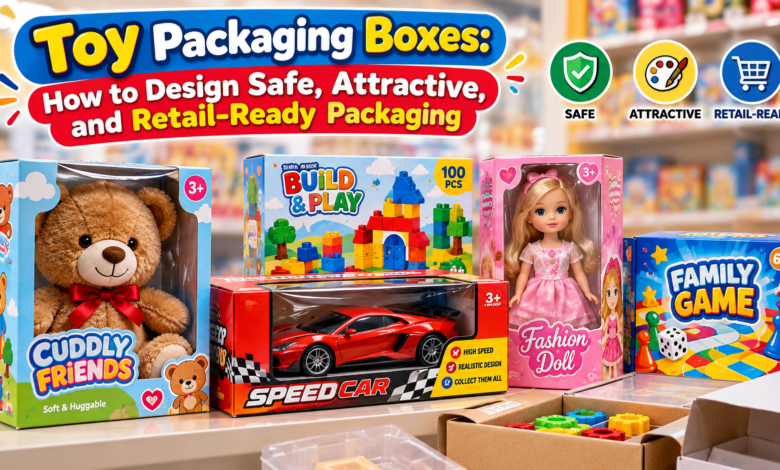
Toy packaging has a different role compared to other retail packaging.
The packaging should appeal to children but at the same time provide enough information for the parent to make the buying decision. On top of that, the packaging should offer protection to the product throughout manufacture, distribution, and retail process.
This implies that effective toy packaging is not just colorful but thoughtfully designed around the product and consumer.
Start With the Toy Inside
The product will dictate the packaging structure.
A small construction set, stuffed toy, board game, doll, or electronic toy will require totally different packaging considerations. The size, weight, shape, accessories, and fragility of the toy will all influence the box.
Prior to selecting a structure, one should take into account:
- Space that the toy requires
- If there are multiple parts to the toy
- Fragile parts of the toy
- If an insert is required
- The position of the toy
- If the customer needs to see the product before purchase
Good-fitting packaging will help minimize movements and damage to the product in transit.
Make the Front Panel Do the Selling
Toy shelving tends to be visually crowded.
Colors, characters, illustrations, and competitive products can create a cluttered situation where the product packaging might not be noticeable.
Therefore, the front panel will have to have an obvious hierarchy.
The product name needs to be visible, whereas the product’s image or illustration must clearly state what toy it is.
This is because the age range, quantity, and other features will depend upon the product itself.
The aim is quick comprehension.
It needs to be possible for a parent to look at the product packaging and figure out what it is right away without having to search for information amid text.
Use Color With Purpose
Color is one of the most powerful elements of toy packaging, but increased use of colors will not necessarily increase attention.
A common set of colors can help establish a brand identity. On the other hand, different colors may be used for different products, for products designed for different age groups, characters or even types of toys.
The pictures and other graphics used should complement the toy without making exaggerated claims about it.
If children constitute part of the target market for a toy, visual storytelling can help engage them, while adults would need more details.
Windows Can Let the Product Speak
In some cases, being able to see the real toy will be more compelling than just seeing its picture.
A clear window can make visible the doll, car, collectible, craft set, or other significant element of the product without necessarily needing to open the package.
However, it must be placed properly to show the most beneficial element of the product.
At the same time, there is an issue of balance with the structural strength of the package. Large windows may have an impact on the stiffness of the carton.
Keep Accessories Organized
Toys have many small parts to them.
If the toy isn’t organized correctly, the pieces can get dislocated in the box or be hard to find. Inserts, partitions, or trays can help organize all the pieces together.
For games or building sets, having good organization within the toy can even enhance the excitement of unboxing the toy.
An insert should be created based on the toy’s parts.
Safety and Information Matter
Toy packaging must sometimes carry information that is essential.
This may vary depending on the toy being packaged and the market environment.
This includes age indications, warnings, usage information, content details, manufacturing details, among others.
All this information must be clear and visible while not interfering with the packaging itself.
Package structure, openings, closure, and material must all be suitable for the toy.
Working with an experienced box manufacturer can help ensure that the packaging structure and production specifications are considered alongside the product requirements.
Design for the Retail Shelf
Retail-ready packaging must perform well even before the consumer lifts the package.
Consider where and how the package will be positioned on the shelf. Will the front of the package remain visible? Will the packages stack? Is the package stable? Will the name of the product be legible from some distance?
With large toys, the ability of the package to withstand structural forces becomes especially significant due to stacking.
A package that looks good yet fails at standing up to typical retail handling is a failure of the package.
Build Packaging Parents Understand and Children Notice
Toy packaging done exceptionally well has two potential audiences considered.
Kids might be interested in the color scheme, characters, images, and product itself, while parents need reliable information and assurance that the packaging is done properly for the product.
If such demands are reconciled, packaging can do well in terms of both performance and visual effect.
With the correct design and materials as well as support from a good box manufacturer, toy packaging will protect the product, catch the eye on the shelves, and make a good impression even before opening the box.