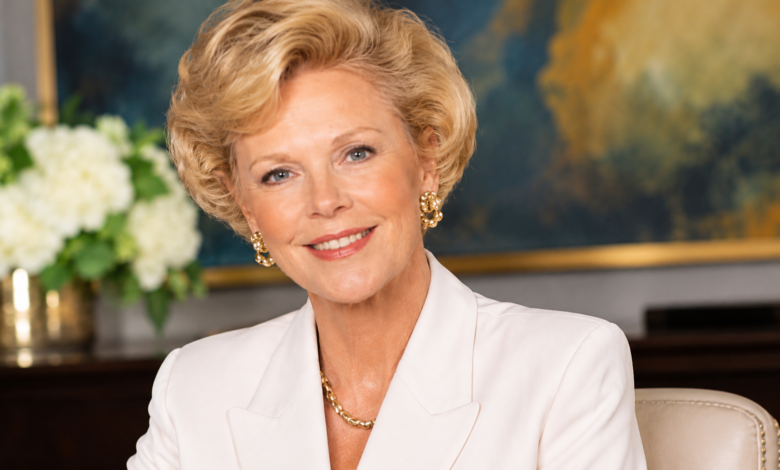
Marilyn Kroc Barg is a name that continues to attract attention because of her connection to one of the most recognizable business families in American history. As the daughter of Ray Kroc, the entrepreneur who helped transform McDonald’s into a major international restaurant chain, she belonged to a family whose name became synonymous with business ambition, franchising, and extraordinary commercial growth. Yet her own life remains far less documented than her father’s remarkable career.
The story of Marilyn Kroc Barg offers a different perspective on the Kroc family. Rather than focusing exclusively on corporate achievements, financial success, and the expansion of a global brand, her biography raises questions about family relationships, personal privacy, historical documentation, and the difference between inherited recognition and individual accomplishment. Although information about her life is limited, the available family history provides a starting point for understanding her place in the Kroc story.
An accurate account of Marilyn Kroc Barg must also distinguish established information from claims repeated across low-quality biography websites. Details about her personal relationships, professional activities, wealth, children, and charitable involvement are not equally well documented. Examining these distinctions makes it possible to explore her background without turning uncertainty into supposed fact.
Marilyn Kroc Barg at a Glance
Marilyn Kroc Barg is commonly identified in biographical accounts as the daughter of Raymond Albert Kroc, widely known as Ray Kroc, and his first wife, Ethel Janet Fleming. She is also associated with the name Marilyn Janet Kroc and the nickname Lynn. Her significance in public searches comes primarily from her family relationship to the businessman whose work helped shape the modern fast-food industry. Unlike her father, she did not become a widely recognized public figure with an extensively documented professional biography.
The following table separates commonly reported biographical details from information that requires additional documentary confirmation. This distinction is especially important because many websites present precise personal details without linking to original records, verified obituaries, or trustworthy historical sources.
| Biographical detail | What can responsibly be reported |
|---|---|
| Commonly reported name | Marilyn Kroc Barg |
| Name associated with family records | Marilyn Janet Kroc |
| Father | Ray Kroc |
| Mother | Ethel Janet Fleming |
| Family relationship | Commonly identified as Ray Kroc’s only child |
| Father’s business association | McDonald’s |
| Public profile | Limited independent documentation |
| Corporate position | No reliably established senior McDonald’s role |
| Personal relationships | Some details appear in genealogical accounts but require careful verification |
| Children | No reliably verified public account established here |
| Personal wealth | No verified individual net-worth figure established |
| Charitable legacy | Claims of specific personal initiatives require documentary evidence |
Early Life and Family Background
Marilyn entered the world before her father became a household name in the restaurant industry. Her early family history therefore belongs to a period when Ray Kroc was still building his working life through sales and commercial ventures rather than directing a globally recognized food-service brand. Understanding this chronology helps readers avoid the assumption that Marilyn necessarily experienced the same wealth, visibility, or opportunities associated with the later Kroc fortune from the beginning of her life.
Public accounts generally place Marilyn within the family formed by Ray Kroc and Ethel Fleming, who married in 1922. McDonald’s corporate history describes Ray’s earlier career as including work as a musician and paper-cup salesman before he became a distributor of Multimixer milkshake machines. His encounter with the McDonald brothers came in 1954, decades after his early adulthood began.
This timeline offers meaningful context for understanding the family environment in which Marilyn grew up.
Who Were Marilyn Kroc Barg’s Parents?
Ray Kroc was an American businessman whose most enduring commercial achievement was helping expand the McDonald brothers’ restaurant concept into a much larger franchise operation. His influence came from recognizing the potential of a repeatable restaurant model, developing franchise relationships, and emphasizing consistency across locations. McDonald’s official history traces the development of this system from Kroc’s first restaurant in Des Plaines, Illinois, in 1955, to the acquisition of the McDonald brothers’ interests in 1961.
Ethel Janet Fleming was Ray Kroc’s first wife and Marilyn’s mother. Although Ray’s business activities later received extensive attention, considerably less public information is available about the everyday family life of Ethel and Marilyn. A responsible biography should recognize this imbalance rather than invent conversations, private family traditions, or emotional details that surviving evidence does not establish. The absence of extensive coverage is a limitation of the historical record, not proof that their family experiences lacked significance.
Ray Kroc’s Career and Its Influence on the Kroc Family
Ray Kroc’s professional journey helps explain why his family name continues to attract so much attention. Before becoming associated with McDonald’s, he worked in sales and distributed equipment used by restaurants. In 1954, he visited a successful hamburger restaurant operated by Richard and Maurice McDonald in San Bernardino, California. He recognized that the brothers’ limited menu and efficient service model could potentially be replicated across a much larger network of restaurants.
Kroc opened his first McDonald’s restaurant in Des Plaines, Illinois, in 1955 and subsequently pursued an ambitious expansion strategy. The brothers’ original restaurant concept and Kroc’s franchising efforts were distinct but interconnected contributions to the business’s development. For Marilyn, this history supplies the larger context behind her surname, but it does not establish that she participated in franchise negotiations, operational decisions, or corporate leadership. Family association and documented professional responsibility are different things.
Growing Up Before McDonald’s Became a Global Brand
The chronology of Marilyn’s life matters because the McDonald’s that modern readers recognize did not exist in its later form throughout her childhood. The original restaurant opened in 1940, and the McDonald brothers subsequently refined their approach to quick service. Ray Kroc became involved much later, opening his Des Plaines location in 1955. The Golden Arches and the company’s wider identity evolved over time rather than appearing as a complete global system at the beginning.
This background also encourages a more realistic view of what it meant to be the child of an ambitious businessman. A parent’s eventual success does not mean that every stage of a child’s life was shaped by the same financial circumstances or public recognition. Because detailed, independently verified accounts of Marilyn’s childhood are scarce, it is more accurate to describe the broad historical environment than to present imagined details about her schooling, friendships, or daily routine as established biography.
Marilyn Kroc Barg and the Meaning of Her Family Name
The surname Kroc carries considerable historical recognition because of Ray Kroc’s association with McDonald’s. Today, it evokes franchising, restaurant operations, international expansion, brand consistency, and the business strategies that helped turn a relatively simple food-service concept into a worldwide enterprise. That recognition naturally leads readers to investigate the members of Ray Kroc’s family, including Marilyn, even though their individual lives may not have received comparable media attention.
For Marilyn, the family name is an important identifier, but it should not be treated as a complete explanation of her personal identity. A relative of a famous entrepreneur may have private ambitions, relationships, responsibilities, and interests that are largely invisible in corporate histories. Since Marilyn’s independent public record is limited, a thoughtful account must leave room for that distinction. Her historical relevance is clear through her family connection, while many aspects of her personal identity remain insufficiently documented.
Education and Childhood Interests
Questions about Marilyn’s education and childhood interests are understandable because readers often want a fuller picture of a person beyond their family connections. They may wonder which schools she attended, what subjects she enjoyed, whether she pursued particular hobbies, or how her interests developed during adolescence. However, the availability of detailed and dependable information about these subjects is limited, making definitive answers difficult to provide responsibly.
Some online biographies assign personal interests or character traits to Marilyn without presenting verifiable supporting material. Such descriptions should not automatically be accepted merely because they appear in multiple articles. When independent evidence is unavailable, the best approach is to distinguish a plausible possibility from a documented fact. A trustworthy biography does not need to manufacture childhood anecdotes to make a person interesting; it can explain the limits of the evidence while preserving the historical questions that remain open.
Her Adult Life and Personal Independence
Marilyn’s adult life attracts interest partly because her father became increasingly prominent while she remained relatively obscure. Readers may naturally wonder whether she developed a career of her own, participated in business, or preferred a more private existence. Yet these questions cannot all be answered with equal confidence. The absence of a substantial public professional record means that descriptions of her occupation, ambitions, or daily responsibilities should be qualified unless supported by stronger documentation.
Privacy can be particularly difficult to interpret when a person is related to a celebrity or prominent business figure. Limited media coverage does not establish that someone deliberately rejected fame, just as a famous surname does not prove that the individual sought commercial influence. In the case of Marilyn Kroc Barg, the safest conclusion is that her independently documented public profile is modest. More specific statements about her motivations or personal choices require evidence that is not consistently available in accessible biographical accounts.
Marriage and Relationship History
Marriages and family relationships are among the most frequently searched subjects in biographies of private historical figures. In Marilyn’s case, some genealogical and secondary accounts associate her with James W. Barg, while other websites refer to an earlier marriage to Sylvester Nordly Nelson. These references are not equally corroborated across the available material, so a careful account should avoid presenting every repeated online detail as definitively established.
When researching relationship history, the strongest evidence generally comes from original marriage records, contemporary newspaper announcements, court documents where relevant, and reliable obituaries. A name appearing on an unsourced biography page is a useful research lead, not conclusive proof by itself. Readers should also be aware that spelling variations, nicknames, and differences in the way a person is indexed can complicate historical searches. Until the underlying records are checked, the most responsible description of Marilyn’s relationships acknowledges the reported associations and their limitations.
Why Marilyn Is Often Called Lynn Kroc Barg
The name Lynn appears in some accounts associated with Marilyn’s family history, creating occasional confusion among readers trying to establish whether Marilyn Kroc and Lynn Kroc Barg were separate people. Variations in names are common in genealogical research, especially when a person uses a nickname, a shortened first name, or a married surname in different documents. Researchers should compare dates, parental names, locations, and the original wording of records before concluding that two names refer to different individuals.
For anyone researching Marilyn Kroc Barg, this naming issue illustrates why search results should be evaluated carefully. A modern biography might use a familiar name in its headline while referring to a formal name in the body text. Another source might reproduce the same record without explaining the variation. The best practice is to treat each name as a research clue and seek independent confirmation, rather than building an elaborate family narrative from spelling differences alone.
Did Marilyn Kroc Barg Work at McDonald’s?
Marilyn’s connection to McDonald’s is primarily understood through her father. The available material reviewed for this article does not establish that she held a senior executive position, directed franchise operations, developed the company’s business model, or served as a prominent corporate spokesperson. Such distinctions are important because relatives of well-known entrepreneurs are sometimes described online as business leaders without evidence of their actual responsibilities.
McDonald’s history identifies Ray Kroc and the McDonald brothers as central figures in the company’s early development, with additional contributions from franchisees, suppliers, and employees as the system expanded. The company’s growth depended on operational consistency, franchise relationships, and the replication of a recognizable service model.
Marilyn’s family relationship places her within this history, but it should not be confused with proof of personal involvement in the business.
Understanding the Difference Between Family Influence and Corporate Leadership
Family influence can take many forms, ranging from informal conversations and personal support to direct participation in a company’s governance. Corporate leadership, however, requires evidence of a specific role, such as an executive appointment, board membership, ownership responsibility, or documented contribution to strategic decisions. These categories should not be blended simply because a person belongs to a prominent business family.
This distinction is particularly relevant when readers investigate Marilyn Kroc Barg. Ray Kroc’s achievements are well documented, but those achievements cannot automatically be attributed to his daughter. A historically accurate profile separates what Ray did, what the McDonald brothers established, and what is independently known about Marilyn. This approach creates a more credible account and helps readers understand the difference between a family connection and an individual professional legacy.
Marilyn Kroc Barg’s Possible Financial Inheritance
Interest in Marilyn’s finances usually stems from her father’s eventual wealth and the commercial success of McDonald’s. Readers often want to know whether she inherited substantial assets, received income from family holdings, or possessed a fortune of her own. These are legitimate historical questions, but answering them requires reliable estate records, probate documentation, financial disclosures, or other credible evidence tied specifically to Marilyn.
No independently verified personal net-worth figure has been established in the material reviewed for this article. Online estimates should therefore be treated with caution, particularly when they do not explain the underlying assets, valuation date, or documentary basis. A famous parent’s wealth is not a reliable substitute for an individual financial record. Any estimate of Marilyn’s assets that lacks supporting evidence should be described as speculative rather than presented as a factual amount.
What Was Marilyn Kroc Barg’s Net Worth?
The search phrase “Marilyn Kroc Barg net worth” reflects a broader curiosity about the financial circumstances of the Kroc family. It is important, however, to distinguish three different questions: how wealthy Ray Kroc became, what assets Marilyn may have personally owned, and what she might have received through inheritance or other arrangements. Each question requires different evidence, and an answer to one does not automatically resolve the others.
Ray Kroc’s major commercial success occurred through the growth of McDonald’s, but the company’s value cannot simply be divided among family members to calculate Marilyn’s supposed fortune. Ownership structures, personal assets, estate planning, liabilities, and the timing of financial events all matter. Without verified documentation of Marilyn’s own estate or holdings, assigning her a precise dollar figure would create a misleading impression of certainty. Responsible biography favors transparent limitations over invented financial precision.
Did Marilyn Kroc Barg Inherit the McDonald’s Fortune?
Marilyn was Ray Kroc’s daughter, but that relationship alone does not establish the terms of any inheritance she received. Inheritance depends on the timing of a person’s death, the assets legally owned at that point, any applicable estate arrangements, and the identities of the beneficiaries. It is therefore necessary to distinguish a person’s family relationship from the legal and financial consequences of that relationship.
Ray Kroc died in 1984, according to established biographical accounts, while many online profiles place Marilyn’s death in 1973. Because the latter detail is not equally well supported across all accessible sources, it should be verified against contemporary records before being used to make definitive inheritance claims.
If the commonly reported 1973 date is correct, Marilyn would have died before her father, meaning she could not have inherited his estate at his death in 1984. The broader lesson is that chronology matters whenever family wealth is discussed.
What Is Known About Marilyn Kroc Barg’s Children?
Whether Marilyn had children is another frequently searched question. The accessible biographical accounts reviewed here do not provide sufficiently strong, consistent evidence to identify any biological or adopted children with confidence. Some recent online articles similarly state that no children have been reliably documented, but a lack of publicly accessible records should not be treated as definitive proof that a person never became a parent.
A responsible answer is therefore that Marilyn’s children, if any, have not been reliably established in the public material reviewed for this article. Readers should be cautious about websites that name supposed sons, daughters, or grandchildren without producing credible records. Family history can involve private adoptions, name changes, incomplete newspaper coverage, and records that are not digitized. Until better evidence becomes available, it is more accurate to acknowledge the uncertainty than to publish an unverified family tree.
Marilyn Kroc Barg’s Relationship With Her Father
The relationship between Marilyn and Ray Kroc is an obvious point of interest, given the contrast between her limited public profile and his extensive business legacy. Readers may wonder how often they saw each other, what they discussed, or whether his entrepreneurial ambitions shaped her own outlook. Unfortunately, the available public material does not support a detailed reconstruction of their private relationship, and it would be inappropriate to invent personal conversations or emotional experiences.
What can be said is that Marilyn belonged to the immediate family of a man whose professional life underwent a major transformation during the 1950s and 1960s. Ray’s association with McDonald’s developed after years of working in sales, and his business commitments became a defining part of his public identity.
That context helps explain why their family relationship remains historically relevant, even though the specific details of their private interactions are not extensively documented.
The Influence of Ray Kroc’s Business Philosophy
Ray Kroc’s business philosophy emphasized consistency, operational discipline, and the ability to reproduce a successful restaurant experience across multiple locations. His approach helped establish a recognizable system in which quality, service, cleanliness, and value became central operating principles. These ideas were important not merely because they supported expansion, but because they made a geographically dispersed business easier to manage and more recognizable to customers.
For modern readers, this history offers a practical lesson about how business influence develops. A successful entrepreneur may shape an industry through systems and organizational practices rather than through a single product or invention. However, those professional principles should not automatically be assigned to Marilyn or treated as evidence of her personal beliefs. Her father’s philosophy belongs to the documented history of his business; any claim that she adopted or promoted specific principles would require evidence from her own statements or activities.
Marilyn Kroc Barg and the Expansion of the Golden Arches
The growth of McDonald’s provides the broader commercial backdrop to Marilyn’s family story. The company’s original restaurant concept was developed by Dick and Mac McDonald, whose streamlined operation emphasized a limited menu and efficient preparation. Ray Kroc recognized the potential for wider expansion, opened his own restaurant in Des Plaines in 1955, and helped develop the franchise network that eventually spread beyond the United States.
The Golden Arches became a powerful visual identity because they made the brand recognizable across locations and markets. Over time, McDonald’s became more than a restaurant chain: it became a case study in franchising, brand consistency, supply-chain coordination, and international business growth. Marilyn’s name appears in this larger history because of her family relationship, not because the available record identifies her as an architect of the company’s expansion. Preserving that distinction improves the accuracy of both her biography and the corporate history.
Philanthropy and Claims About Marilyn’s Charitable Work
Some online profiles describe Marilyn as a philanthropist or associate her with charitable activities connected to the Kroc family. These claims deserve careful examination because philanthropy is often discussed loosely in biographies of wealthy families. A person may donate privately, support local organizations, participate in community events, or simply belong to a family known for giving. Those circumstances are not equivalent, and a specific charitable role should be supported by records identifying the individual and the activity.
At present, the material reviewed for this article does not establish a detailed, independently verified record of Marilyn’s personal charitable contributions. That does not prove she never supported charitable causes; it means that specific claims should not be presented as established fact without reliable evidence. A thoughtful biography can acknowledge the possibility of private generosity while distinguishing it from documented public philanthropy. In historical writing, uncertainty is preferable to attaching admirable achievements to someone without proof.
Did Marilyn Kroc Barg Found Ronald McDonald House Charities?
Claims that Marilyn founded or led Ronald McDonald House Charities should be treated with particular caution. The organization’s official history states that the first Ronald McDonald House opened in Philadelphia in 1974 to provide accommodation and support for families whose children needed medical care. Its development involved pediatric oncologist Dr. Audrey Evans, Philadelphia Eagles player Fred Hill and other supporters, alongside assistance from McDonald’s.
Many online accounts place Marilyn’s death in 1973, although that date should be checked against original records when making definitive chronological claims. If the reported date is correct, she could not have founded an organization whose first house opened the following year. The distinction matters because the Kroc family name, McDonald’s corporate involvement, and the work of individual charity founders can easily become conflated. The organization’s documented history is the appropriate starting point for evaluating such claims.
Joan Kroc and the Importance of Identifying the Correct Family Member
Joan Kroc, Ray Kroc’s third wife, occupies a distinct place in the history of the Kroc family. She became widely known for her philanthropy, particularly substantial contributions to charitable organizations and community initiatives. Her public legacy includes major gifts associated with The Salvation Army and National Public Radio, making her an important figure in discussions about private wealth and charitable giving in the United States.
The distinction between Joan and Marilyn is essential when researching the family. Joan was Ray’s wife during the later years of his life, while Marilyn was his daughter from his first marriage. Their relationships to Ray were different, and their biographies should not be merged. When an article attributes Joan’s donations, public appearances, or philanthropic projects to Marilyn without documentary support, it creates a misleading family history. Accurate names, dates, and relationships help readers distinguish documented achievements from mistaken attributions.
Why Marilyn Kroc Barg’s Biography Is Difficult to Research
Researching a person with a limited public profile can be more challenging than researching a celebrity or business executive. Public figures often leave behind interviews, company announcements, published biographies, speeches, financial disclosures, and extensive newspaper coverage. Private individuals may leave a much smaller digital footprint, especially if they lived before online databases and social media became common. Marilyn’s biography illustrates this difference between public recognition and documentary availability.
The difficulty becomes greater when modern websites repeat information from one another without identifying original sources. A detail may appear on several pages and seem well established even though every page ultimately relies on the same unverified statement. For readers researching Marilyn Kroc Barg, the number of search results is therefore less important than the quality of the evidence behind them. A small number of independently verifiable facts can provide a stronger foundation than dozens of confident but unsourced claims.
Separating Verified Facts From Online Speculation
The most useful way to understand Marilyn’s story is to classify information according to how strongly it is supported. Family relationships and the history of Ray Kroc’s business can be checked against established corporate histories and biographical references. Personal details such as marriages, children, occupations, charitable activities, and exact financial circumstances require separate evidence. A reliable article should not treat these categories as equally certain simply because they appear together on the same webpage.
The following table offers a practical framework for evaluating the most common questions about Marilyn Kroc Barg. It distinguishes the broader historical context from details that remain uncertain in the sources reviewed. This approach is useful not only for readers, but also for publishers who want to build credible biography content without repeating unsupported claims.
| Research question | Current evidence assessment | Best verification method |
|---|---|---|
| Who was her father? | Well established: Ray Kroc | Reputable biographies and corporate histories |
| Who was her mother? | Commonly identified as Ethel Janet Fleming | Family and marriage records |
| Was she Ray Kroc’s daughter? | Established in biographical accounts | Reliable biographies and genealogical documentation |
| Did she hold a senior McDonald’s role? | No reliable evidence identified | Corporate archives and contemporary business records |
| Was she married? | Marriage details appear in secondary and genealogical sources | Original marriage certificates and official records |
| Did she have children? | No children reliably established in the reviewed material | Birth, family, obituary, and probate records |
| What was her net worth? | No verified personal estimate established | Estate inventories and financial records |
| Did she found Ronald McDonald House Charities? | The claim is inconsistent with the commonly reported chronology | Official organizational history and contemporary records |
| What was her exact cause of death? | Not conclusively established here | Death certificate or contemporary obituary |
| What was her independent career? | Insufficient public documentation | Employment, professional, and archival records |
The Importance of Historical Context in Family Biographies
A biography becomes more informative when it places individual lives within the period in which they occurred. Marilyn’s family history intersects with major changes in American commerce, suburban development, franchising, advertising, and consumer culture. These developments help explain why her father’s career became historically significant and why his family continues to attract attention decades later.
Historical context must not be confused with personal evidence, however. The fact that McDonald’s expanded rapidly during Marilyn’s adult years does not tell us what she thought about that expansion or whether she took part in it. Similarly, knowing that the Kroc family later became associated with major charitable initiatives does not establish Marilyn’s individual contribution. Context provides a framework for understanding the available facts; it cannot fill every gap in a private person’s biography.
Marilyn Kroc Barg’s Public Image and Media Visibility
Marilyn’s public image is unusual because it is shaped largely by her relationship to someone else’s achievements. Many people discover her name while researching Ray Kroc, the history of McDonald’s, or the family background of the company’s most famous early business leader. This creates a type of indirect recognition: her name remains searchable because of a historical connection, even though her own public activities are not extensively documented.
That limited visibility also makes it difficult to determine whether she actively preferred privacy or simply lived outside the circles that generate substantial media attention. Both possibilities are plausible, but neither should be presented as a confirmed explanation without evidence. A careful biography avoids turning a lack of interviews into a personality assessment. Instead, it describes the public record accurately and allows readers to understand that not every historically interesting person leaves behind a detailed public narrative.
The Difference Between a Private Life and a Missing Historical Record
A private life is not the same thing as an undocumented life. Family members, friends, employers, local organizations, and public institutions may hold records even when a person never appeared regularly in newspapers. Those records may not be digitized, indexed consistently, or easily accessible to researchers. As a result, the apparent scarcity of online information about Marilyn does not necessarily reflect the full extent of what survives in physical archives or private collections.
This distinction is important when readers interpret gaps in her biography. If a website cannot identify her occupation, that does not prove she never worked. If no reliable public source identifies children, that does not establish absolute certainty about parenthood. The most defensible wording describes what can be confirmed from the evidence examined and identifies what remains unresolved. Such language is not a weakness; it is a sign that the writer understands the limits of historical research.
What Marilyn Kroc Barg’s Story Reveals About Family Legacy
Family legacy often combines personal relationships, inherited recognition, cultural memory, and the achievements of individual relatives. In the Kroc family, Ray’s business success became so prominent that it shaped how later generations of readers encountered the surname. Marilyn’s place in that history demonstrates how a person can become a subject of continuing interest without developing a comparable public profile of their own.
Her story also illustrates the importance of resisting the assumption that every family member must have played a direct role in a famous enterprise. Businesses grow through the work of founders, partners, franchisees, employees, suppliers, and many others whose contributions differ in scale and visibility. Family members may be important to a founder personally without participating in corporate decisions. Recognizing these distinctions makes the history of a successful business more complete, not less compelling.
The Broader Significance of Ray Kroc’s Entrepreneurial Legacy
Ray Kroc’s career remains a useful example of how a business concept can grow through disciplined execution and a scalable operating model. The McDonald brothers had already developed an efficient restaurant format before Kroc encountered their business. His contribution involved recognizing the potential for expansion, developing a franchise network, and promoting consistency across restaurants. McDonald’s corporate history documents the transition from its early restaurant operations to the expansion that followed Kroc’s involvement.
This broader story explains why interest in Marilyn continues even though her independent biography is relatively limited. Readers investigating her life are often also investigating the origins of a global brand and the people connected to its early history. Yet a useful account should keep its focus clear: Ray’s commercial achievements explain the family’s public recognition, while Marilyn’s own biography must be built from evidence specifically about her. These are related subjects, but they are not interchangeable.
How to Research Marilyn Kroc Barg More Reliably
Anyone seeking a fuller account of Marilyn’s life should begin with records that were created close to the events being investigated. Marriage certificates, birth registrations, death certificates, contemporary newspaper archives, probate files, and local historical collections can be more informative than modern websites that do not cite their sources. Genealogical databases can also provide valuable leads, but their entries should be checked against the original documents whenever possible.
A practical research process should compare dates, locations, names, and family relationships across independent records. If one source identifies a spouse and another gives a different name, the discrepancy should be investigated rather than silently resolved in favor of the more frequently repeated claim. The same principle applies to death dates, children, occupation, and financial information. By recording both what is known and what remains uncertain, researchers can produce a biography that is useful to readers and less likely to perpetuate misinformation.
A Quote That Helps Explain the Kroc Business Legacy
McDonald’s historical identity is closely associated with the operating principle “Quality, Service, Cleanliness and Value,” a formulation that captures the emphasis on consistency in its early business model. The company’s historical materials describe this philosophy as part of the system that supported the expansion of its restaurants.
Although this principle provides useful context for understanding Ray Kroc’s professional legacy, it should not be presented as a personal quotation from Marilyn Kroc Barg. No verified statement from Marilyn has been established here. Distinguishing between an organization’s documented philosophy and an individual’s own words is an important editorial practice, especially when writing about people whose personal writings and interviews are not readily available.
The Role of Accurate Timelines in Marilyn Kroc Barg’s Biography
Chronology is one of the most effective tools for checking the accuracy of a family biography. The McDonald brothers opened their original restaurant in 1940, Ray Kroc began working with their concept in the 1950s, and the first restaurant in his developing McDonald’s system opened in Des Plaines in 1955. The company then expanded internationally, beginning with locations in Canada and Puerto Rico in 1967.
For Marilyn Kroc Barg, dates are especially important when evaluating claims about her marriages, personal career, charitable work, and relationship to later developments in the Kroc family. A claim about participation in an organization should be checked against the date of the activity and the individual’s documented life dates. Timeline inconsistencies can expose errors that might otherwise be repeated across multiple biography websites. When a date is uncertain, it should be qualified rather than used as the foundation for additional unsupported conclusions.
Common Misconceptions About Marilyn Kroc Barg
One common misconception is that a relative of a successful entrepreneur must have held a leadership position in the family business. Another is that a wealthy family automatically gives every member a publicly documented fortune. Neither assumption is reliable. Corporate roles depend on evidence of actual participation, while individual wealth depends on personal assets, liabilities, ownership, and estate arrangements.
A second misconception is that repeated claims online are necessarily accurate. In Marilyn’s case, the limited availability of reliable personal information has created room for contradictory descriptions of her relationships, career, charitable work, and finances. Readers should be particularly cautious when an article provides exact details without identifying its sources. A strong biography does not simply compile the most confident statements it can find; it evaluates their credibility and explains what can genuinely be established.
Why Marilyn Kroc Barg Still Attracts Search Interest
Interest in Marilyn reflects several overlapping subjects: celebrity family history, the origins of McDonald’s, the personal lives of business figures, and curiosity about relatives who remain outside the spotlight. Readers often begin with a simple question about Ray Kroc’s daughter and then explore related questions about her parents, relationships, wealth, and place in the family story. These related interests help explain why her name continues to appear in online searches.
There is also a broader human reason for this curiosity. People naturally want to understand the personal circumstances behind famous names and major historical achievements. Marilyn Kroc Barg represents a less visible part of a highly recognizable business family, and that contrast makes her biography interesting. The most useful response to this interest is not to manufacture an elaborate hidden story, but to explain the available evidence, the historical context, and the questions that remain unanswered.
What Her Story Teaches Content Creators About Biography Writing
The biography of a private individual presents an important editorial challenge: readers want meaningful detail, but the available record may not support a conventional life story. In such cases, writers can provide value by explaining the person’s family background, historical setting, verified relationships, and connection to significant events. They can also investigate why certain claims are repeated and identify where the evidence becomes uncertain.
For publishers developing content about Marilyn Kroc Barg, accuracy should take priority over dramatic language. Unsupported claims about a secret fortune, an executive career, family descendants, or charitable achievements might attract clicks in the short term, but they can weaken trust and create factual problems. Strong biography writing earns credibility by distinguishing established information from speculation, linking related historical facts to dependable sources, and acknowledging the limits of what can be known.
The Difference Between Search Visibility and Historical Importance
A person can receive considerable search attention without having an extensive public record. Search engines respond to user interest, the availability of relevant pages, and the connections between related topics. Consequently, Marilyn’s association with Ray Kroc and McDonald’s can generate ongoing interest even when the evidence about her independent career and personal life remains limited.
Historical importance, however, cannot be measured by search volume alone. It requires consideration of documented events, individual contributions, family relationships, and the quality of available evidence. Marilyn’s place in the Kroc family history is meaningful, but it should not be exaggerated into a claim that she independently shaped the restaurant company. A balanced account recognizes her family connection while keeping the distinction between personal biography and corporate history clear.
Frequently Asked Questions About Marilyn Kroc Barg
Who was Marilyn Kroc Barg?
Marilyn Kroc Barg is commonly identified as Ray Kroc’s daughter with his first wife, Ethel Janet Fleming. She is best known today for her connection to the family behind McDonald’s, while details about her independent public life remain limited.
Was Marilyn Kroc Barg Ray Kroc’s only child?
Established biographical accounts identify Marilyn as Ray Kroc’s only child. This family relationship is one of the most consistently reported facts about her background and explains why her name appears in articles about the McDonald’s businessman.
Was Marilyn Kroc Barg involved in McDonald’s?
Marilyn Kroc Barg was connected to McDonald’s through her father, but the sources reviewed do not establish that she held a senior corporate position or played a documented role in managing the company. Her family relationship should not be confused with executive leadership.
Who was Marilyn Kroc Barg’s mother?
Her mother is commonly identified as Ethel Janet Fleming, Ray Kroc’s first wife. Ray and Ethel married in 1922, and their family history predates Ray’s involvement in McDonald’s during the 1950s.
Did Marilyn Kroc Barg have children?
No children have been reliably established in the publicly accessible biographical material reviewed for this article. This should be understood as a limitation of the available evidence rather than definitive proof that she never had children.
Who was Marilyn Kroc Barg’s husband?
Some genealogical and secondary accounts associate Marilyn with James W. Barg and also report an earlier marriage to Sylvester Nordly Nelson. The underlying original records should be checked before treating every detail of these reported relationships as conclusively established.
What was Marilyn Kroc Barg’s net worth?
No verified personal net-worth figure has been established in the sources reviewed. Estimates published without supporting estate records or financial documentation should be treated as speculation rather than reliable measurements of her wealth.
Was Marilyn Kroc Barg a philanthropist?
Some online articles describe her as a philanthropist, but a detailed, independently verified record of her personal charitable activities has not been established here. Claims about specific donations, organizations, or charitable leadership should be supported by credible documentation.
Did Marilyn Kroc Barg found Ronald McDonald House Charities?
The claim is not supported by the organization’s documented history. The first Ronald McDonald House opened in Philadelphia in 1974, with its origins connected to Dr. Audrey Evans, Fred Hill, other supporters, and McDonald’s involvement.
Why is Marilyn Kroc Barg less famous than her father?
Ray Kroc became a major public figure through his role in expanding McDonald’s, while Marilyn has a much smaller independently documented public profile. The available evidence does not establish a comparable corporate or media career for her, so most interest in her comes through family history.
What is the most reliable way to research Marilyn Kroc Barg?
The best approach is to consult original family records, contemporary newspaper archives, official documents, reputable biographies, and verified historical sources. Comparing independent records helps distinguish established facts from claims that modern websites repeat without adequate evidence.
Conclusion: Understanding Marilyn Kroc Barg Beyond the Kroc Name
Marilyn Kroc Barg remains an interesting subject because her family history intersects with one of the most recognizable business stories of the twentieth century. As Ray Kroc’s daughter, she occupies a place in the background of McDonald’s history, a story involving the McDonald brothers’ restaurant concept, Kroc’s franchising ambitions, and the growth of a major international brand. Yet her own biography is not as extensively documented as her father’s career, and that difference should shape how her life is presented.
The most responsible account of Marilyn Kroc Barg combines established family information with careful historical context and a clear acknowledgment of uncertainty. Her precise personal wealth, professional activities, children, and specific charitable contributions should not be stated as facts without stronger supporting evidence. The same care applies to relationship details and dates that vary across online accounts. Accuracy is particularly important when a private individual’s story is reconstructed largely through secondary sources.
Ultimately, Marilyn’s story demonstrates why family biographies deserve the same attention to evidence as corporate histories. A famous surname can bring lasting public recognition, but it does not reveal every aspect of a person’s life or prove participation in a relative’s achievements. By separating documented history from unsupported speculation, readers gain a clearer understanding of Marilyn’s place in the Kroc family and the broader history associated with McDonald’s.
YOU MAY ALSO READ