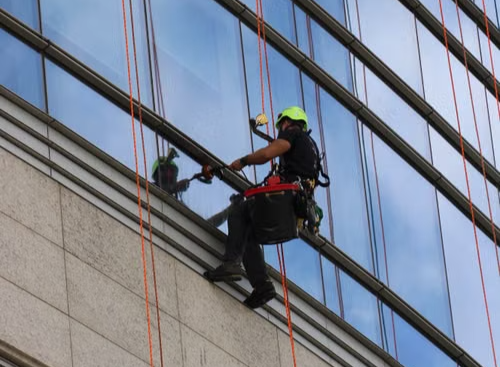
The best way to clean a high-rise building facade is not one method that works for every structure. It is a plan based on the surface material, the type of dirt, and the risks involved. The plan should use the mildest cleaning product that will work-often deionised pure water or a mild pH-neutral detergent-along with controlled equipment suited to the building’s exterior. Instead of using very high pressure or strong chemicals across the whole facade, professional maintenance starts by identifying the dirt, testing small sample areas, and using safe access systems to reach the exterior without causing damage.
High-rise buildings face constant exposure to air pollution, vehicle fumes, acid rain, ultraviolet light, algae, and fungal growth. In busy cities, dirt does more than make a tower look untidy. It can damage sealants, mark glass, and push corrosive substances into porous stone and concrete. Building managers searching on the internet for “How to clean building facades at height?” quickly discover that protecting the building requires knowledge of facade design, chemical handling, and safe work at height.
A good cleaning plan must account for the building materials, weather, and access equipment. A glass curtain wall may respond well to pure-water cleaning with telescopic poles or rope access. Precast concrete or heavily stained limestone may need controlled steam, rotary brushing, or a carefully balanced alkaline cleaner. Choosing the right method helps remove dirt without harming the exterior or putting occupants and the public at risk.
What Are the Best Methods for Cleaning High-Rise Building Facades?
The right facade-cleaning plan starts with identifying the exact type of dirt and the amount of force the exterior can safely handle. City dust, diesel soot, bird droppings, mineral deposits, and tiny biological spores each need a different approach. Using the wrong method can push dirt further into the facade or damage the surface.
Modern building maintenance uses three main groups of methods: water-based cleaning, chemical cleaning, and controlled abrasive cleaning. The usual rule is to begin with the mildest available option. Stronger products or mechanical tools should be used only when gentle water or heat cannot remove the dirt.
How Do Water-Based, Chemical, and Abrasive Cleaning Methods Compare?
Water-based cleaning is usually the gentlest and most environmentally friendly choice for exterior work. It may use hot pressurised water, purified deionised water, or a light mist. These methods loosen dust, bird droppings, and loose particles by breaking the bond between the dirt and the surface. Pure-water cleaning leaves no chemical film, which reduces the chance of quick repeat soiling and creates fewer problems for water collection systems.
Chemical cleaning uses products that range from biodegradable, neutral-pH detergents to special alkaline or acid cleaners. These products can dissolve difficult mineral marks, metal oxidation, and thick carbon deposits. Chemical work needs strict control, since the products may mark nearby glass, weaken silicone joints, or release harmful vapour near fresh-air HVAC intakes.
Abrasive cleaning is the strongest option. It uses controlled materials such as glass beads, fine sponge particles, or sodium bicarbonate to remove graffiti, industrial residue, and thick mineral deposits. Since abrasive methods remove a very thin layer of the surface along with the dirt, they should be limited to hard, unpolished masonry and structural steel. They should be used only when gentler methods have failed.
Why Building Height, Access, and Surface Condition Affect the Choice
Building height creates wind and temperature problems that affect cleaning work. Wind speeds generally increase higher above the ground. Fine spray can become an uncontrolled mist, putting people many floors below at risk. Wind can also dry chemical products before they have enough time to work. Higher areas may be colder and more exposed to freezing and thawing, which reduces the safe period for wet cleaning.
The shape of the building also affects the access method. A simple, straight tower may be suitable for a heavy Building Maintenance Unit (BMU) or a large suspended cradle carrying water tanks and hot-water equipment. Buildings with setbacks, wide overhangs, or delicate sun screens may not support heavy suspended platforms. These sites often need lightweight industrial rope access teams using small, controlled sprayers.
The condition of the facade must also guide the cleaning method. Crumbling concrete, fine cracks, and old brittle seals may fail under a strong water jet. Water could then enter the building and cause serious damage. A worn facade usually calls for low-pressure soft washing, hand brushing in small areas, and a system for collecting and controlling wastewater.
Which Method Is Safest for Glass, Stone, Concrete, and Metal?
Glass and glazed curtain walls should be cleaned with purified water and soft-bristle brushes or non-scratch microfiber sleeves. The surface can then be dried with a squeegee or allowed to dry without leaving marks when deionised water is used. Strong acids, especially hydrofluoric acid and uncontrolled fluorosilicate products, must not be used. They can permanently frost glass, etch its surface, and damage silica or low-emissivity coatings.
Limestone, marble, and travertine contain calcium-based minerals and are very sensitive to acids. A safe approach is to use a long period of light misting to soften carbon deposits, followed by hot water or a buffered alkaline detergent. The pH should be watched and kept between 7.5 and 9.5. Granite and dense slate contain more silica and can accept somewhat stronger mechanical action, provided the impact pressure stays within safe limits.
Concrete panels and polymer-modified render often respond well to temperature-controlled steam or a mild biocide soft wash. These methods can kill mould at its roots without loosening the surface aggregate. Architectural metals, including anodised aluminium and polyvinylidene fluoride (PVDF) coated panels, should generally be cleaned with neutral products between pH 5 and 8 and non-abrasive pads. Strong alkaline products or rough pads can remove anodisation, cancel product warranties, and leave bare metal exposed to fast pitting corrosion.
Which Cleaning Method Suits Each Facade Material?
Modern towers usually have several facade materials rather than one uniform exterior. A single building may include glass, metal panels, flexible joint systems, and decorative stone. Applying an untested product across all of these surfaces can lead to major glazing damage, weakened seals, and discoloured metal.
Facilities teams should create a clear material profile for the building exterior before work begins. Each material reacts differently to water, changes in pH, heat, and abrasion. Separate treatment plans may be needed for different sections of the same building.
Why a Material Inspection Should Come Before Cleaning
Before a technician is lifted onto the building, every exterior face should receive a close visual and physical inspection. This check can reveal hidden problems such as fine cracks, failed joint sealant, nests, loose masonry, and early signs of movement. Dirt can hide these defects. Washing before an inspection may force large amounts of water into insulation spaces or the building interior.
A pre-cleaning survey also lets specialists, such as the team at Rope Access in London, test small areas that are not easy to see. A test can be carried out on every different facade material. These sample areas show how long a product should remain on the surface, how much friction is safe, how quickly the material absorbs water, and whether the proposed process could affect a building warranty. Skipping this step can cause permanent chemical marks, especially on nearby glass.
Glass Curtain Walls and Window Systems
Glass curtain walls need pure-water systems that use several stages of reverse osmosis and deionisation. These systems can reduce dissolved solids to below 20 parts per million (ppm). Ordinary tap water contains minerals such as calcium carbonate, magnesium salts, and chlorides. When tap water dries on glass, it can leave white marks and hard water spots.
Deionised water contains very few dissolved mineral ions. It can draw dust, bird deposits, and vehicle residue away from the glass without strong detergent. Technicians use soft natural or synthetic brushes to loosen the dirt and then rinse the surface with a large flow of pure water. High-pressure spray wands should be kept away from window assemblies because strong water force may loosen structural silicone, damage pressure-equalised drainage holes, or push moisture past EPDM weather seals.
Concrete, Render, and Precast Panels
Precast concrete, glass-fiber reinforced concrete (GFRC), and exterior insulation finish systems (EIFS) have porous or textured surfaces that collect dust and biological growth. High pressure must be used with care. Excessive force can remove the thin cement surface, expose the aggregate, and leave small rough holes where dirt will collect more easily later.
A common method is soft washing with a biodegradable surface detergent and high-temperature, low-pressure steam. Steam may reach 150°C at the nozzle while operating below 50 bar. Heat helps dissolve road oil, diesel soot, and organic material. The facade can then be rinsed with a smaller amount of water, reducing saturation and the chance of trapped damp.
Natural Stone, Brick, and Terracotta
Masonry materials differ greatly in hardness and chemical sensitivity. Porous terracotta and traditional clay brick usually respond best to light misting over several hours. This slowly softens hard pollution deposits before low-pressure rinsing. The method helps protect the original fired surface and lime-based mortar joints.
If a chemical is needed for efflorescence or iron marks, acid-sensitive materials such as limestone and marble should be treated only with alkaline or enzyme-based cleaners. The stone should be fully wetted first so the product does not sink deeply into it. Granite can accept low-strength acidic detergents, but careful neutralising rinses are still needed to protect nearby mortar, fixing clips, and silicone movement joints.
Aluminum, Steel, and Other Metal Cladding
Metal facades may include anodised aluminium, powder-coated panels, corten steel, or stainless-steel ribs. These materials need close pH control. Common industry guidance says that products used on anodised aluminium should stay between pH 5.0 and 8.0. Strong acids and strong alkalis can dissolve the protective anodised layer and cause chalking, fading, and permanent white oxidation marks.
Cleaning teams use mild neutral detergents with microfiber sleeves, hand pads, or low-pressure foam equipment. They then rinse the surface fully with pure water to remove all detergent. Special care is needed around horizontal joints and panel returns. Water can collect in these areas, dry slowly, and leave mineral rings.
Timber Facades and Composite Panels
Timber and modern composite panels, including high-pressure laminates, can be damaged by too much water or rough contact. Fast water jets may split the wood grain, damage the cells, and remove protective microporous coatings. This leaves the material open to rot and warping.
Timber can be cleaned with diluted oxygen-releasing detergents or enzyme products that remove mould, moss, and surface dirt without stripping the wood’s natural lignin. Rinsing should use a wide, low-pressure spray. The timber must dry fully before it is re-oiled, stained, or treated with a water-repellent seal.
How Do Cleaners Reach High-Rise Building Facades?
Reaching the facade safely and in a controlled way is one of the hardest parts of exterior building maintenance. Access systems must deal with great height, changing wind, people and traffic below, and the shape of the building.
The chosen access system affects work speed, setup time, space needed at ground level, and safety controls. Current practice combines permanent roof-mounted equipment with flexible suspension systems that crews can install for a specific project.
Rope Access for Difficult or Limited-Access Areas
Industrial rope access, often called abseiling, is well suited to high-rise buildings with awkward shapes or limited access. Under recognised systems such as those run by the Industrial Rope Access Trade Association (IRATA) and SPRAT, technicians work from two separate ropes. One is the working line and the other is an independent safety line.
Rope access equipment is light, easy to move, and needs very little space at ground level. It lets technicians reach narrow lightwells, deep overhangs, sharp setbacks, and structural soffits that mechanical cradles or hydraulic platforms cannot reach. Rope systems can often be installed and removed within hours, which limits disruption for people inside the building.
Permanent Building Maintenance Units and Davit Systems
Large commercial towers with straight vertical elevations often use permanent Building Maintenance Units (BMUs). These systems may include roof cars that move across the roof, counterweighted telescopic arms, and suspended gondolas or cradles. The equipment is built to lower workers safely over the edge of the building.
Advanced BMUs may include powered cable winches, pneumatic restraint systems that follow guide rails on the facade, and extra material hoists. Glass Hook Replacement Units (GRUs), for example, can lift heavy glass panels during repair work. Roof-mounted davit systems are a smaller option. They use sockets fixed along the parapet to support portable lifting arms.
Temporary Suspended Platforms and Cradles
When a building has no permanent BMU, or when its existing unit is being repaired, a temporary suspended platform can be used. These platforms are often called swing stages. They consist of aluminium cradles hung from strong steel wire ropes. The ropes connect to temporary roof-mounted counterweighted beams or systems clamped to the parapet.
Suspended cradles work well for long facade repair projects and intensive cleaning on buildings below 100 metres. They provide a level working deck with room for several technicians, cleaning products, wastewater tanks, and powered washing equipment. They are most useful on broad, flat elevations where the cradle can move down in straight vertical lines.
Scaffolding for Extensive Repairs and Deep Cleaning
Fixed frame or modular scaffolding is not often used for regular high-rise window cleaning. It remains useful when cleaning is part of major masonry repairs, full sealant replacement, or a complete cladding refurbishment. Scaffolding offers a strong working platform and access to almost every part of the exterior.
A major benefit is that scaffolding can be fully enclosed. Contractors can cover the frame with waterproof monarflex sheeting or fine debris netting. This creates a contained work area that limits spray, holds chemical vapours, and stops loose material or overspray from reaching the street.
Aerial Work Platforms and Cherry Pickers
For lower parts of a tower, such as the podium, mezzanine, and first six floors, mobile elevating work platforms (MEWPs) can provide quick access. These include boom lifts, spider lifts, and truck-mounted cherry pickers. Spider lifts have adjustable outriggers and compact crawler tracks, allowing them to work in courtyards and pedestrian areas where the ground can support only limited weight.
These hydraulic platforms do not need roof rigging. They let workers reach fins, signs, and entrance canopies from below. Their usefulness decreases above about 40 to 60 metres because of the space needed for outriggers, limits on ground loading, and high wind risk when the boom is fully extended.
How Access Equipment Affects Cleaning Time and Cost
Access arrangements often make up the largest part of the cost and schedule for high-rise cleaning. Fixed scaffolding requires major setup work, often including weeks of erection, road permits, and security fencing. This makes it too expensive for simple routine washing. Temporary cradles need less preparation, but they are limited to the speed of their vertical movement.
Rope access usually has the lowest setup cost and can be ready quickly. It is well suited to spot cleaning, small repairs, and fast glass washing. The table below shows the main differences between access systems:
| Access System | Setup Speed & Mobilization | Architectural Versatility | Payload Capacity | Relative Equipment Cost |
| Rope Access (Abseiling) | Rapid (Hours) | Exceptional (Complex geometries, recesses) | Low (Technician and handheld gear) | Low |
| Permanent BMU | Immediate (Built-in) | Moderate (Limited to track/jib reach) | High (Heavy crew, gear, hoists) | High (Capital infrastructure) |
| Temporary Suspended Cradle | Moderate (1-3 Days) | Low to Moderate (Linear vertical drops) | High (Multiple technicians, wash gear) | Moderate |
| Mobile Boom Lift (MEWP) | Fast (Same day) | Moderate (Podiums and lower floors only) | Moderate (2 technicians and tools) | Moderate to High (Daily rental rates) |
| Fixed Scaffolding | Slow (Weeks) | High (Complete manual access envelope) | Very High (Heavy materials, full crews) | Extremely High |
Safety, Training, Permits, and Environmental Controls
Cleaning a facade hundreds of feet above a busy pavement requires careful safety planning. Work at height, heavy rigging, high-pressure water, and cleaning chemicals can all create serious hazards. These risks require legal compliance and close site control.
High-rise cleaning should use backup protection at every stage. Each connection, fall-arrest line, and containment barrier should have a second safeguard to reduce the chance of a dropped object, a fall, or public contact with water and chemicals.
Fall Protection and Rope Access Training Requirements
Anyone working over the edge of a high-rise building must have recognised work-at-height training. Rope access workers are trained and assessed under systems such as IRATA or SPRAT. These systems have three skill levels, with logged working hours required before a technician can move into supervisory work or advanced rigging.
Under IRATA and SPRAT systems, a technician uses two ropes. The main working line supports the worker through the descent equipment. A separate safety line carries an automatic fall-arrest device. Workers use full-body harnesses, approved structural lanyards, and tool bags attached to the harness. Squeegees, pressure wands, and other tools must also be attached with rated lanyards so they cannot fall to the ground.
Equipment Inspections, Rescue Plans, and Worker Protection
High-rise teams follow a formal inspection routine before every use. Anchor slings, carabiners, descenders, pulleys, and ropes are checked before each setup. They also receive recorded third-party LOLER (Lifting Operations and Lifting Equipment Regulations) or OSHA inspections every six months. Equipment with fraying, chemical damage, distortion, or heavy wear must be removed from service.
No work position should be used without a detailed rescue plan for that site. Public fire and rescue services should not be the only rescue option. An on-site supervisor, usually an IRATA Level 3 technician or equivalent, must have the skills and equipment to carry out a partner rescue, tensioned-line extraction, or suspended-cradle evacuation within minutes if a worker becomes injured or unable to move.
How Teams Protect Pedestrians, Vehicles, Landscaping, and Tenants
The risks of facade cleaning affect people below as well as workers on the ropes. Contractors must create a clear exclusion zone at street level. Heavy pedestrian canopies, covered hoarding, and security fencing can redirect people away from falling spray, cleaning residue, and dropped equipment.
Ground teams may use several protective measures:
- Waterproof tarpaulins and plastic covers over public artwork, street furniture, valuable landscaping, and other sensitive items.
- Negative-pressure air seals, sealed fresh-air intakes, and closed louvers to stop chemical mist or vapour from entering ventilation systems.
- Traffic controls that close parking lanes and water barriers that protect vehicles when work takes place above an active road.
Clear warning signs in several languages and ground marshals with two-way radios keep contact with the suspended technicians. Washing should stop at once if a person enters the exclusion zone or a barrier is moved.
Permits, Building Rules, and Local Work-at-Height Regulations
High-rise facade cleaning often requires coordination with local councils, heritage authorities, and building managers. In busy cities, contractors may need road occupancy permits, pavement closure approvals, and airspace permissions before work starts. Drone use and tall hydraulic cranes may also require contact with aviation authorities and transport agencies.
The project must follow local facade and employment rules. Examples include the Work at Height Regulations 2005 in the UK and OSHA 1910 Subpart D/I in the United States. Some cities also require regular facade inspections. New York City’s FISP and Local Law 11 are examples. In these locations, cleaning may need to be planned alongside a certified facade survey so loose or unstable elements are fixed before washing begins.
Water Runoff, Chemical Handling, and Wastewater Disposal
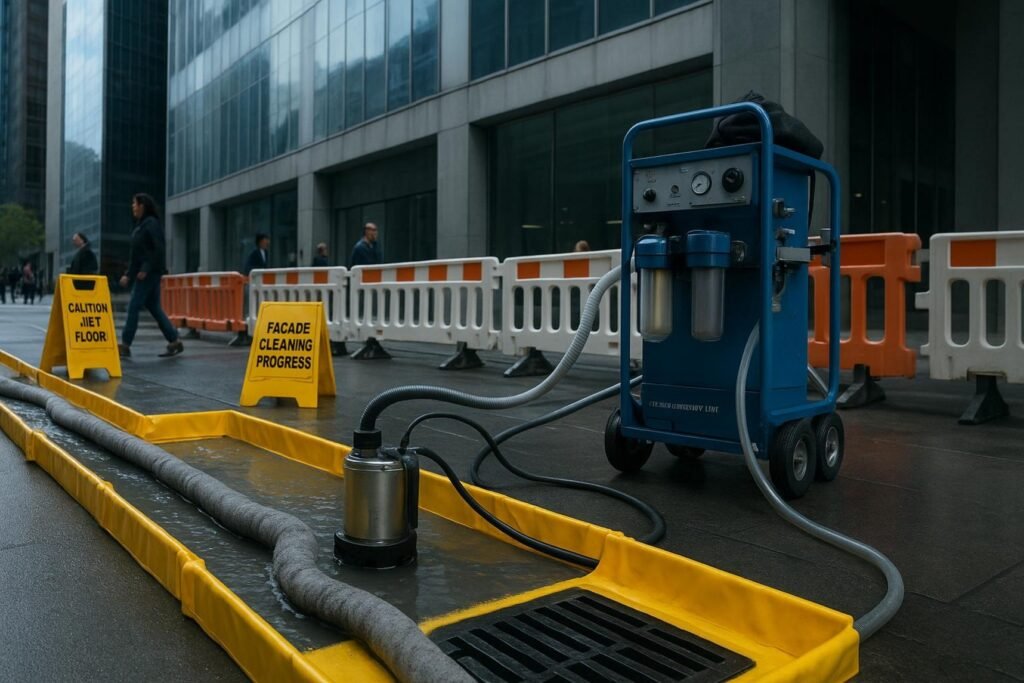
Environmental rules generally ban uncontrolled discharge of facade wash water into storm drains. Storm drains often lead directly to rivers, lakes, or coastal waters. Runoff that contains heavy metals, diesel particles, masonry sediment, or cleaning chemicals can harm the environment. Contractors that fail to collect this water may face large fines and other penalties.
Professional high-rise cleaning teams use several runoff controls:
- Ground drainage points are identified before work. They are covered with waterproof silicone drain mats and magnetic storm-grate seals.
- Containment berms and absorbent booms are placed along the pavement edge to direct wash water into collection points.
- Wet vacuums and submersible pumps collect the water and slurry. Mobile filtration units can remove solids, separate hydrocarbons, and adjust the pH before the water is sent to the sanitary sewer or a licensed waste facility.
High-rise maintenance is also moving toward systems that reuse water. Newer setups combine controlled spray delivery with vacuum-assisted wash heads. These systems can recover more than 85 percent of the water at the facade, clean it, and send it back into use. This lowers water use and reduces the impact on urban drainage and nearby ecosystems.