Introduction
Interest in Ashley Paddock reflects a familiar pattern in online searches: people often want to understand the background, family connections, and personal story of someone whose name has attracted attention. Yet finding reliable information about a person can be more complicated than simply collecting details from search results. Names may be shared by multiple people, online profiles may be incomplete, and repeated claims do not automatically become verified facts.
This guide to Ashley Paddock takes a careful, reader-first approach to the information available about the name. Rather than inventing a birth date, occupation, relationship history, or personal milestone, it explains what readers should establish before accepting a biographical claim. It also explores how identity verification, public records, responsible reporting, and digital privacy help create a more accurate understanding of an individual.
Understanding Ashley Paddock and the Interest in the Name
The name Ashley Paddock can lead readers to search for biographical information, family background, professional activities, and personal history. However, a search query alone does not establish which individual a reader has in mind. Without a reliable identifying detail, such as a confirmed professional profile or a reputable publication mentioning the person, it would be premature to present one particular biography as definitive.
For anyone researching Ashley Paddock, the most useful starting point is to distinguish verified information from assumptions. A trustworthy profile should explain how its central claims were established and should avoid filling gaps with plausible-sounding details. This distinction matters because an accurate biography is not simply a collection of facts; it is an account in which each important statement has a reasonable evidentiary foundation.
Why Readers Search for Personal Biographies
Biographical searches often begin with curiosity about a person’s identity. Someone may have encountered a name in a news article, a professional discussion, a family reference, a social media post, or another online source. The next step is usually to establish who the person is and why the name has appeared in that context. These are reasonable questions, but they require information that connects the name to a specific individual.
Searches for Ashley Paddock may also reflect a desire to understand a person’s background beyond a single mention. Readers commonly look for education, career history, family relationships, achievements, and current activities. Those subjects can help form a coherent personal narrative when supported by evidence. When dependable information is missing, however, a responsible article should explain the limitation rather than transform unanswered questions into supposed biographical facts.
What Can Be Established About Ashley Paddock?
A meaningful biography begins with identity confirmation. The name itself is not sufficient to establish a person’s age, birthplace, nationality, education, profession, or family circumstances. Those details should be connected to an identifiable person through credible sources, not assembled from unrelated profiles that happen to use the same name.
At present, this article does not have enough independently verified biographical evidence to establish a complete personal history for Ashley Paddock. That limitation should be understood clearly rather than hidden behind confident language. It does not mean that relevant information cannot exist; it means that specific claims require appropriate supporting evidence before they can responsibly be included in a published biography.
Ashley Paddock and Carlos Rodón
One of the clearest publicly reported connections associated with Ashley Paddock is her marriage to professional baseball pitcher Carlos Rodón. Sports publications have identified her as his wife and discussed their family life alongside coverage of his baseball career. This connection provides an important starting point for readers who encountered her name while following Major League Baseball or looking into the personal lives of professional athletes.
Although Carlos Rodón competes in a profession that attracts extensive public attention, the circumstances of a spouse’s life should not automatically be treated as public information. Ashley Paddock’s identity should be understood independently of her husband’s statistics, contracts, team changes, and performances. A balanced biography can explain the publicly reported relationship while recognizing that personal interests, private decisions, and everyday family experiences may not be documented in reliable detail.
Quick Biography and Key Facts
Readers often prefer a concise overview before exploring the wider story. The table below separates information reported by sports publications from details that should not be presented as confirmed without stronger evidence. In particular, online biography websites sometimes publish conflicting dates, ages, education details, and family information, making careful verification important when preparing a profile of Ashley Paddock.
The most useful biographical summary emphasizes the relationship that established her public recognition and identifies the limits of available reporting. It avoids presenting estimates as established facts or treating information repeated across several low-quality websites as independent confirmation. This approach provides a more dependable reference for readers interested in Ashley Paddock’s background.
| Biographical detail | Available information |
|---|---|
| Name | Ashley Paddock |
| Publicly reported connection | Wife of Carlos Rodón |
| Spouse’s profession | Professional baseball pitcher |
| Sport associated with her public profile | Major League Baseball |
| Marriage | Sports and biography publications report that the couple married in January 2018 |
| Children | Public reporting identifies the couple as parents |
| Exact date of birth | Not reliably established here |
| Verified age | Not reliably established here |
| Detailed education history | Conflicting online claims require verification |
| Independent professional biography | Limited information verified in the sources reviewed |
| Personal social media | Public reporting includes an Instagram presence associated with the name Ashley Rodón |
| Net worth | No independently verified personal figure established here |
The table is a cautious overview, not an official biography. Dates and family details should be checked against reliable reporting before being used as definitive facts, particularly where different websites disagree.
Early Life and Family Background
The early life of Ashley Paddock receives less consistent coverage than the career of her husband. Some online profiles make claims about her upbringing and home state, but such claims should be evaluated according to their original sources. Without a dependable biographical interview, an authoritative institutional record, or corroborating reporting, it would be inappropriate to describe her childhood, parents, siblings, or family traditions as established facts.
This gap is not unusual for someone whose public recognition comes largely through a relationship with a professional athlete. Many people connected to sports personalities do not maintain public biographies documenting every stage of their lives. For readers researching Ashley Paddock, acknowledging the difference between documented facts and unknown personal history is more useful than filling the gaps with a generic story about family values or childhood ambitions.
Education and College Connections
Education is frequently mentioned in biographies of the spouses of professional athletes because college can be where important relationships begin. Some online articles associate Ashley Paddock with North Carolina State University, while other publications make different or less precise claims about her educational background. These discrepancies mean that a specific degree, graduation year, or university should not be stated as definitive without a reliable supporting source.
The distinction between attending a university and graduating from it is also important. A person may enroll in a program, participate in campus activities, or encounter a future spouse through a shared social circle without completing a particular qualification. A credible profile of Ashley Paddock should preserve those distinctions and avoid turning an unverified connection into a detailed educational timeline.
How Ashley Paddock Became Known to Baseball Fans
The popularity of Ashley Paddock’s name is closely associated with public interest in Carlos Rodón. Professional baseball generates attention that extends beyond game results to include player biographies, family milestones, interviews, and human-interest stories. When a player moves between teams or experiences a particularly memorable season, audiences often become interested in the people who share important parts of his life away from the field.
This does not mean that Ashley Paddock’s own identity can be reduced to her husband’s career. Rather, the connection explains why readers may encounter her name when searching for information about the New York Yankees, MLB players’ families, or Carlos Rodón’s personal life. Responsible coverage should explain this context without inventing an independent entertainment career, business venture, or public achievement that has not been reliably documented.
Ashley Paddock and the Story of Their Relationship
The relationship between Ashley Paddock and Carlos Rodón has attracted interest because it connects family life with the demanding schedule of professional baseball. Coverage of the couple has included their marriage and family milestones, giving readers a glimpse of the personal circumstances surrounding a player whose working life is regularly documented through statistics, interviews, and game coverage.
The available public record does not justify reconstructing every stage of their courtship as though it were a fully documented love story. The exact circumstances of their first meeting, the private conversations that shaped their relationship, and the details of their early dating life should not be guessed. A trustworthy account can acknowledge the reported marriage while leaving intimate or unverified details out of the narrative.
Marriage and Wedding Details
Several sports and biography publications report that Ashley Paddock and Carlos Rodón married on January 6, 2018, in Costa Rica. This date is frequently repeated in online coverage of the couple, although readers should distinguish a detail repeated by secondary sources from one independently confirmed through an official announcement or direct interview.
A wedding date can help establish a timeline, but it does not reveal the full character of a marriage. Details about the ceremony, guests, private vows, or personal decisions deserve careful treatment unless the couple has shared them publicly or a reliable publication has documented them. In writing about Ashley Paddock, the aim should be to provide useful context without turning limited reporting into an embellished account of a private event.
Family Life and Parenthood
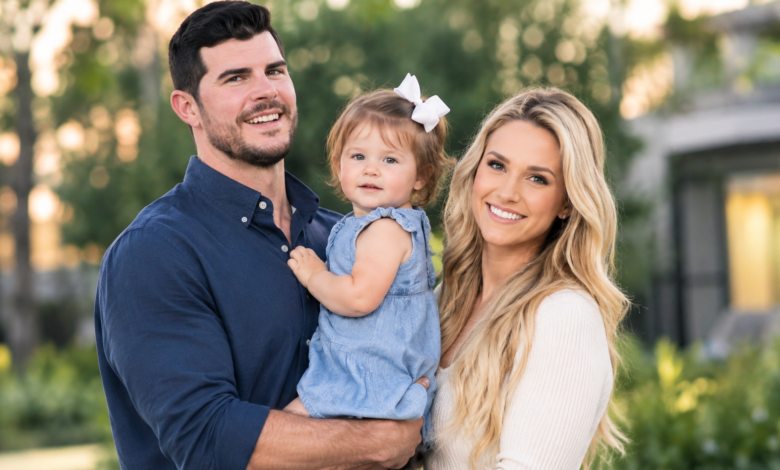
Family life is an important part of the public reporting about Ashley Paddock and Carlos Rodón. Sports coverage has discussed the couple’s experiences as parents, including the arrival of their children. These milestones help explain why people searching for the family may be interested in Ashley beyond her association with baseball.
Parenthood, however, is a personal subject rather than simply another category of celebrity information. A respectful profile should avoid unnecessary details about children’s routines, schools, locations, or private circumstances. The broader context is enough to explain that the couple’s family life forms part of their public story, while recognizing that their children have interests in privacy and a life beyond sports coverage.
Ashley Paddock’s Role in a Professional Athlete’s Life
A professional baseball career involves far more than the time a player spends competing. Players travel, maintain demanding training schedules, manage public expectations, and face changes in performance, health, and employment. Their families may also have to adjust to relocations, lengthy periods away from home, and the unpredictable rhythm of a competitive season.
It is reasonable to discuss these general pressures when explaining the environment surrounding Ashley Paddock and Carlos Rodón. It would be less responsible to claim knowledge of their private household arrangements or to attribute particular career decisions to Ashley without evidence. The distinction matters: explaining the realities of an athlete’s lifestyle provides useful context, while inventing a spouse’s influence creates a narrative that readers cannot independently evaluate.
Understanding the Demands of Major League Baseball
Major League Baseball requires players to sustain performance through a long season that includes regular games, travel, preparation, and recovery. Pitchers face particular physical and tactical demands because their work depends on repeatable mechanics, command, conditioning, and careful management of their throwing workload. Those demands can make the calendar and location of a professional player’s work especially important to family planning.
For the families of MLB players, the season may involve extended road trips and changing routines. Offseason periods can offer different opportunities, although training and other professional responsibilities continue. This context helps readers understand the broader setting in which Ashley Paddock’s family life takes place without assuming that every MLB household follows the same routine or that every family experiences these demands in an identical way.
Carlos Rodón’s Baseball Career and Public Profile
Carlos Rodón’s career is the main reason Ashley Paddock’s name appears in sports-related searches. Rodón has played in Major League Baseball and has been associated with teams including the Chicago White Sox, San Francisco Giants, and New York Yankees. His career has included significant pitching performances and periods of public scrutiny, making his professional journey a recurring subject of baseball reporting.
Understanding that career provides context for the attention surrounding his family, but it should not be confused with evidence about Ashley’s independent professional accomplishments. A spouse’s biography is not automatically a reflection of the athlete’s statistics, salary, or awards. A well-structured article keeps these subjects connected where relevant while maintaining a clear distinction between each person’s individual history.
Public Attention, Injuries, and Personal Resilience
Professional sports can bring intense scrutiny when an athlete experiences injuries, a difficult season, or a change in performance. Baseball coverage may focus on recovery timelines, mechanics, statistics, and expectations, while human-interest reporting sometimes explores the emotional side of those experiences. Stories about the people close to an athlete can help readers understand that competitive careers unfold within a larger human context.
Some reporting about Carlos Rodón has discussed mental health and difficult periods during his career. Those subjects should be presented with attribution and care, rather than used to speculate about Ashley Paddock’s private emotional state or the details of their marriage. The broader lesson is that public performance does not tell the whole story of a person’s life, and neither public attention nor an athlete’s struggles gives outsiders unlimited access to family experiences.
Mental Health and the Importance of Support Systems
Mental health is relevant to discussions of elite sport because athletes face performance pressure, public criticism, injury uncertainty, and demanding schedules. A support system can include family members, teammates, coaches, medical professionals, and trusted friends. The value of that network is not limited to professional athletes; people in many occupations rely on supportive relationships during stressful periods.
Coverage of Ashley Paddock and Carlos Rodón has connected their personal story with discussions of hardship and emotional resilience. Nevertheless, it is important not to present private conversations or medical experiences as established facts unless they have been shared publicly by the people involved. A careful article can recognize the general importance of support without attributing specific psychological effects, treatments, or private decisions to an individual.
A Public Quote and Its Context
A quote can provide a more personal dimension to a biography when it comes from a credible report and is presented in its original context. EssentiallySports published coverage of the couple’s experience around pregnancy and included a statement attributed to Ashley Rodón about the uncertainty that can accompany that period. The brief quotation below illustrates the difference between a reported personal statement and a writer’s assumptions about what someone must have felt.
“I won’t be truly calm until I am holding our baby in my arms.”
The statement should not be used to infer additional medical details or to construct a complete account of the family’s private experiences. Its significance is narrower: it expresses uncertainty during an emotionally important moment. When covering Ashley Paddock, quotes like this are most useful when they preserve the speaker’s meaning, respect the circumstances in which the words were reported, and avoid sensationalizing a deeply personal subject.
Personal Interests and Life Outside Baseball
Readers often want to know what Ashley Paddock enjoys beyond her connection to professional baseball. Questions about hobbies, travel, friendships, education, and personal ambitions are common in celebrity biography searches because they help create a fuller picture of a person. However, the existence of a popular search query does not establish that reliable information about those subjects is publicly available.
A responsible biography should not assign hobbies or personality traits to Ashley Paddock simply because they sound appropriate for a sports spouse. Claims that she is particularly interested in fashion, charitable work, equestrian activities, or another pursuit should be supported by a credible interview, an attributable public statement, or another relevant source. Where evidence is limited, it is better to leave those subjects open than to manufacture a personality profile.
Career and Professional Activities
One recurring question about Ashley Paddock concerns whether she has an independent career. The available sports-focused coverage provides much more information about her relationship with Carlos Rodón than it does about a separately documented professional history. That imbalance makes it difficult to establish an occupation, employer, business portfolio, or list of career achievements with confidence.
This distinction is important because a lack of extensive public reporting is not evidence that someone lacks professional interests or accomplishments. Many people work in roles that receive little media attention, and others intentionally keep their professional lives separate from a spouse’s public profile. Until reliable evidence establishes particular roles or qualifications, readers should avoid treating unverified occupational descriptions as facts about Ashley Paddock.
Is Ashley Paddock Involved in Philanthropy?
Charitable involvement is another topic that can appear in online biographies of athletes and their families. Professional sports communities often participate in fundraising, youth programs, community outreach, and initiatives supporting people facing difficult circumstances. Some activities are organized by teams, while others are personal projects led by individual athletes or their family members.
A specific charitable contribution should be connected to a documented organization, announcement, interview, or event before it is attributed to Ashley Paddock. General statements that someone supports children, mental health, family welfare, or another cause should not be presented as confirmed evidence of personal advocacy without appropriate sourcing. This careful distinction prevents an article from overstating an individual’s public work while still allowing documented charitable contributions to be recognized when evidence becomes available.
Public Image and Media Representation
Public image is shaped by the way a person appears in reporting, photographs, interviews, and online discussions. In Ashley Paddock’s case, the connection with a well-known baseball player has helped make her name searchable, but visibility through another person’s career does not necessarily translate into a large independent media presence. Different outlets may also emphasize different aspects of the same person, depending on whether their focus is sports, relationships, or family life.
Readers should remember that media descriptions are selective. A short article may emphasize a wedding, another may discuss parenthood, and a third may focus on a player’s career. None of these accounts alone establishes the entirety of Ashley Paddock’s personality, priorities, or everyday life. A balanced profile brings together relevant, supportable information while resisting the temptation to turn a handful of public appearances into sweeping conclusions about character.
Ashley Paddock and Social Media
Social media can help readers distinguish between an individual’s own public statements and descriptions written by third parties. Posts shared by a verified or otherwise reliably identified account may provide useful context about events, public appearances, or milestones, especially when the person chooses to discuss those subjects directly. However, a name or photograph on a social platform does not automatically prove that an account belongs to the person being researched.
When looking for information about Ashley Paddock, readers should consider whether an account has a clear connection to credible reporting and whether its content can reasonably be attributed to her. Private accounts, impersonation, reposted photographs, and fan-created pages can all complicate identification. It is also important to remember that a person’s decision not to share personal details publicly is not evidence of secrecy or wrongdoing; it may simply reflect a preference for privacy.
Why Privacy Matters for Athletes’ Families
Professional athletes are public figures, but their partners and children do not necessarily choose the same degree of public exposure. Media interest can bring attention to weddings, family milestones, and public appearances, yet it does not eliminate the need to distinguish between relevant public information and private details. Responsible reporting considers whether a fact genuinely helps readers understand the subject or merely satisfies curiosity at someone else’s expense.
For Ashley Paddock, this distinction is particularly relevant because much of the online interest in her comes from her marriage. A useful biography can explain her public connection to Carlos Rodón without exposing personal information that has no legitimate biographical purpose. Respecting those limits does not make an article less informative; it makes the information that remains more credible and appropriately focused.
Common Misconceptions About Ashley Paddock
One common misconception is that every detail in a biography appearing near the top of search results has been independently verified. Online articles may repeat the same claim from another website, and several pages can therefore appear to corroborate information that originated from a single weak source. Repetition should never be confused with independent confirmation, especially for exact ages, education histories, net worth estimates, and personal milestones.
Another misconception is that a person’s connection to a famous athlete means their own background can be inferred from the athlete’s life. Ashley Paddock’s relationship with Carlos Rodón is a useful identifying detail, but it does not establish her occupation, finances, private beliefs, or personal preferences. A sound profile separates what is publicly documented from what remains unknown and updates its claims when stronger evidence becomes available.
How to Verify Information About Ashley Paddock
The most reliable way to research Ashley Paddock is to begin with sources closest to the original information. A direct interview, a public statement from the people involved, a reputable sports publication, or an official team announcement may provide stronger evidence than an anonymous biography website. For dates and career milestones, a source that identifies where its information came from is generally more useful than a page that simply lists facts without explanation.
It also helps to compare claims across genuinely independent sources and examine whether their dates and details agree. If one website gives a different age, university, marriage year, or number of children than another, the disagreement should be investigated rather than resolved by choosing whichever answer sounds most plausible. This method is particularly important for Ashley Paddock because online profiles vary in their level of detail and reliability.
The Difference Between Public Records and Online Biography Pages
Public records and online biography pages serve different purposes. Certain official records may establish a date, legal event, or professional qualification, depending on what is publicly accessible. A biography website, by contrast, may summarize information from other publications, rely on interviews, or publish details that have not been independently checked. Understanding that difference helps readers assess the strength of a claim before repeating it.
When researching Ashley Paddock, an article should not treat a search-engine listing as proof that every detail on a page is accurate. Even a polished website with a quick-facts table may contain estimates or unsupported statements. The most useful approach is to trace important claims to their original evidence, distinguish confirmed information from reporting that remains uncertain, and avoid including unnecessary private data merely because it can be found online.
Why Online Biographies Sometimes Contain Conflicting Facts
Conflicting biographies can emerge for several reasons. A writer may confuse two people with the same name, copy an outdated article, misinterpret an ambiguous social media post, or rely on another website that never verified its original claims. Errors can then spread as additional publishers reuse the information without checking it independently.
For Ashley Paddock, discrepancies in reported age, education, and personal background are a reason to exercise caution. A reader should not assume that the most detailed profile is automatically the most accurate one. In biographical research, a smaller number of well-supported facts is more valuable than a long list of attractive but uncertain details. Editorial restraint is especially important when information concerns family members who are not themselves public officials or professional entertainers.
The Role of Search Engines in Celebrity Biography Research
Search engines make it easier to discover names, articles, interviews, and public profiles, but their results are not a formal verification system. A page can rank because it matches a query closely, attracts clicks, or has links from other websites. Ranking alone does not establish editorial quality, factual accuracy, or the independence of its sources.
Readers searching for Ashley Paddock should therefore use search results as an entry point rather than as the final authority. The next step is to inspect the actual page, identify its publisher, review the publication date, and determine whether the information is supported by direct evidence. If the source does not explain where a claim came from, the claim should be treated cautiously, particularly when it concerns sensitive family matters or precise biographical details.
Why Accurate Biographical Writing Matters
A biography can influence how readers perceive a real person. An invented occupation, an incorrect educational qualification, or an inaccurate family detail may seem minor on an entertainment website, but it can mislead readers and unfairly shape someone’s public reputation. Accuracy is therefore not simply a technical writing preference; it is a basic responsibility when publishing information about identifiable people.
A strong article about Ashley Paddock should offer context, explain her public connection to baseball, and answer reasonable questions without pretending to know every aspect of her life. Where the evidence is incomplete, a transparent explanation is more useful than a confident guess. That principle also helps a publisher build long-term reader trust because people can see that the article prioritizes factual reliability over exaggerated claims.
Search Intent and What Readers Want to Know
A search for a person’s name often contains several overlapping intentions. Some readers want a quick identity check, others want a relationship or family timeline, and some are looking for an age, career, education, or social media profile. An effective biography should address the most relevant questions early, then provide additional context for readers who want to understand the subject more fully.
For Ashley Paddock, the most clearly supported starting point is her reported marriage to Carlos Rodón and the interest created by his career in professional baseball. Other questions, such as her exact age, independent occupation, or full educational history, require more dependable evidence than a search query alone can provide. A reader-first article makes that distinction easy to understand instead of burying uncertainty under a long list of supposed facts.
What Makes a Biography Useful Rather Than Repetitive?
A useful biography does more than repeat the same name and relationship in every section. It organizes information into meaningful topics, distinguishes facts from context, and explains why a particular detail matters. For example, describing the general demands of an MLB season can help explain the environment surrounding a player’s family, but repeating that a spouse supports an athlete without offering evidence or additional context adds little value.
This is an important consideration when publishing content about Ashley Paddock. Search optimization can help readers discover a page, but keyword repetition cannot compensate for a lack of reliable information. A well-edited profile uses the person’s name where it is natural, varies its phrasing, removes unsupported superlatives, and gives each section a clear purpose. The result is easier to read and more likely to deserve the attention it receives.
Responsible Coverage of Family and Personal Experiences
Personal experiences sometimes become part of public reporting because a person chooses to discuss them in an interview or public statement. When that happens, writers should preserve the original context, avoid sensational language, and refrain from expanding the account with unsupported interpretations. This is especially important for topics involving parenthood, grief, health, and emotional challenges.
In writing about Ashley Paddock, an editor should consider whether a personal detail is relevant and whether the available source supports the proposed wording. A documented statement can be quoted or carefully summarized, but it should not become an excuse to speculate about other events in the person’s life. The most respectful approach recognizes that a public account represents only the information that was shared, not a complete record of someone’s private experiences.
How Ashley Paddock’s Story Fits Into Sports Culture
Sports culture has long included interest in the people surrounding athletes. Fans follow not only the competition but also the stories of preparation, setbacks, relationships, and family milestones that make professional careers feel more human. Team coverage, interviews, documentaries, and social media can all expand the public narrative beyond what happens during a game.
Ashley Paddock’s public association with Carlos Rodón fits within this wider pattern of interest in athletes’ families. However, the popularity of a story does not automatically create evidence for every detail a reader might want to know. A thoughtful account explains the connection to professional baseball while recognizing the limits of available reporting and the difference between public interest and an individual’s obligation to disclose private information.
What Readers Should Remember About Ashley Paddock
The clearest starting point for understanding Ashley Paddock is the publicly reported connection with Carlos Rodón. That connection explains why her name appears in sports-related biographies and articles about MLB families. Reports also discuss their marriage and parenthood, although specific personal details should be checked against dependable sources before being presented as settled facts.
Beyond that foundation, readers should approach detailed claims about her age, career, education, finances, and personal interests with care. Some online profiles provide information that other sources do not confirm, and repetition is not proof. Keeping these limits in mind produces a more balanced understanding of Ashley Paddock and prevents an article from confusing assumptions with established biographical information.
Conclusion
Ashley Paddock is publicly known in sports coverage primarily through her marriage to Carlos Rodón, the professional baseball pitcher. Their relationship and family milestones have drawn attention from readers interested in the personal side of Major League Baseball. Those details provide a meaningful introduction, but they do not establish every aspect of her individual background or private life.
The most reliable way to understand Ashley Paddock is to separate well-supported reporting from unverified online claims. Her exact age, complete education history, independent professional activities, and personal finances should not be presented as facts without credible evidence. By focusing on the documented connection to baseball, treating personal experiences respectfully, and acknowledging where information remains uncertain, readers can gain a clearer picture without being misled by speculation. Ultimately, a responsible biography is not the one that claims to know everything; it is the one that helps readers understand what is known and what still needs verification.
Frequently Asked Questions About Ashley Paddock
Who is Ashley Paddock?
Ashley Paddock is publicly known as the wife of Carlos Rodón, a professional baseball pitcher who has played in Major League Baseball. Sports coverage has discussed their marriage and family life, although detailed information about her independent background remains limited.
Is Ashley Paddock married to Carlos Rodón?
Yes. Sports and biography publications identify Ashley Paddock as Carlos Rodón’s wife and report that they married in January 2018. The couple’s relationship is the main reason her name appears in baseball-related searches.
How old is Ashley Paddock?
A reliably verified date of birth has not been established in the sources reviewed for this article. Some online biographies offer age estimates, but readers should not treat those estimates as confirmed without a dependable source.
Where is Ashley Paddock from?
Some online profiles describe Ashley Paddock as having connections to North Carolina, but her precise birthplace and complete early-life history are not firmly established here. A definitive answer would require stronger biographical evidence.
What does Ashley Paddock do for a living?
The sources reviewed provide more information about Ashley Paddock’s relationship with Carlos Rodón than about an independent professional career. Her occupation should not be stated as fact without reliable documentation of her work or professional activities.
Does Ashley Paddock have children?
Public sports coverage identifies Ashley Paddock and Carlos Rodón as parents. For accurate family details, readers should rely on dependable reporting or statements from the family rather than conflicting or unsourced biography pages.
When did Ashley Paddock and Carlos Rodón get married?
Several online sports and biography publications report January 6, 2018, as the couple’s wedding date. This is a commonly reported date, though an authoritative original confirmation would provide the strongest verification.
Did Ashley Paddock attend college?
Some online biographies associate Ashley Paddock with North Carolina State University, but other profiles contain conflicting educational details. Her precise educational history should therefore be verified before a particular institution, degree, or graduation date is stated as fact.
Is Ashley Paddock active on social media?
Public sports reporting has referenced an Instagram presence associated with the name Ashley Rodón. Readers should verify the identity of any account before attributing posts to her, since similar names and reposted content can create confusion.
What is Ashley Paddock’s net worth?
No independently verified personal net worth figure has been established in the sources reviewed. Estimates published without transparent financial evidence should be treated cautiously, and Carlos Rodón’s professional earnings should not be confused with Ashley Paddock’s individual wealth.
Why is Ashley Paddock searched online?
Interest in Ashley Paddock is largely associated with her marriage to Carlos Rodón and readers’ curiosity about the family lives of professional baseball players. Searches commonly concern her background, relationship, children, and personal history, although not every requested detail is publicly verified.
Is Ashley Paddock a public figure?
Ashley Paddock has a public profile through her association with a professional athlete, but that does not mean every aspect of her life is publicly documented. Her biography should distinguish information reported in reputable sources from private matters and unverified claims.
YOU MAY ALSO READ