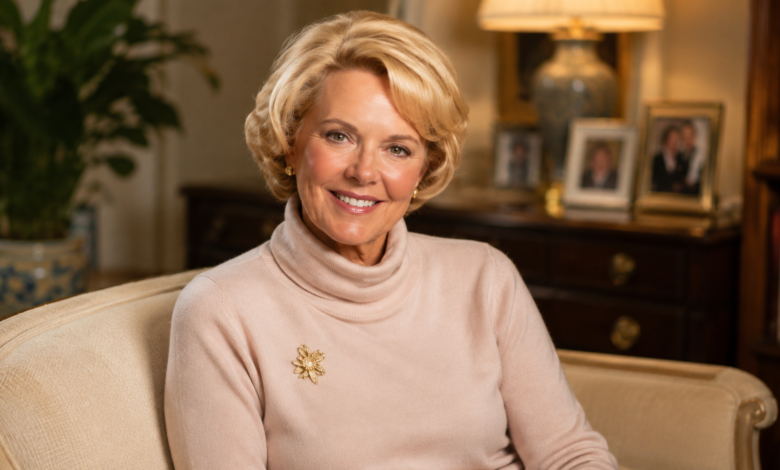
Jane Dobbins Green remains a relatively obscure name in comparison with the towering business legacy of Ray Kroc, the businessman who helped transform McDonald’s from a successful restaurant concept into a global corporation. Yet her story continues to attract attention because her life intersected with Hollywood, American business history, and one of the most important periods in Kroc’s personal life.
The available record about Jane Dobbins Green is considerably smaller than the record surrounding Kroc himself. That makes careful research particularly important. Some details are supported by biographical research and historical accounts, while others appear repeatedly across modern websites without clear primary documentation. This article examines what can reasonably be established about her birth, career, marriage, relationship with Kroc, later life, and historical significance while clearly identifying areas where the evidence remains limited.
Jane Dobbins Green at a Glance
Jane Dobbins Green is primarily remembered as Ray Kroc’s second wife. Historical accounts identify her birth name as Jane Elizabeth Dobbins and place her birth in Walla Walla, Washington, in 1911. One well-sourced account from the Society for American Baseball Research identifies her as the daughter of David and Grace Duncan Dobbins and states that she worked as John Wayne’s secretary before meeting Kroc.
Her marriage to Ray Kroc began in 1963 and ended in 1968. That five-year period overlapped with an extraordinary phase in the development of McDonald’s, although there is no reliable evidence that Jane held an executive or operational position within the company. Later genealogical records associate her with the name Jane E. Dobbins Whitney, and compiled records report that she died in Los Angeles in 2000.
Quick Biography Table
| Category | Best-supported information |
|---|---|
| Birth name | Jane Elizabeth Dobbins |
| Reported birth year | 1911 |
| Reported birthplace | Walla Walla, Washington |
| Parents | David and Grace Duncan Dobbins |
| Reported occupation | Secretary to John Wayne |
| Best known for | Marriage to Ray Kroc |
| Ray Kroc marriage | 1963–1968 |
| Children with Ray Kroc | No reliable evidence of children |
| Later surname | Jane E. Dobbins Whitney |
| Reported death | August 7, 2000 |
| Reported place of death | Los Angeles, California |
| Reported age at death | 88 |
| McDonald’s executive role | No reliable evidence |
| Independent net worth | Not reliably documented |
This table is intentionally conservative because many online profiles present uncertain details as established facts. In particular, precise measurements, detailed personality descriptions, financial estimates, and elaborate accounts of her private life should not automatically be treated as historical fact simply because several websites repeat them.
Who Was Jane Dobbins Green?
Jane Dobbins Green was an American woman whose historical identity became closely connected with Ray Kroc. Kroc was the businessman who played the central role in expanding the McDonald’s franchise system and turning the restaurant brand into a major American and eventually international business. Jane therefore appears in biographies of Kroc even though she did not become a public business personality herself.
The most useful way to understand Jane is as an individual whose life intersected with several influential American worlds. Jane Dobbins Green Her reported work as John Wayne’s secretary placed her near Hollywood, while her marriage to Kroc placed her within the private life of a rapidly expanding businessman. Those associations make her historically interesting, but they should not be confused with evidence that she personally built McDonald’s or maintained a major public career.
The Importance of Her Birth Name
The name Jane Dobbins Green can create confusion because different stages of her life appear under different surnames. Historical and genealogical sources identify her as Jane Elizabeth Dobbins at birth. During her marriage to Ray Kroc, she was known as Jane Dobbins Green, while later records associate her with Jane E. Dobbins Whitney. Understanding those name changes is essential when researching her biography.
This naming issue also explains why searches for Jane Dobbins Green can produce inconsistent results. A researcher looking only for one surname may miss records filed under another. In historical biography, surname changes are not merely technical details; they can determine whether records from different decades are correctly connected to the same person. Later genealogical information is therefore useful, although individual compiled records still require appropriate caution.
Early Life in Walla Walla, Washington
Available biographical research places Jane Elizabeth Dobbins’s birth in Walla Walla, Washington, in 1911. The Society for American Baseball Research account of Ray and Joan Kroc identifies her parents as David and Grace Duncan Dobbins. Some genealogical records provide more detailed names and a precise November 22 birth date, but the broader facts of her 1911 birth and Washington connection are better supported than many of the more detailed claims circulated online.
Beyond those basic facts, very little dependable information survives about Jane’s childhood. Jane Dobbins Green There is no strong public record establishing a detailed account of her education, childhood interests, siblings, ambitions, or formative experiences. That absence should not be filled with invented character traits. A responsible biography recognizes that a limited archive is a limitation of the evidence, not an invitation to create a fictional childhood narrative.
What Is Known About Her Family Background?
Jane’s parents are identified in researched biographical material as David and Grace Duncan Dobbins. Genealogical records sometimes provide expanded versions of their names, including David Warren Dobbins and Grace Myrtle Duncan, although the level of documentation varies depending on the particular database or compiled record being consulted.
Her family background is therefore one of the areas where researchers should distinguish between a documented connection and an elaborate family story. Jane Dobbins Green The basic parental identification is repeated in historical research, but a detailed account of the Dobbins family’s social standing, finances, education, or lifestyle cannot be confidently reconstructed from the accessible evidence. For Jane Dobbins Green, that distinction matters because modern biography sites sometimes turn limited genealogical information into unsupported narratives.
Growing Up in Early Twentieth-Century America
Being born in 1911 placed Jane within a generation that experienced enormous changes in American society. Her lifetime crossed the transition from early twentieth-century America into the age of mass media, modern corporate culture, television, commercial aviation, and large-scale consumer brands. Those historical conditions provide useful context for understanding the world in which her adult life unfolded.
However, broad historical context should not be mistaken for personal biography. We can say that Jane lived through these transformations, but we cannot assume exactly how she experienced them. Jane Dobbins Green Her surviving public record does not provide enough first-person material to reconstruct her opinions about changing gender roles, Hollywood, business, or American culture. That restraint makes the biography more credible rather than less interesting.
Jane Dobbins Green and Her Professional Life
One of the strongest pieces of information about Jane’s professional background is her reported work as John Wayne’s secretary. Ray Kroc identified her in his memoir Grinding It Out as John Wayne’s secretary, and the Society for American Baseball Research also incorporates that occupation into its account of Kroc’s life. This gives the career claim considerably more weight than many of the unsupported details found on biography websites.
The available evidence does not establish precisely how long Jane worked for Wayne or provide a comprehensive description of her responsibilities. A secretary in a major Hollywood environment could have handled correspondence, scheduling, appointments, travel coordination, telephone communication, documents, and confidential administrative work, but those are general possibilities rather than confirmed details about Jane. Her professional identity should therefore remain anchored to what the historical sources actually establish.
Working as John Wayne’s Secretary
The John Wayne connection is significant because it gives Jane an identity independent of her marriage to Ray Kroc. Before her name became associated with the McDonald’s story, she reportedly worked in the professional orbit of one of Hollywood’s most recognizable actors. That position placed her within an entertainment industry that operated through demanding schedules, extensive correspondence, publicity arrangements, travel, and complex personal and professional networks.
At the same time, it would be inaccurate to transform the secretary position into an undocumented Hollywood career. Jane was not an actress simply because she worked for an actor. Jane Dobbins Green There is no reliable evidence in the reviewed sources that she held film credits, produced movies, became a studio executive, or pursued a public entertainment career. The most defensible description remains straightforward: she worked as John Wayne’s secretary before her relationship with Kroc.
Why the John Wayne Connection Matters
The John Wayne connection helps explain why Jane entered the orbit of prominent American personalities before she married Kroc. It also demonstrates how professional networks could connect people from different industries during the mid-twentieth century. Hollywood was not isolated from business, politics, advertising, hospitality, or social networks; people working behind the scenes often interacted with influential figures without becoming famous themselves.
For modern readers, this is an important distinction. Jane’s association with John Wayne does not make her a celebrity in the same sense as Wayne or Kroc. Instead, it shows how a private professional could occupy an interesting place within a famous person’s working environment. Jane Dobbins Green Her story is therefore partly about proximity to fame without becoming fame itself.
How Jane Met Ray Kroc
Accounts of Jane Dobbins Green’s meeting with Ray Kroc describe a remarkably brief courtship. The Society for American Baseball Research account says that Kroc met Jane in California in 1963 and married her on February 23 of that year, only about two weeks after they met. This rapid progression is one of the most striking details in the documented story of their relationship.
The circumstances are particularly notable because Kroc was already an established businessman by this stage. His McDonald’s career had developed dramatically during the previous decade, and his personal life was changing alongside his professional success. Yet the available record gives little insight into the private conversations, emotional dynamics, or motivations that led Jane and Kroc to marry so quickly. Those details remain largely undocumented.
The 1963 Marriage to Ray Kroc
Jane and Ray Kroc married in 1963, making her his second wife. Their marriage lasted until 1968. The timing is historically significant because Kroc was then deeply involved in the continuing expansion of McDonald’s, a business story that would eventually become one of the best-known examples of American franchising and brand development.
Jane’s marriage to Kroc should therefore be understood within two parallel timelines. Personally, it was a five-year marriage between two adults with previous life experiences. Commercially, those same years fell during a formative stage of Kroc’s business career. The overlap creates historical interest, but it does not prove that Jane directly influenced McDonald’s strategy or operations.
Jane and the Expanding McDonald’s Era
When Jane married Ray Kroc, McDonald’s was moving far beyond the scale of the original restaurant operation associated with Richard and Maurice McDonald. Kroc’s contribution involved developing the franchise model, expanding the network, enforcing consistency, and building a recognizable national brand. By the 1960s, the company’s growth was becoming an important part of American commercial history.
Jane lived alongside Kroc during part of that transformation, but the historical record does not identify her as a corporate strategist or McDonald’s executive. This is an important distinction for SEO readers because many online profiles imply that being married to a powerful businessman automatically meant participating in the company’s decision-making. In Jane’s case, there is no reliable evidence establishing such a corporate role.
Did Jane Dobbins Green Work for McDonald’s?
There is no reliable evidence that Jane Dobbins Green held an executive or operational position at McDonald’s. Her connection to the company primarily came through her marriage to Ray Kroc. This distinction is especially important because later websites sometimes blur the line between being the spouse of a business leader and being an employee, executive, investor, or business partner.
A historically responsible account should resist that temptation. Jane’s life is interesting precisely because it demonstrates how an individual can become part of business history through personal association without necessarily being part of the corporate organization itself. Her place beside Kroc during an important era is historically relevant, but it should not be exaggerated into a career that the available evidence does not support.
The J&R Double Arch Ranch Connection
Some accounts of Kroc’s personal life mention properties and ventures carrying Jane’s name, including the J&R Double Arch Ranch. Jane Dobbins Green The appearance of her name in connection with a Kroc-era property is interesting because it shows that she was not entirely absent from the material world surrounding Kroc’s personal life.
Yet a property bearing a person’s name does not automatically prove that person owned, operated, or managed the enterprise independently. Modern biographies sometimes interpret such associations too broadly. Without documentation showing Jane’s managerial responsibilities, financial control, or operational role, it is safer to describe the ranch as a Kroc-era property associated with her name rather than claim that she personally ran a major business.
The Pie-Shop Story
Another detail associated with Jane concerns a short-lived pie-shop concept. Jane Dobbins Green Recent historical accounts mention a Kroc-era pie venture connected with her name. Such details are potentially valuable because they show that Kroc’s business interests were not limited to the core McDonald’s brand and that Jane’s name appeared in some of the ventures surrounding him.
However, the evidence does not establish that Jane personally operated the pie business as an entrepreneur. This is an important example of how a small factual detail can become distorted through repetition. A careful article can acknowledge the venture while avoiding the unsupported conclusion that Jane was a professional restaurateur or business executive.
A Common Confusion: Jane or Joan?
One of the most persistent problems in online information about Jane Dobbins Green is confusion between Jane and Joan Kroc. Ray Kroc’s third wife, Joan Beverly Kroc, had a very different story and eventually became a major philanthropist. Joan was also the woman Kroc encountered while she was playing the organ at the Criterion restaurant in St. Paul in 1957.
That restaurant-musician story belongs to Joan, not Jane. Jane Dobbins Green Historical research specifically distinguishes the two women and identifies Joan Smith as the musician Kroc met years before his marriage to Jane. Keeping these identities separate is essential because otherwise facts from Joan’s biography can accidentally be transferred into Jane’s biography, creating a completely inaccurate account.
Jane Dobbins Green and Joan Kroc Compared
| Topic | Jane Dobbins Green | Joan Kroc |
|---|---|---|
| Relationship to Ray Kroc | Second wife | Third wife |
| Marriage period | 1963–1968 | 1969–1984 |
| Known pre-marriage connection | Reported John Wayne secretary | Musician/organist |
| Public profile | Relatively private | Much more publicly documented |
| McDonald’s historical association | Through Kroc’s personal life | Through marriage and later philanthropy |
| Major philanthropic record | Not established | Extensive |
| Common confusion | Sometimes confused with Joan | Sometimes incorrectly merged with Jane’s story |
The distinction is more than a matter of names. Joan became a major public figure in philanthropy after Kroc’s death, while Jane’s historical record is comparatively limited. Treating them as interchangeable produces false claims about careers, personality, dates, and accomplishments.
Why Jane Is Often Overlooked
Jane is overlooked partly because Ray Kroc’s biography is dominated by business history. Books, documentaries, corporate histories, and articles naturally concentrate on the creation and expansion of McDonald’s. Personal relationships are often included only when they directly affect the larger business narrative.
Her relative obscurity also reflects the absence of an extensive public record in her own voice. Jane Dobbins Green Unlike famous executives who left interviews, speeches, books, and corporate correspondence, Jane does not appear to have built a public persona around her marriage or career. That makes her difficult to research, but it also means modern writers should avoid treating silence as evidence of a particular personality.
“The absence of a public record is not the same thing as the absence of a life.”
That principle is particularly useful when studying people who became historically visible primarily because they were connected to famous figures. Jane’s limited documentation does not make her unimportant; it simply changes how confidently her biography can be reconstructed.
What Her Story Reveals About Famous Spouses
The story of Jane Dobbins Green illustrates a broader problem in celebrity biography: spouses are frequently reduced to labels. A person becomes “the wife of,” “the husband of,” or “the ex-spouse of” a famous individual, and the rest of the biography gradually disappears. Jane’s case demonstrates why that approach can be misleading.
Her professional history as a reported Hollywood secretary existed before her marriage to Kroc. That fact matters because it establishes that her adult identity did not begin when she met a famous businessman. Even though the surviving record is incomplete, acknowledging her earlier professional life creates a more balanced understanding of who she was.
Her Place in Ray Kroc’s Personal Timeline
Ray Kroc’s marriages form an important part of his personal biography. He was first married to Ethel Fleming, then married Jane in 1963, and later married Joan Mansfield Smith, who became Joan Kroc. Jane therefore occupies the middle position in a sequence that is frequently summarized too quickly in biographies of Kroc.
Her five-year marriage occurred between Kroc’s first marriage and his much longer relationship with Joan. That chronology is essential because it prevents the common error of placing Jane and Joan into the same period. Jane was Kroc’s second wife, while Joan became his third wife after the end of his marriage to Jane.
What Happened to the Marriage?
Jane and Ray Kroc’s marriage ended in 1968. The relationship therefore lasted approximately five years, although the precise private circumstances surrounding their separation should be treated carefully. Modern profiles often describe the end of the marriage through Kroc’s renewed relationship with Joan Smith, but the available sources do not provide a complete first-person account from Jane explaining her own perspective.
This is one of the most important places to separate chronology from interpretation. We can establish that the marriage ended in 1968 and that Joan later became Kroc’s third wife. We should be much more cautious about assigning motivations, emotions, blame, or private conversations unless those details are supported by reliable historical evidence.
The Role of Joan in the Later Kroc Story
Joan Smith became Joan Kroc and eventually developed a significant public identity of her own. Her philanthropy, charitable giving, and connection to the later Kroc legacy are extensively documented. That public legacy sometimes overshadows the woman who occupied the second-wife position before her.
For researchers interested in Jane Dobbins Green, this creates a useful lesson: the fame of a later spouse can reshape the way an earlier spouse is remembered. Jane did not disappear from history because she lacked a life; she became less visible because Kroc’s later years, marriage, and philanthropic legacy generated a much larger documentary footprint.
Did Jane Have Children With Ray Kroc?
There is no reliable evidence in the reviewed sources establishing that Jane and Ray Kroc had children together. Many modern biographies simply state that there were no children, while some broader profiles provide little information about family life at all.
Because family information can be incomplete in public records, the most responsible formulation is that no reliable evidence has been identified showing children from the marriage. It is better to state the limits of the available record than to invent family details or repeat an unsupported genealogy as definitive.
Jane’s Life After Ray Kroc
Jane’s life after her divorce from Kroc is one of the least documented portions of her biography. This is an important fact in itself. While Kroc continued to receive extensive attention because of McDonald’s, Jane largely disappeared from the mainstream historical narrative after their marriage ended.
Later records reportedly connect Jane with Paul Donald Whitney, and some genealogical material identifies her later as Jane E. Dobbins Whitney. A 1984 marriage is reported in several modern accounts, but the supporting documentation available through public online biographies is not as extensive as the records surrounding her Kroc marriage.
Jane Dobbins Green and the Name Whitney
The later surname Whitney is especially important for researchers trying to trace Jane’s final years. A person who searches only for Jane Dobbins Green may assume that information disappears after 1968, when in reality later records may use a different surname.
This is a common challenge in historical genealogy. Marriage changes can fragment an individual’s documentary trail across newspapers, public records, genealogical databases, cemetery information, and family records. Jane’s later identity as Jane E. Dobbins Whitney helps connect the later part of her life to the earlier Jane Dobbins records, although not every online genealogy entry should be accepted without verification.
Jane’s Reported Death in 2000
Compiled genealogical records and multiple modern biographies report that Jane died on August 7, 2000, in Los Angeles County, California. Based on the commonly reported November 22, 1911 birth date, she would have been 88 years old.
The basic death information appears consistently enough to be useful, but claims about her exact cause of death should be treated more cautiously. Some online profiles describe natural causes or old age, yet a reliable death certificate or authoritative obituary would be preferable before presenting a specific medical explanation as fact. The historical record is strongest on the date and location rather than the cause.
Where Was Jane Buried?
Several modern accounts associate Jane with Westwood Memorial Park in Los Angeles. A user-maintained Find a Grave memorial has also been cited in connection with her later identity and burial. Such cemetery references can be helpful for genealogical research, but they should not automatically be treated as equivalent to an official cemetery register.
The Westwood area is historically significant because the cemetery contains the graves and memorials of numerous prominent entertainment-industry figures. Jane’s reported burial there fits with the Los Angeles setting of her later life, but the burial detail remains somewhat less firmly documented than her basic birth, marriage, and death chronology.
Jane Dobbins Green’s Age
The most commonly reported dates place Jane’s birth in 1911 and death in 2000, producing an age of 88. Jane Dobbins Green Some online sources disagree about the precise birth date, but the broader 1911–2000 lifespan appears repeatedly in researched and genealogical accounts.
Age is one of the easiest biographical facts to calculate, but even here researchers should distinguish between an exact date and a reported year. If the November 22, 1911 date is correct, then she was 88 when she died in August 2000. If a source establishes only the year 1911, then “88” is still a reasonable calculation based on the commonly reported dates, but the exact birthday should be attributed appropriately.
Was Jane Dobbins Green Wealthy?
There is no reliable public financial record that establishes Jane’s independent net worth. This is an area where online celebrity-biography sites frequently go too far, assigning specific dollar amounts without showing financial statements, probate records, settlement documents, or other evidence.
It is reasonable to assume that Jane’s marriage to Ray Kroc connected her to a wealthy household during part of her life. It is not reasonable to convert Kroc’s wealth into Jane’s personal net worth. Wealth within a marriage can involve property rights, trusts, settlements, inheritance arrangements, and separate assets, none of which can be accurately reconstructed from Kroc’s estimated fortune alone.
Did Jane Receive Money From Ray Kroc?
The financial terms of Jane and Kroc’s divorce are not sufficiently documented in the reviewed sources to provide a trustworthy settlement amount. Websites sometimes publish specific figures, but without primary legal or financial documentation those claims should be considered unverified.
This is an important distinction for readers searching for “Jane Dobbins Green net worth.” A trustworthy biography should not manufacture a number merely because the keyword is popular. The correct answer is that her independent wealth is not reliably documented in the accessible historical record, and Kroc’s fortune cannot be used as a substitute for Jane’s personal financial information.
Did Jane Have an Independent Career?
Jane’s reported work as John Wayne’s secretary demonstrates that she had an occupation before marrying Kroc. Jane Dobbins Green Beyond that, the available evidence does not provide enough information to construct a detailed career history.
There is no strong basis for describing her as a corporate executive, professional entrepreneur, McDonald’s manager, actress, or major public business figure. Her professional record appears much more limited in the surviving sources. That does not diminish her work; it simply means the biography should not claim achievements that cannot be substantiated.
Jane Dobbins Green in Popular Culture
Jane’s absence from popular portrayals of Ray Kroc’s life is notable. The 2016 film The Founder, which dramatizes Kroc’s rise and relationships, focuses heavily on other parts of his personal and professional story and does not give Jane a substantial role. This omission can make modern audiences assume that Kroc’s second marriage was insignificant.
Historical visibility, however, is not determined solely by movies. Jane Dobbins Green Film adaptations simplify complicated timelines, combine events, emphasize particular characters, and remove others for narrative reasons. Jane’s limited presence in popular culture therefore should not be interpreted as proof that she was unimportant during her own lifetime.
Why Online Profiles Often Contradict Each Other
Searching for Jane Dobbins Green produces an unusual mixture of reasonably sourced information and highly repetitive claims. Several websites copy or paraphrase the same basic facts, while adding details about personality, appearance, career, wealth, or family without demonstrating where those details originated.
This creates a classic “citation echo” problem. A fact can appear on ten websites and still trace back to one weak source. Search visibility is not the same thing as historical reliability. For this reason, the strongest approach is to prioritize memoirs, researched biographies, reputable historical organizations, genealogical records, and primary documents where available.
The Difference Between Evidence and Repetition
One of the most useful lessons from researching Jane is the distinction between corroboration and repetition. If five websites repeat the same claim but all copied it from one another, they do not provide five independent confirmations.
A stronger fact pattern occurs when different types of evidence point in the same direction. For example, the identification of Jane as John Wayne’s secretary is strengthened because it appears in Kroc’s memoir and in a researched historical account. By contrast, precise claims about personality or private finances often lack that kind of independent confirmation.
A Responsible Research Method for Jane’s Biography
A reliable biography of Jane should begin with the strongest documented anchors: her birth identity, reported birthplace, professional connection to John Wayne, marriage to Kroc, divorce, later surname, and reported death. These anchors create a chronological framework without requiring speculation.
Researchers can then examine weaker claims separately. If a website says Jane had a specific occupation, financial amount, physical measurement, or personality trait, the next question should be simple: what is the original source? If no primary or reputable secondary evidence can be identified, the detail should either be qualified or excluded. Jane Dobbins Green This approach produces a biography that is less sensational but far more trustworthy.
A Chronological View of Jane’s Life
| Period | Historical development |
|---|---|
| 1911 | Reported birth of Jane Elizabeth Dobbins in Walla Walla, Washington |
| Early adulthood | Limited surviving public information |
| Before 1963 | Reported work as John Wayne’s secretary |
| February 1963 | Marriage to Ray Kroc |
| 1963–1968 | Marriage to Kroc during major McDonald’s expansion |
| 1968 | Marriage to Kroc ended |
| Later years | Records associate her with the Whitney surname |
| 1984 | Reported later marriage involving Paul Donald Whitney |
| 2000 | Reported death in Los Angeles |
| After 2000 | Continued historical interest through Kroc biographies and online research |
This timeline highlights an important feature of Jane’s story: the best-documented period is not necessarily the longest period of her life. Her early years and later decades remain comparatively difficult to reconstruct, while her five-year marriage to Kroc generates disproportionate historical attention.
What Makes Jane Historically Interesting?
Jane is historically interesting because her life intersects with two highly recognizable strands of twentieth-century American culture: Hollywood and fast-food business history. Her reported work for John Wayne connects her to entertainment, while her marriage to Kroc connects her to the expansion of McDonald’s.
Yet the deeper interest lies in the contrast between fame and documentation. Jane was close to famous people without becoming a public celebrity herself. Her biography shows that historical significance can emerge from proximity, relationships, and timing even when an individual leaves relatively little public material behind.
Jane and the Changing Role of Women
Jane’s working life also belongs to a broader period in which women occupied increasingly diverse professional roles while still encountering strong social expectations around marriage and domestic life. Jane Dobbins Green Working as a secretary in Hollywood was a skilled administrative position, particularly when serving a prominent professional whose schedule and communications required organization and discretion.
Still, it would be speculative to claim that Jane personally represented a particular feminist philosophy or social movement. Her individual views are not sufficiently documented. What can be said is that her life unfolded during a period of substantial change in women’s employment and social roles, and her reported career provides one small example of women working within the professional structures of mid-century America.
The Private-Person Problem
Writing about a person who was never a major public celebrity requires a different editorial standard from writing about a movie star or politician. Jane did not create a large public archive explaining her life, opinions, relationships, or ambitions. Much of what survives comes through people and institutions around her.
That means privacy itself should be respected as an evidentiary boundary. If a detail cannot be verified, it should not be presented merely because it makes the story more colorful. This approach is particularly valuable in biographies of celebrity spouses, where speculation can quickly become indistinguishable from fact after repeated publication.
Jane’s Relationship With Fame
Jane’s life demonstrates an unusual relationship with fame. She reportedly worked for John Wayne, then married Ray Kroc, meaning that two of the most recognizable American personalities of their respective industries became part of her life story.
But fame by association does not necessarily produce public visibility. Jane did not become a major media personality, publish a widely known memoir, or build a public philanthropic organization. Her story therefore exists mostly in the shadows of the people around her, which makes the surviving fragments all the more important.
What Can We Learn From Her Story?
The first lesson is that historical biography requires restraint. When documentation is thin, the goal is not to fill every blank but to identify what is known, what is plausible, and what remains uncertain. Jane’s biography is a good example of why those categories should remain separate.
The second lesson concerns identity. Jane was more than the label “Ray Kroc’s second wife.” Her reported career preceded the marriage, and her life continued afterward. Even though the available record is incomplete, a good biography should preserve that chronological independence rather than define an entire person through one relationship.
Common Myths About Jane Dobbins Green
One common misconception is that Jane was the musician Ray Kroc met at the Criterion restaurant. That woman was Joan Smith, his future third wife. Another misconception is that Jane had a major executive position at McDonald’s. There is no reliable evidence supporting that claim.
Another recurring problem involves net worth. Kroc was extremely wealthy, but his fortune does not establish Jane’s personal wealth. Similarly, claims about a specific divorce settlement should not be treated as fact without documentary support. The safest and most accurate biography keeps these distinctions visible rather than presenting speculation as certainty.
Why the Keyword “Jane Dobbins Green” Remains Relevant
The search interest surrounding Jane Dobbins Green reflects a broader pattern in online biography. People often become curious about lesser-known relatives, spouses, former spouses, or associates of famous individuals because mainstream biographies leave unanswered questions.
Searchers are usually looking for straightforward information: Who was she? When was she born? What did she do? How long was she married to Ray Kroc? Did she have children? What happened after the divorce? When did she die? Answering those questions accurately is more valuable than manufacturing dramatic details that the evidence cannot support.
How Jane Fits Into Ray Kroc’s Legacy
Ray Kroc’s legacy is usually discussed through franchising, standardization, branding, restaurant operations, and the global growth of McDonald’s. His personal relationships receive less attention because the business story is so dominant.
Jane’s place in that legacy is therefore primarily chronological and personal. She was Kroc’s second wife during a crucial phase of his business career. Jane Dobbins Green That connection makes her relevant to a complete biography of Kroc, but it does not make her responsible for the development of McDonald’s. Understanding that distinction allows her story to be included without distorting the history of the company.
Jane’s Story Compared With Kroc’s Public Image
Kroc cultivated a strong public identity as an ambitious entrepreneur. His memoir and subsequent biographies helped establish a narrative centered on persistence, salesmanship, opportunity, and business expansion.
Jane left no comparable public narrative. Consequently, much of what readers know about her comes through the narrative framework surrounding Kroc. This creates an inherent imbalance: his voice is extensive, while hers is largely absent. A modern biography should recognize that imbalance instead of assuming that Kroc’s perspective fully explains Jane’s life.
The Historical Value of a Limited Record
A limited record can still be valuable. The fact that Jane appears in multiple independent historical and genealogical contexts allows researchers to establish a basic chronology even though many details remain missing.
Her biography demonstrates how historical reconstruction works. Researchers connect names, dates, occupations, marriages, memoir references, genealogical entries, and later records. The goal is not to create a complete story where none exists, but to build the most accurate story possible from the surviving evidence.
What Future Research Could Clarify
Future research could potentially clarify Jane’s early education, complete employment history, pre-Kroc marriages, divorce arrangements, later marriage, estate, and burial records. Primary documents such as marriage certificates, census records, newspaper archives, probate files, and official death records could provide stronger evidence than many modern biography pages.
Researchers could also investigate John Wayne’s archival records to establish more precisely when Jane worked as his secretary and what her professional responsibilities were. Such research would help move her biography beyond the narrow framework of “Ray Kroc’s second wife” and toward a more complete account of her own adult life.
Why Accuracy Matters for SEO Biography Content
Biography content often competes heavily for search traffic, encouraging publishers to add every available detail. That strategy can create a misleading impression of authority when the information is actually based on repeated low-quality claims.
A better SEO strategy is to build topical authority through accuracy, context, semantic completeness, and transparent sourcing. For a subject such as Jane, the strongest article is not the one with the most sensational claims. It is the one that answers the reader’s questions while clearly distinguishing documented information from uncertain or disputed details.
A Practical Fact-Checking Framework
When evaluating a claim about Jane, first ask whether it appears in a primary source. If not, look for a reputable biographical or historical source that cites its evidence. Then determine whether independent sources actually corroborate the claim rather than merely repeating identical wording.
The final step is proportional language. A well-supported fact can be stated directly. A plausible but incomplete claim should be qualified. An unsupported claim should be omitted. This framework is especially useful for birth dates, occupations, marriages, children, financial information, causes of death, and personal characteristics.
What We Know With Reasonable Confidence
The strongest available evidence supports several core points: Jane was born Jane Elizabeth Dobbins in Washington State in 1911; she was reported to have worked as John Wayne’s secretary; she married Ray Kroc in 1963; their marriage ended in 1968; and later records associate her with the Whitney surname. Her reported death occurred in Los Angeles in 2000.
Those facts provide a coherent biography without requiring speculation. They also explain why Jane continues to appear in searches related to Ray Kroc, McDonald’s history, John Wayne, celebrity spouses, and twentieth-century American business culture.
What Remains Uncertain
Several commonly published details remain less secure. These include extensive descriptions of her personality, exact professional duties, independent net worth, precise divorce settlement, detailed childhood experiences, and some claims about her later personal life.
The appropriate response to uncertainty is not to ignore the subject but to label the evidence accurately. Historical writing becomes stronger when readers can see where the record ends. In Jane’s case, the gaps are part of the story and should be acknowledged rather than concealed.
The Broader Lesson of Jane’s Biography
Jane’s biography offers a useful reminder that historical importance is not always accompanied by extensive documentation. Some people become visible because of their work, while others become visible because their lives intersect with powerful institutions or famous individuals.
Her story also demonstrates why biographies should preserve individuality. Calling someone “Ray Kroc’s second wife” identifies the relationship, but it does not describe the whole person. Jane had a birth identity, a professional history, relationships before and after Kroc, and a life that continued beyond the five years for which she is most often remembered.
Final Assessment of Her Legacy
Jane’s legacy is best understood as a small but distinctive thread within a much larger American story. Her reported work for John Wayne connects her with Hollywood, while her marriage to Ray Kroc places her within the personal history of the man who helped build McDonald’s into a global brand.
She did not become a major corporate figure or philanthropist in the public record available today. Instead, her significance comes from the intersection of private life and public history. That makes her biography less conventional than the story of a celebrity or executive, but no less worthy of careful documentation.
Conclusion: The Life Behind the Name
Jane Dobbins Green was more than a name appearing between Ray Kroc’s first and third marriages. She was born Jane Elizabeth Dobbins in Walla Walla, Washington, reportedly worked as John Wayne’s secretary, and married Kroc in 1963 during an important period in the growth of McDonald’s. Their marriage lasted until 1968, after which her public documentary footprint became considerably smaller.
The most responsible account of Jane recognizes both the facts and the gaps. She should not be confused with Joan Kroc, the musician who became Kroc’s third wife, and her name should not be used as a shortcut for unsupported claims about wealth, corporate leadership, personality, or private relationships. Later records associate her with Jane E. Dobbins Whitney and report her death in Los Angeles in 2000.
Ultimately, the enduring interest in Jane comes from the unusual intersection of her life with two iconic American figures. Yet her story is valuable precisely because it reminds us that people connected to famous individuals deserve to be examined as individuals. The historical record may never reveal every detail of her life, but the evidence that survives provides a meaningful outline of a woman whose path crossed Hollywood and one of the defining business stories of twentieth-century America.
Frequently Asked Questions
Who was Jane Dobbins Green?
Jane Dobbins Green was an American woman best known as Ray Kroc’s second wife. She was born Jane Elizabeth Dobbins and was reportedly employed as John Wayne’s secretary before marrying Kroc in 1963.
When did Jane Dobbins Green marry Ray Kroc?
Jane Dobbins Green married Ray Kroc in 1963. The Society for American Baseball Research reports February 23, 1963, as the wedding date, and the marriage ended in 1968.
How long were Jane Dobbins Green and Ray Kroc married?
Jane Dobbins Green and Ray Kroc were married for approximately five years, from 1963 until 1968. Their marriage occurred during a major period of expansion in Kroc’s McDonald’s business career.
Did Jane Dobbins Green work for John Wayne?
Yes. Jane Dobbins Green is identified in Ray Kroc’s memoir and researched historical accounts as John Wayne’s secretary. The available record does not establish the exact length or detailed responsibilities of that employment.
Was Jane Dobbins Green the musician Ray Kroc met in Minnesota?
No. That story belongs to Joan Smith, who later became Joan Kroc. Jane and Joan are frequently confused in online biographies, but historical research distinguishes them clearly.
Did Jane Dobbins Green have children with Ray Kroc?
No reliable evidence has been identified showing that Jane Dobbins Green and Ray Kroc had children together. Public biographies generally do not identify children from their marriage.
Did Jane Dobbins Green have a role at McDonald’s?
There is no reliable evidence that Jane Dobbins Green served as a McDonald’s executive or held an operational position in the company. Her connection to McDonald’s history comes primarily through her marriage to Ray Kroc.
What was Jane Dobbins Green’s net worth?
Jane Dobbins Green’s independent net worth is not reliably documented. Estimates based on Ray Kroc’s fortune should not be presented as her personal wealth because the financial circumstances of their marriage and divorce are not sufficiently documented.
When did Jane Dobbins Green die?
Available genealogical and biographical records report that Jane Dobbins Green, later associated with the name Jane E. Dobbins Whitney, died on August 7, 2000, in Los Angeles County, California.
How old was Jane Dobbins Green when she died?
If the commonly reported November 22, 1911 birth date and August 7, 2000 death date are correct, Jane Dobbins Green was 88 years old when she died. The exact birth date is less firmly documented than the broader 1911 birth year.
Was Jane Dobbins Green featured in The Founder?
Jane does not have a substantial role in the 2016 film The Founder, which focuses on Ray Kroc’s rise and other major elements of his personal and business history. Her limited representation in popular culture contributes to her relative obscurity.
Was Jane Dobbins Green married before Ray Kroc?
Historical research indicates that Jane had been married before meeting Kroc, and one researched account says she had been married three times previously. However, the complete sequence and documentation of those earlier marriages are not as firmly established as her marriage to Kroc.
Did Jane Dobbins Green marry again after Ray Kroc?
Later genealogical records associate Jane with the name Jane E. Dobbins Whitney, and modern accounts report a marriage involving Paul Donald Whitney in 1984. The later-life record is less extensively documented than her marriage to Kroc.
Where was Jane Dobbins Green born?
Jane Dobbins Green, born Jane Elizabeth Dobbins, is reported to have been born in Walla Walla, Washington, in 1911.
What is the most important fact about Jane Dobbins Green?
The most important fact is that Jane was an individual with a life and professional history of her own, not merely a footnote to Ray Kroc. Her documented connection to John Wayne, her marriage to Kroc, and her later life provide a meaningful but incomplete portrait of a woman who lived through major changes in American culture and business.
YOU MAY ALSO READ