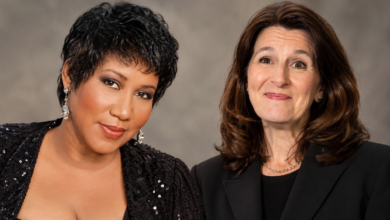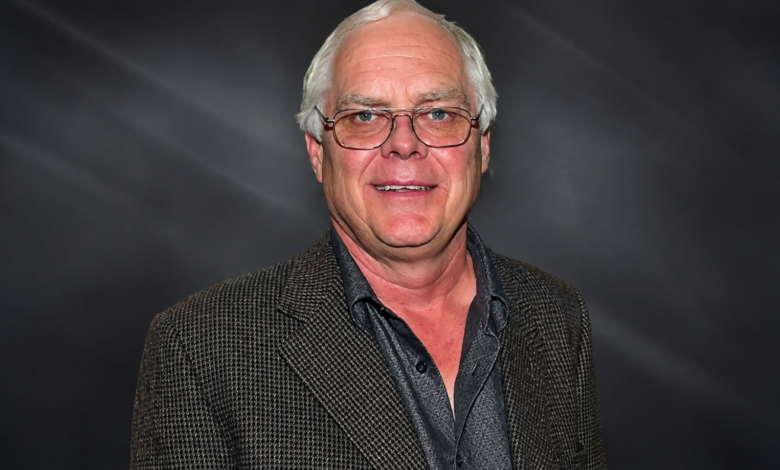
Michael Tell is a fascinating figure whose life became connected to Hollywood history through a remarkably brief marriage to actress Patty Duke and, decades later, through the discovery that he was the biological father of actor Sean Astin. Yet the story of Michael Tell goes well beyond those two famous names. He was also a concert promoter, newspaper publisher, journalist, and a longtime member of the Las Vegas community whose professional life was largely separate from Hollywood.
For many years, searches for Michael Tell focused almost entirely on the mystery surrounding Sean Astin’s parentage. That is understandable, but it creates an incomplete picture. Tell spent much of his adult life working in music and community journalism, eventually becoming closely associated with the Las Vegas Israelite, a publication founded by his parents. His story therefore sits at an unusual intersection of entertainment, journalism, family history, and personal privacy.
Who Was Michael Tell?
Michael Tell was an American concert promoter, journalist, and newspaper publisher whose name became internationally recognizable because of his relationship with Patty Duke and his biological connection to Sean Astin. While popular biographies often reduce him to “Patty Duke’s ex-husband,” that description leaves out a substantial part of his professional life. He worked in the music business, participated in the development of Las Vegas entertainment culture, and later became a prominent figure in the local Jewish press. The University of Nevada, Las Vegas preserves an oral-history interview with Tell that describes him as the youngest son of Jack and Beatrice Tell and the second-generation publisher of the Las Vegas Israelite.
The public image surrounding Michael Tell is therefore more complicated than the celebrity headlines suggest. His marriage to Duke lasted only 13 days in 1970, yet the relationship eventually became historically significant because Sean Astin was later confirmed as Tell’s biological son. At the same time, Tell maintained a professional identity that did not depend on Hollywood. His later work in Las Vegas journalism gave him a community role that continued for decades and ultimately became an important part of the Tell family legacy. The newspaper itself describes his tenure as lasting about 40 years.
Early Life and Family Background
Michael Tell was born into a family connected to journalism and Jewish community life. His parents, Jack and Beatrice Tell, became important figures in the development of Jewish publishing in Nevada. According to the UNLV oral-history archive, Tell traced his family roots to Eastern European grandparents who had settled in New Jersey and New York. He also recalled receiving a traditional Jewish upbringing and becoming a bar mitzvah in a Conservative Jewish synagogue in New York.
His teenage years helped shape the direction of his later career. At 16, Michael Tell accompanied his father westward as Jack Tell pursued newspaper opportunities in Nevada. The family eventually settled in Las Vegas, where Jack became involved with local journalism and later founded the Las Vegas Israelite with Beatrice in 1965. This environment exposed Tell to publishing, local reporting, community relationships, and the practical side of running a newspaper long before he became known through Hollywood.
Michael Tell and the Las Vegas Israelite
One of the most important aspects of Michael Tell’s career was his long association with the Las Vegas Israelite. The publication was founded by his parents in 1965 and became a long-running English-language newspaper serving the Jewish community of Southern Nevada. After his father’s death in 1979, Tell took over the publication, continuing the family business and helping preserve its role as a community institution.
The newspaper’s present-day website describes the publication as the only Jewish-English newspaper in Las Vegas and emphasizes the continuity of the Tell family legacy. That detail is important because it changes how his life should be understood. Michael Tell was not simply a celebrity-adjacent personality who disappeared after a famous marriage. He became a second-generation publisher who spent decades documenting and serving a particular community, making journalism a central part of his adult identity.
His Career as a Concert Promoter
Before journalism became the dominant part of his professional life, Michael Tell explored the entertainment industry. His UNLV oral history records his early involvement in concert promotion and notes that he opened a teen nightclub called the Twin Lakes Twist in 1961. This experience placed him inside the rapidly changing entertainment culture of the period, when youth-oriented music venues and live performances were becoming increasingly important to American popular culture.
The concert-promoter side of Michael Tell is often overshadowed by the Patty Duke story, but it provides valuable context. He was not a random outsider who happened to marry a famous actress. He already had connections to entertainment and music before his name became associated with Duke. His experience in promotion also helps explain why later descriptions of him frequently identify him as a music promoter as well as a publisher. His professional interests crossed two worlds: entertainment and community journalism.
Michael Tell and Patty Duke
The relationship between Michael Tell and Patty Duke became one of the most unusual chapters in both of their biographies. Duke was already a major Hollywood star, famous for her Academy Award-winning performance in The Miracle Worker and for The Patty Duke Show. By 1970, however, her personal life had become complicated, and she was navigating overlapping relationships and intense public attention. During this period, she became involved with Tell.
The marriage was extraordinarily brief. Sources consistently report that Michael Tell and Duke married in June 1970 and that the union ended after only 13 days. Encyclopedia.com records the marriage as occurring in June and later being annulled, while accounts based on Duke’s autobiography describe the decision as an impulsive one made during a highly turbulent period.
Why Did Michael Tell and Patty Duke Marry?
The circumstances surrounding the marriage are important because the union cannot be understood simply as an ordinary Hollywood romance. Duke was pregnant and was uncertain about the identity of the baby’s biological father. Later accounts indicate that the marriage was connected to her desire to provide her unborn child with a recognized family name. The situation was further complicated by the intense media scrutiny surrounding her relationships at the time.
Patty Duke later described the period as emotionally unstable and acknowledged that the marriage was not the result of a conventional, long-established romantic relationship. This context matters when evaluating Michael Tell because many internet biographies portray the marriage as a sensational celebrity event without explaining the personal circumstances behind it. The historical record instead suggests a rushed decision occurring during an exceptionally complicated moment in Duke’s life.
How Long Was the Marriage?
The marriage between Michael Tell and Patty Duke lasted just 13 days, making it one of the shortest widely remembered celebrity marriages. The pair married in June 1970 and the marriage was annulled in July. The precise dates are sometimes presented slightly differently by secondary sources, but the 13-day duration is consistently reported across biographies and later coverage.
The short marriage might have disappeared into Hollywood trivia if not for what happened afterward. Duke was pregnant with the child who would become actor Sean Astin, and uncertainty about the child’s paternity continued for years. That meant a marriage lasting less than two weeks eventually became connected to one of the more unusual parentage stories in modern American entertainment history.
The Birth of Sean Astin
Sean Astin was born on February 25, 1971, in Santa Monica, California, to Patty Duke. At the time, the identity of his biological father was uncertain and became the subject of different claims over the years. Duke initially associated his paternity with actor John Astin in her autobiography, while she later told Sean that Desi Arnaz Jr. was his biological father. Neither account ultimately proved genetically correct.
The eventual discovery made Michael Tell central to Sean Astin’s family history. A DNA test conducted in the 1990s established that Tell was Sean’s biological father. This was particularly significant because John Astin, who married Duke in 1972, had adopted Sean and raised him as his son. The distinction between biological parentage and the person who actually performs the role of a parent became a recurring theme in Sean Astin’s public comments about his family.
The Sean Astin Paternity Mystery
The paternity story surrounding Sean Astin is unusual because several different family relationships existed simultaneously. Before the DNA confirmation, Sean grew up believing John Astin was his father. John had married Patty Duke and became an important parental figure in Sean’s childhood. Meanwhile, Desi Arnaz Jr. remained emotionally significant to Sean even after genetic testing established that he was not Sean’s biological father.
The eventual DNA result did not erase those relationships. Instead, it added another person to the family story. Sean has publicly expressed affection for John Astin, Desi Arnaz Jr., Michael Tell, and his stepfather Michael Pearce, emphasizing that family can be defined by love and experience as well as genetics. That perspective is especially important when discussing Michael Tell because the biological connection was only one part of Sean’s understanding of fatherhood.
What Did the DNA Test Reveal?
The DNA testing performed in the 1990s changed the public understanding of Sean Astin’s parentage. According to accounts of the family history, Sean underwent testing after meeting a relative of Tell who suggested that Tell could be his biological father. Testing involving the relevant men ultimately established that Michael Tell was Sean’s biological father.
The result resolved a question that had existed since before Sean’s birth. It also demonstrated why assumptions based on timing, marriage, or public statements can be unreliable when biological parentage is uncertain. The story became a notable example of how modern genetic testing can overturn decades-old family assumptions. For Sean, however, the discovery was not simply a scientific answer; it was also an opportunity to understand another branch of his family history.
Michael Tell and Sean Astin’s Relationship
After the paternity discovery, Michael Tell and Sean Astin developed a relationship. The connection appears to have been handled with considerable sensitivity because Sean already had an established bond with John Astin, the man who had raised him. Rather than replacing one father with another, the discovery allowed Sean to acknowledge multiple important paternal relationships. Contemporary reporting quoted Sean describing the men in his life as different kinds of fathers.
That distinction offers one of the most meaningful insights into Michael Tell’s legacy. His importance to Sean was biological, but the relationship did not need to compete with John’s role as a parent. Sean’s ability to maintain affection for several father figures shows how complicated family structures can still produce strong emotional bonds. The story also illustrates why labels such as “real father” can be too simplistic when describing a person’s lived family experience.
John Astin, Michael Tell, and Desi Arnaz Jr.
John Astin, Michael Tell, and Desi Arnaz Jr. occupy very different places in Sean Astin’s family history. John was the man who married Patty Duke and helped raise Sean. Tell was Sean’s biological father. Arnaz was once believed by Duke and Sean to be Sean’s biological father and nevertheless remained emotionally important to him. The three relationships demonstrate that genetics, legal status, and emotional connection do not always point to the same person.
Sean’s own comments have consistently reflected that complexity. One frequently cited statement captures the distinction clearly: “John Astin is my father, Michael Tell is my biological father.” That short sentence explains why a complete biography should avoid treating Michael Tell as a replacement for John Astin. The two men had different relationships with Sean, and both became part of his life in different ways.
Michael Tell’s Professional Life Beyond Hollywood
It is easy to assume that Michael Tell spent his entire life living in the shadow of Patty Duke, but his later career tells a different story. His work as a newspaper publisher became an important long-term commitment. The Las Vegas Israelite continued the work begun by his parents and gave Tell a platform for covering the people, organizations, events, traditions, and issues affecting the Jewish community in Southern Nevada.
His professional trajectory is especially interesting because it moved from entertainment toward community journalism. Concert promotion placed him in a world built around performers and audiences, while publishing required long-term relationships with readers, advertisers, writers, and local institutions. The transition illustrates a broader truth about careers: a person’s most visible association is not necessarily the same as the work that occupied most of their adult life.
The Las Vegas Jewish Community
Michael Tell’s connection to Las Vegas journalism was closely tied to the development of Jewish community life in Southern Nevada. His family’s newspaper served as a specialized source of information for readers who wanted coverage centered on Jewish culture, events, organizations, traditions, and community affairs. The publication’s continuing existence demonstrates that the project was larger than any one publisher.
This community role gives the story of Michael Tell a dimension that celebrity biographies often overlook. A local newspaper can function as a historical record, preserving names, celebrations, institutional changes, community debates, and personal milestones that may not receive attention from mainstream media. By helping continue his family’s publication, Tell participated in that long-term process of community memory and documentation.
Michael Tell as a Second-Generation Publisher
The University of Nevada, Las Vegas oral-history collection provides particularly useful context for understanding Michael Tell as a publisher. The archive identifies him as the youngest son of Jack and Beatrice Tell and the second generation of ownership of the Las Vegas Israelite. It also records his memories of moving west with his father and becoming involved in both the newspaper world and concert promotion.
That firsthand source is valuable because it shifts the narrative away from speculation. Rather than relying only on celebrity websites, readers can see how Tell described his own professional background and family history. The oral-history format also captures an important aspect of his identity: he belonged to a family that built a community publication and then carried that responsibility into another generation.
A Useful Timeline of Michael Tell’s Life
| Period | Event | Why It Matters |
|---|---|---|
| Childhood | Grew up in the Tell family | His family background connected him to journalism and Jewish community life |
| Age 16 | Traveled west with his father | Helped introduce him to Nevada and his family’s publishing ambitions |
| 1961 | Became involved with a teen nightclub | Demonstrated his early interest in music and entertainment |
| 1965 | His parents founded the Las Vegas Israelite | Created the family publication that later became central to his career |
| 1970 | Married Patty Duke | Brief Hollywood marriage brought him national attention |
| 1971 | Sean Astin was born | Created the family connection that later became a paternity mystery |
| 1972 onward | Duke married John Astin | John became an important parental figure in Sean’s upbringing |
| 1979 | Tell became associated with the next generation of newspaper ownership | His publishing career became increasingly central |
| 1990s | DNA testing identified him as Sean Astin’s biological father | Resolved decades of uncertainty about Sean’s paternity |
| 2018 | Participated in a UNLV oral-history interview | Preserved firsthand information about his family and career |
| 2025 | Passed away | Closed a long life that extended far beyond his Hollywood connection |
The timeline shows why a biography focused only on the 1970 marriage gives an incomplete impression. The Hollywood episode occupied a tiny fraction of his life, while journalism, publishing, music promotion, and Las Vegas community involvement occupied much more of his adult years. The archival record is particularly helpful because it documents parts of his life that are otherwise easy to miss in celebrity-focused coverage.
What Michael Tell Did After the Marriage
After the annulment, Michael Tell largely moved away from the kind of celebrity attention that had surrounded his relationship with Patty Duke. Unlike many people connected to Hollywood, he did not build a public career around the marriage. His subsequent life was much more closely connected to Las Vegas, publishing, music, and community activity than to the entertainment press. This relative privacy is one reason reliable information about his personal life can be harder to find.
The contrast is striking. His 1970 marriage created a dramatic headline, but his decades-long career was comparatively quiet. That pattern makes his story a useful reminder that public visibility and personal significance are not the same thing. For most of his life, Michael Tell was better understood through his work and community connections than through the celebrity relationship that initially made his name recognizable.
Michael Tell’s Private Nature
A major challenge in researching Michael Tell is separating documented facts from repeated internet claims. Numerous websites recycle the same basic details about his marriage, family, and career, sometimes adding unsupported claims about personality, wealth, relationships, or private circumstances. Such details should be treated cautiously unless they can be connected to a credible source.
The strongest available material tends to come from archival sources, established publications, and direct statements from people involved. The UNLV oral-history interview is particularly valuable because it records Tell speaking about his own background. The Las Vegas Israelite’s memorial notice is another important primary source because it reflects how his family and professional community remembered him.
Michael Tell’s Age and Death
Michael Tell was born on March 1, 1945, according to the memorial notice published by the Las Vegas Israelite. The same publication records his death in April 2025, while later reporting from the Las Vegas Review-Journal also identified him as an 80-year-old longtime publisher and community figure. The available sources therefore place his lifespan at approximately eight decades.
His death is significant because it closes the life of a person whose public identity had changed dramatically over time. He began in entertainment and music promotion, became involved in family publishing, and remained associated with Las Vegas journalism for decades. His passing also prompted renewed interest in the parts of his life that had been overshadowed by his brief marriage and his son’s Hollywood career.
The Date of Michael Tell’s Death
The Las Vegas Israelite memorial page records Michael Tell’s death as April 6, 2025, while other published sources, including reporting cited in later biographies, have given April 9, 2025. Because the sources are not perfectly consistent, the safest approach is to acknowledge the discrepancy rather than present an uncertain date as an uncontested fact. His death occurred in April 2025 at age 80.
This is a useful example of why online biographies should be cross-checked before publication. A small difference in a date may seem insignificant, but authoritative SEO content should distinguish between verified information and details reported differently by different sources. For readers researching Michael Tell, transparency is more useful than false precision.
His Legacy in Las Vegas Journalism
Michael Tell’s strongest long-term professional legacy is arguably connected to the Las Vegas Israelite. The newspaper remains part of the Tell family story and continues to describe itself as a publication serving the Jewish community of Southern Nevada. The current publication specifically remembers Tell as a longtime publisher and says that his family intends to continue the newspaper’s work.
That legacy matters because community newspapers preserve a different kind of history from national media. They record ordinary lives, local institutions, celebrations, cultural traditions, and community relationships. In that sense, Michael Tell’s contribution cannot be measured only by fame. His work helped maintain a publication whose value came from sustained service to a particular audience over generations.
Michael Tell’s Connection to Sean Astin’s Career
The connection between Michael Tell and Sean Astin naturally attracts attention because Astin became a highly recognizable actor. He is known for roles including Mikey Walsh in The Goonies, Samwise Gamgee in The Lord of the Rings trilogy, and Bob Newby in Stranger Things. His career has therefore made his family history interesting to audiences who may never have heard of the Las Vegas Israelite.
However, it is important not to reduce Astin’s career to his parentage. The fact that Michael Tell was his biological father is a significant biographical detail, but Astin’s professional achievements span decades and include acting, directing, producing, and other creative work. The family connection explains part of his background; it does not by itself explain his career.
Common Misconceptions About Michael Tell
One common misconception is that Michael Tell was primarily famous because he was Patty Duke’s husband. That is true from a popular-culture perspective, but it is not an adequate description of his professional life. He had an independent career in music promotion and publishing, and his association with the Las Vegas Israelite lasted far longer than his marriage to Duke.
Another misconception concerns Sean Astin’s family. Saying that Tell “replaced” John Astin is inaccurate. DNA established Tell as Sean’s biological father, but John Astin raised Sean and remained his father in the emotional and parental sense. Sean himself has repeatedly acknowledged the distinction, demonstrating that biological fatherhood and lived fatherhood can coexist without one invalidating the other.
Why the Michael Tell Story Still Attracts Attention
The story continues to attract attention because it combines several themes that naturally interest readers: Hollywood fame, a very short marriage, an uncertain pregnancy, disputed paternity, DNA testing, and a famous actor’s unusual family history. Each element would be interesting by itself; together they create a narrative that remained relevant for decades.
There is also a deeper reason for the enduring interest. The story challenges the idea that family history is always simple or linear. A person can have a biological father, an adoptive or legal father, and other people who function as father figures. Sean Astin’s experience demonstrates that identity can include all of those relationships at once, which gives the story relevance beyond celebrity gossip.
How Reliable Sources Change the Biography
Researching Michael Tell requires source evaluation because many online pages repeat information without demonstrating where it originated. A stronger biography prioritizes archival records, established journalism, direct interviews, and the family’s own publications. The UNLV archive, for example, provides a firsthand interview conducted in 2018, while the Las Vegas Israelite offers direct information about his role in the publication and his death.
This approach also helps avoid unnecessary speculation. Details about private relationships, finances, personality, or personal habits should not be presented as fact merely because they appear on multiple low-quality websites. Repetition is not the same as verification. A trustworthy Michael Tell biography should clearly separate established facts from claims that remain uncertain or poorly documented.
Michael Tell and Patty Duke’s Larger Legacy
Patty Duke’s life was far larger than her brief relationship with Michael Tell. She became an Academy Award-winning actress, television star, author, and advocate. Her later marriage to John Astin lasted many years, and she eventually married Michael Pearce. Her public career and advocacy work became a major part of American entertainment history.
Even so, the Tell chapter remains important because it sits at a turning point in Duke’s life. The pregnancy, the short marriage, and the uncertainty about paternity influenced the family structure that followed. Michael Tell’s role was brief in terms of time but consequential in terms of the family history that emerged from it.
What Makes Michael Tell Historically Interesting?
Michael Tell is historically interesting because his life demonstrates how a person can become famous for something that represents only a tiny part of his actual biography. For most readers, the first association is Patty Duke. A closer look reveals a career in music promotion, a long publishing career, a family newspaper, a connection to Las Vegas Jewish community history, and a later relationship with his biological son.
His story also illustrates the value of archival research. The most revealing information about his career does not come from celebrity gossip but from a university oral-history collection and the publication his family built. Those sources provide a fuller picture of a man who was both connected to Hollywood and largely independent of it.
The Difference Between Fame and Legacy
Fame is often measured by how many people recognize a person’s name, but legacy can be measured by what remains after public attention fades. Michael Tell’s fame came largely from a short marriage and a family connection to a famous actor. His legacy, however, includes decades of publishing and community involvement.
That distinction makes his biography more meaningful. The marriage to Patty Duke lasted 13 days, while his association with the Las Vegas Israelite lasted decades. The first created headlines; the second created continuity. Looking at both together produces a more balanced understanding of Michael Tell and avoids turning an entire lifetime into a single celebrity footnote.
What Readers Should Know About His Family
Michael Tell’s family history includes several generations of journalism and community involvement. His parents, Jack and Beatrice Tell, founded the Las Vegas Israelite, and Michael continued the publication as a second-generation owner. The newspaper’s current materials emphasize that the family legacy continues through later generations.
His connection to Sean Astin adds a separate branch to that family story. Sean became one of the best-known members of the extended family through his acting career, while Michael remained comparatively private. The result is an unusual family narrative in which one generation is strongly associated with community journalism and another with international entertainment.
Michael Tell’s Importance to Sean Astin’s Identity
For Sean Astin, discovering Michael Tell’s biological connection was not simply a piece of trivia. It gave him information about his genetic background and added another relationship to an already complicated family structure. Yet Sean did not treat biology as the only definition of fatherhood. His public comments show appreciation for John Astin, Desi Arnaz Jr., Michael Tell, and other father figures in his life.
This is arguably the most human part of the story. The discovery did not require Sean to erase his childhood or rewrite every relationship he had known. Instead, it expanded his understanding of where he came from. That makes the Michael Tell story less about a dramatic “secret father” revelation and more about how people can integrate new information into an existing sense of family.
Michael Tell’s Career in Context
The career of Michael Tell makes more sense when viewed against the changing media environment of the second half of the twentieth century. He experienced the era of live music promotion, local newspapers, community publishing, and eventually the transformation of media by digital technology. His professional life therefore crossed several different media models.
That adaptability is significant. Music promotion depends on events, personalities, and audiences, while newspaper publishing depends on information, trust, and continuity. Moving between those worlds required different skills, but both involved understanding communities and communicating with audiences. His career demonstrates how entertainment and journalism could overlap in the regional media landscape of his generation.
Why His Newspaper Work Deserves More Attention
The newspaper side of Michael Tell’s biography deserves greater attention because it represents the part of his career that endured. The Las Vegas Israelite was not merely a short-lived personal project. It became an established community publication with a history stretching from the 1960s into the present. The current publication continues to identify the Tell family as central to its legacy.
Community publishing can be less visible than national journalism, but its influence can be unusually deep. A specialized publication may become the place where readers find announcements, cultural coverage, local history, celebrations, and stories that larger outlets ignore. By continuing his parents’ work, Michael Tell helped maintain that form of community communication for decades.
The Enduring Mystery Around His Life
Even with archival material available, parts of Michael Tell’s personal life remain relatively private. That is not necessarily a problem to solve. In fact, the limited documentation is itself informative because it shows that he did not spend his later decades continually seeking publicity from his connection to Patty Duke or Sean Astin.
A responsible biography should resist the temptation to fill those gaps with speculation. There is value in saying that certain details are not publicly documented. In an internet environment where repeated claims can quickly become accepted as fact, acknowledging uncertainty is a sign of stronger research rather than weaker storytelling.
Michael Tell’s Lasting Place in Popular Culture
In popular culture, Michael Tell will probably remain connected to three ideas: Patty Duke, Sean Astin, and the unusual 13-day marriage. Those associations are unlikely to disappear because they form part of a fascinating Hollywood family history that has been discussed for decades.
Yet a fuller historical view adds another layer. He was also a Las Vegas publisher and community journalist, a music promoter, and a member of a family that built a long-running Jewish newspaper. His popular-culture identity and professional identity are therefore very different, and understanding both is essential for anyone searching for a complete account of his life.
Frequently Asked Questions About Michael Tell
The most common questions about Michael Tell usually concern his marriage to Patty Duke, his connection to Sean Astin, his professional career, and the final years of his life. The answers below separate established information from areas where public records are less certain. This is especially important because many online biographies repeat conflicting details without explaining their sources.
For readers researching the subject, the strongest evidence comes from archival material, established reporting, direct interviews, and the Las Vegas Israelite itself. The University of Nevada, Las Vegas oral-history collection provides unusually valuable firsthand information about his family background, early entertainment work, and publishing career.
Who was Michael Tell?
Michael Tell was an American concert promoter, journalist, and newspaper publisher. He became widely known through his brief 1970 marriage to Patty Duke and later through the discovery that he was Sean Astin’s biological father. His long-term professional identity was strongly connected to the Las Vegas Israelite.
Was Michael Tell Patty Duke’s husband?
Yes. Michael Tell and Patty Duke married in 1970, but the marriage lasted only 13 days before it was annulled. The relationship occurred during a complicated period in Duke’s personal life and became historically important because she was pregnant at the time.
How long were Michael Tell and Patty Duke married?
Michael Tell and Patty Duke were married for 13 days. Their extremely short union became one of the best-known details associated with both biographies, although it represented only a very small portion of Tell’s much longer life and career.
Is Michael Tell Sean Astin’s biological father?
Yes. DNA testing conducted in the 1990s established that Michael Tell was Sean Astin’s biological father. Sean had previously believed that John Astin or Desi Arnaz Jr. might be his biological father, but genetic testing ultimately resolved the question in Tell’s favor.
Who raised Sean Astin?
John Astin played the major parental role in raising Sean after marrying Patty Duke. John adopted Sean, and Sean has continued to describe him as his father while also recognizing Michael Tell as his biological father.
Did Michael Tell and Sean Astin have a relationship?
After Sean learned the results of the paternity testing, he developed a relationship with Michael Tell. Sean’s comments indicate that he viewed Tell as one of several important paternal figures rather than as someone who erased the role played by John Astin.
What did Michael Tell do for a living?
Michael Tell worked in entertainment and journalism. His early career included concert promotion, while his later professional life centered on publishing the Las Vegas Israelite, the Jewish community newspaper founded by his parents.
What was the Las Vegas Israelite?
The Las Vegas Israelite is a long-running English-language Jewish newspaper serving Southern Nevada. It was founded by Jack and Beatrice Tell in 1965, and Michael Tell later became its second-generation publisher. The publication continues under later members of the Tell family.
When did Michael Tell die?
Michael Tell died in April 2025 at age 80. The Las Vegas Israelite memorial notice gives April 6, while other reporting has cited April 9, so the exact date should be treated cautiously unless referring to a specific source.
How old was Michael Tell when he died?
Michael Tell was 80 years old when he died in 2025. The Las Vegas Israelite memorial notice lists his birth date as March 1, 1945, while later reporting also identifies him as 80 at the time of his death.
Was Michael Tell a musician?
The available evidence identifies Michael Tell primarily as a concert promoter rather than a recording musician. His early entertainment work included running a teen nightclub and promoting concerts, activities that connected him to the music business.
Did Michael Tell seek Hollywood fame?
There is little evidence that Michael Tell built his later career around Hollywood publicity. After his brief marriage to Patty Duke, his professional life became much more closely associated with Las Vegas publishing and community journalism. His long-term career was therefore largely independent of his celebrity connection.
Why is Michael Tell still famous?
Michael Tell remains known because his name is connected to Patty Duke and Sean Astin. The combination of a 13-day celebrity marriage and a later DNA discovery confirming his biological relationship to a famous actor created a story that continued to attract public interest for decades.
Conclusion
Michael Tell’s biography is much richer than the familiar headline about a 13-day marriage to Patty Duke. His life included early work in music promotion, a family history rooted in journalism, decades as a publisher of the Las Vegas Israelite, and a complicated but ultimately meaningful connection to Sean Astin. The Hollywood chapter made his name famous, but it was not the whole story.
The most important fact about Michael Tell may be the contrast between public perception and private reality. To much of the world, he was Patty Duke’s brief husband and Sean Astin’s biological father. To the Las Vegas community, he was a longtime publisher and journalist who helped continue his family’s newspaper. To Sean Astin, he became one part of a larger family story that also included John Astin and Desi Arnaz Jr.
His story also demonstrates why responsible biography requires more than repeating popular claims. Archival sources show that Tell had a substantial professional identity outside Hollywood, while Sean Astin’s own statements provide context for the complicated question of fatherhood. The result is a portrait of a man whose most famous connection lasted only days, while his professional and community contributions lasted for decades.
Ultimately, Michael Tell belongs to an unusual category of historical figures: people who became famous because of a relationship but whose real lives were considerably broader than that relationship. His connection to Patty Duke and Sean Astin will remain the easiest way to identify him, but his work in music promotion and Las Vegas journalism deserves equal consideration. Remembering both sides produces a more accurate, balanced, and human biography.
YOU MAY ALSO READ