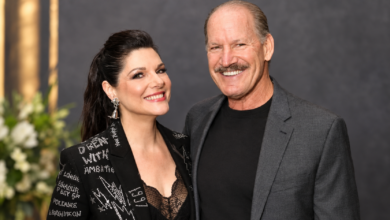
Patricia Lofton: The Untold Story of Oprah Winfrey’s Half-Sister, Adoption, Family Reunion, and Life Beyond Fame


Patricia Lofton became a subject of international interest after Oprah Winfrey revealed that she had discovered a half-sister she never knew existed. The revelation transformed a deeply personal family discovery into one of the most memorable stories associated with the final years of The Oprah Winfrey Show. Yet the significance of Patricia Lofton’s story extends beyond her relationship with one of the world’s most recognizable media personalities. It touches on adoption, identity, family separation, the search for biological relatives, and the complicated emotions that can accompany a reunion after decades apart.
The story began long before television audiences learned her name. Born in Milwaukee, Wisconsin, and placed for adoption as an infant, Patricia spent years trying to understand her origins. Her search eventually led to a discovery that connected her personal history with Oprah Winfrey’s family. Although the reunion attracted widespread attention, Patricia’s life has largely remained private. Understanding her story requires separating documented events from online speculation while recognizing the human experiences behind the headlines.
Who Is Patricia Lofton?
Patricia Lofton is widely identified in online biographies as the maternal half-sister of Oprah Winfrey. The two women share their biological mother, Vernita Lee, but have different fathers. Their family connection became publicly known in January 2011, when Oprah discussed the discovery on her television program and introduced viewers to the sister she had met only a few months earlier. The announcement surprised audiences because Oprah had spent decades sharing significant parts of her life with the public, yet this important family relationship had remained unknown to her.
The name Patricia Lofton is now commonly used in online searches, although early mainstream reports generally referred to Oprah’s newly discovered sister simply as Patricia, while later established coverage also used the name Patricia Lee. That variation matters when researching her biography. A careful account should acknowledge the commonly searched name without presenting every detail published by newer websites as independently verified fact. What is firmly established is the central relationship: Patricia was the daughter of Vernita Lee who had been placed for adoption in 1963 and later reunited with Oprah. This distinction provides a reliable foundation for understanding her life.
Patricia Lofton’s Early Life and Birth Background
Patricia was born in Milwaukee, Wisconsin, in 1963, during a period when her biological mother, Vernita Lee, was experiencing serious financial difficulties. Lee later explained that she did not believe she could adequately raise another child at that time. As a result, Patricia was placed for adoption shortly after birth. The decision separated her from her biological family before she could understand the circumstances surrounding it, leaving questions that would become important during her adulthood. Her story illustrates how decisions made under economic pressure can influence family relationships across several generations.
At the time of Patricia’s birth, Oprah was a young child living with her father, Vernon Winfrey, in Nashville, Tennessee. She did not know that her mother was pregnant or that another daughter had been born. This geographical separation helps explain why the two sisters grew up without knowing about each other. Their childhood experiences followed different paths, even though they shared a mother. One eventually became a prominent television personality, while the other grew up outside the family’s public narrative. Their eventual reunion brought those separate histories together, but it could not erase the years they had spent apart.
Why Was Patricia Lofton Placed for Adoption?
The explanation publicly given for Patricia’s adoption centered on financial hardship. Vernita Lee was raising a family under difficult circumstances and believed she could not afford to care for another baby. Contemporary reporting described the adoption as a decision made during a period when Lee struggled to provide for her children. Understanding this context is important because adoption decisions often involve practical limitations, emotional pressures, and social circumstances that are not fully visible to the child who is adopted. The available reporting supports the financial explanation without establishing every private thought or conversation that influenced Lee’s decision.
Lee later expressed regret about the circumstances and acknowledged that giving up the baby had been painful. Such admissions help explain why the family history remained emotionally complicated for decades. Adoption can provide a child with a permanent home, but it can also leave biological relatives with unanswered questions about identity and belonging. In Patricia’s case, the separation created a long gap between her birth and her eventual discovery of her biological family. The reunion did not change the past, but it offered an opportunity for family members to discuss it more openly and understand the circumstances from different perspectives.
Growing Up in Foster Care and Adoption
Reports about Patricia’s childhood indicate that she spent time in foster care before being permanently adopted at approximately seven years old. That experience is an important part of her publicly reported background because it shows that her early years involved more than a single transition from one household to another. Foster care can introduce uncertainty into a child’s sense of stability, particularly when the reasons for separation from biological relatives are not fully understood. However, the specific details of Patricia’s foster placements, her relationships with individual caregivers, and her private childhood memories have not been comprehensively documented in reliable public sources.
Her eventual adoption gave her a different family environment, but it did not necessarily answer every question about her biological origins. Many adopted people develop curiosity about their birth families at different stages of life, and those questions may become more significant when they have children of their own. Patricia’s later search demonstrates how information about birth parents and siblings can become meaningful long after childhood. It is important not to assume that every adopted person experiences the same emotions or follows the same path. Her documented search offers an individual example of the desire to understand personal history while respecting the complexity of adoption.
Patricia Lofton’s Search for Her Biological Family
Patricia’s search for her birth family developed over several years. According to reporting from 2011, she first attempted to contact her biological mother when she was about twenty years old, although the search did not immediately lead to a reunion. She returned to the question years later, encouraged in part by her children. By then, she was seeking more than a name on a document; she wanted to understand where she came from and whether relatives might be willing to establish contact. The process demonstrates how an adoption search can involve persistence, incomplete records, emotional uncertainty, and the need to respect other family members’ boundaries.
A particularly important development occurred in 2007, when Patricia obtained information about her adoption and learned details about her biological family. She was reportedly told that her birth mother did not wish to meet her at that time. This response could have ended the search, but another piece of information soon changed its direction. A television report about Vernita Lee included family details that appeared to match information Patricia had received through her adoption records. The connection was not based on a celebrity rumor alone; it emerged from the comparison of family information and was subsequently supported by further contact and DNA testing.
How Patricia Lofton Discovered Her Connection to Oprah Winfrey
The discovery came through a combination of adoption records, a televised interview, and family information. After learning details about her biological relatives, Patricia saw a report involving Vernita Lee and recognized that the names and circumstances discussed on television appeared to correspond with information from her own search. The similarity was striking enough to encourage further investigation. It offered a possible explanation for her family background, but the relationship still needed to be established through credible evidence rather than assumption. This step is central to the story because it shows how information that initially seemed unrelated can become meaningful when examined alongside personal records.
Patricia subsequently found a way to contact Oprah’s niece, Alisha, and the family began investigating the possible connection. Contemporary reports described DNA testing that supported the biological relationship. Once the evidence was shared with the family, Oprah learned that she had a half-sister she had never known about. The revelation was extraordinary precisely because it was unexpected: Oprah had spent years discussing personal history and family relationships on television, yet this part of her own background had remained hidden from her. Patricia’s discovery therefore became a personal turning point as well as a major news story.
The Role of Adoption Records and DNA Testing
Adoption records can provide important clues for people trying to locate biological relatives, but their usefulness depends on the laws, records, and circumstances involved in an individual adoption. Documents may contain birth dates, names, locations, or details about biological siblings. In Patricia’s case, information from her adoption search helped her recognize similarities between her family history and details disclosed in a television report. Those clues provided a starting point for further contact. They did not eliminate the need to verify the relationship, especially because family histories can include similar names, incomplete records, and misunderstandings.
DNA testing supplied additional evidence supporting the connection between Patricia and Oprah’s family. ABC News reported in 2011 that Patricia was an 85 percent match to Oprah’s niece, who was the daughter of another sister named Patricia. That figure belongs to the reporting of the time and should not be treated as a universal standard for interpreting DNA relationships. Genetic results must be understood in the context of the test used and the relatives compared. More broadly, Patricia’s experience demonstrates that documentary evidence, family communication, and genetic testing can work together when biological relationships need to be established.
Patricia Lofton and Oprah Winfrey’s First Meeting
Patricia and Oprah met in person during Thanksgiving in November 2010, after the family had begun confirming the connection. The meeting took place before Oprah publicly revealed the discovery in January 2011. For Oprah, the experience meant confronting an unexpected addition to her immediate family. For Patricia, it offered the possibility of meeting a biological sister whose identity she had gradually uncovered through years of searching. Their first encounter represented the culmination of a long investigation, but it was also the beginning of a new relationship that would need time to develop beyond the initial excitement.
The reunion later became part of the public story when Oprah shared footage and discussed the experience with her television audience. Although the meeting attracted enormous attention, its importance was personal before it became a media event. Family reunions after long separations can involve joy, disbelief, grief over lost time, and questions about how to move forward. No single public moment can fully represent all those emotions. The meeting offered the sisters a starting point, allowing them to begin learning about each other as individuals rather than relying solely on what they had heard or imagined during years apart.
Why Oprah Winfrey Was Surprised by the Discovery
Oprah’s surprise was understandable because she had not known that Patricia existed. She was living with her father when Patricia was born, and the pregnancy had not been disclosed to her. By the time the sisters discovered their connection, decades had passed. Oprah’s public identity was closely associated with openness, personal reflection, and conversations about family, making the revelation particularly striking. Yet being a public figure does not mean knowing every aspect of one’s family history. Her experience illustrates how information can remain unknown even within families whose members are widely recognized and whose lives appear extensively documented.
The announcement also demonstrated that public familiarity and private knowledge are very different things. Viewers had heard Oprah discuss her childhood and relationships, but that did not mean her family history was complete. The discovery challenged the assumption that a celebrity’s personal life is necessarily transparent simply because the person has shared many experiences publicly. Patricia’s existence was not a story that Oprah had deliberately concealed from viewers; it was a relationship she herself had only recently learned about. This distinction is essential when interpreting the event, because it keeps the focus on an unexpected family discovery rather than creating an unsupported narrative of deliberate public deception.
Patricia Lofton’s Appearance on The Oprah Winfrey Show
In January 2011, Oprah introduced the story to viewers of The Oprah Winfrey Show. The program allowed the sisters to discuss the discovery and gave the audience a clearer understanding of how adoption records and family information had brought them together. The episode received widespread media coverage because it involved a major television personality experiencing a family reunion similar to the stories she had explored with guests for years. The roles were suddenly reversed: Oprah was no longer simply the interviewer helping another person tell a personal story. She was directly involved in a discovery that had transformed her own understanding of her family.
The broadcast also gave Patricia an opportunity to explain why she had tried to handle the discovery privately. Contemporary reporting emphasized that she had not chosen to sell the story to the press, even though the connection to Oprah could have attracted substantial attention. That decision became a central part of the public narrative because it suggested that her primary goal was family contact rather than publicity. The television appearance should nevertheless be understood as one public chapter in a much longer personal story. It revealed selected details, not every aspect of Patricia’s experiences, feelings, or private life.
Why Patricia Did Not Sell Her Story to the Media
One of the most widely reported aspects of Patricia’s discovery was her decision not to turn the potential family connection into a media-exclusive story. Oprah and contemporary news outlets highlighted that Patricia had sought contact through family channels instead of immediately approaching the press. Her approach helped create a foundation for trust during an emotionally sensitive period. When a person is trying to reconnect with biological relatives, publicity can complicate the process by introducing outside expectations, speculation, and pressure to explain private matters before the family is ready.
Her decision also provides a useful reminder that a compelling personal story does not automatically belong to the public. Even when a discovery involves a famous person, the other family members retain their own interests, boundaries, and reasons for choosing privacy. The public may be curious about the details, but curiosity does not establish an entitlement to personal information. Patricia’s reported approach illustrates how a family relationship can be treated as a human connection rather than a commercial opportunity. It also helps explain why the story resonated with viewers who valued the possibility of an authentic reunion over a publicity-driven revelation.
The Meaning of Family, Identity, and Belonging
Patricia’s experience highlights the difference between biological identity and the family relationships that shape everyday life. Biological information can answer questions about ancestry and shared relatives, but it does not automatically determine the emotional meaning of family. Adoptive parents, foster caregivers, biological relatives, and siblings can occupy different places in a person’s history. Each relationship may contribute to identity in its own way. Patricia’s reunion with Oprah added a new chapter to her family story without making her earlier experiences irrelevant or requiring her to define herself only through her biological connection.
Belonging is also a process rather than a single event. A family reunion can establish a relationship, but familiarity develops through communication, shared experiences, and the gradual building of trust. The sisters had decades of separate memories and experiences to understand, and no meeting could immediately replace that lost time. Their story is therefore more meaningful when viewed as the beginning of a relationship rather than a magical solution to every question. It demonstrates that family identity can become more complete as people learn new information, while also showing that relationships require patience after a major discovery.
Patricia Lofton’s Relationship With Her Children
Contemporary reporting identified Patricia as a mother of two children and noted that her children encouraged her to continue looking for her biological family. Their involvement is significant because it suggests that the search was not isolated from her life as a parent. Questions about ancestry can affect later generations as well as the person who was adopted. Children may want to understand their extended family, family medical history, or the origins of traditions and physical similarities. In Patricia’s case, her children helped sustain interest in finding answers that might otherwise have remained unresolved.
Public reports have named her children in connection with the story, but detailed accounts of their present lives, careers, relationships, and personal circumstances are not consistently supported by reliable sources. Responsible coverage should not turn limited historical information into a complete portrait of people who have not chosen broad public exposure. Their role can be acknowledged without assuming that they want their private lives discussed in detail. The most reliable conclusion is that family encouragement contributed to Patricia’s search and that the discovery eventually expanded the biological family connections available to her and her children.
Patricia Lofton’s Education and Academic Journey
Some later accounts describe Patricia as having pursued higher education and earning a degree in sociology from the University of Wisconsin–Milwaukee. These reports have connected her educational progress with Oprah’s support and attention to her sister’s ambitions. The story is often presented as an example of personal development after the family reunion. However, because detailed academic records and comprehensive firsthand reporting are not consistently available across major sources, individual claims about dates, qualifications, and subsequent employment should be checked against reliable institutional or contemporary news coverage before being treated as definitive.
The broader significance of higher education in this context is easier to understand than every detail of Patricia’s academic history. Education can create opportunities for professional development, strengthen confidence, and provide a framework for understanding social challenges. Sociology, in particular, examines families, institutions, inequality, and the ways social environments shape individual experiences. If Patricia’s reported degree is accurate, it would offer an interesting connection between her educational interests and the family circumstances that became part of her public story. Nevertheless, her achievements deserve to be described on their own merits rather than treated as meaningful only because Oprah is her sister.
Did Oprah Winfrey Support Patricia Lofton?
News coverage following the reunion described a developing relationship between the sisters and reported that Oprah supported Patricia’s academic journey. The connection attracted attention because Oprah had the financial resources and public influence to offer forms of assistance that would not be available in every family reunion. Yet the most responsible account distinguishes between specific support described in credible reporting and broad assumptions about the sisters’ financial arrangements. A famous relative’s wealth does not, by itself, establish what another family member receives, how money is managed, or what private agreements may exist between them.
Support can also take forms that are not financial. Encouragement, access to educational opportunities, emotional connection, and the willingness to build a relationship can all be meaningful. For a family reconnecting after decades apart, practical help may coexist with the slower work of getting to know each other. The public record does not provide a complete accounting of every private interaction between Patricia and Oprah, and there is no reason to invent one. The documented story is strongest when it recognizes the reported bond between the sisters while allowing the details of their private relationship to remain private.
Patricia Lofton’s Life After the Reunion
After the 2011 announcement, Patricia remained far less visible than her famous half-sister. Her name continues to attract search interest, but there is limited reliable public information describing her daily activities, current employment, private relationships, or long-term plans. This lack of coverage should not be interpreted as evidence that nothing important has happened in her life. It simply means that the available public record does not provide a complete biography. A person can become known through a major news event without choosing to make that event the center of every subsequent chapter.
The distinction between public interest and public participation is especially important in Patricia’s case. Her connection to Oprah makes her a frequent subject of online biographies, but repeated publication does not automatically make a claim accurate. Some websites recycle details from earlier articles, while others add unsourced estimates or personal information that cannot be verified. Readers should therefore approach claims about Patricia’s current lifestyle with care. The most reliable description is that she became publicly known through her family reunion and has generally maintained a private profile, with no comprehensive, independently verified account of her present-day life available in the major reporting discussed here.
Is Patricia Lofton Still Close to Oprah Winfrey?
The public reunion and subsequent coverage established that the sisters began building a relationship after their discovery. Some reporting described Oprah’s happiness about having found another sibling and her support for Patricia’s progress. These accounts indicate that the reunion was meaningful to both women. However, a public event from 2010 or 2011 cannot establish the exact nature of a relationship in 2026. Closeness can change over time, and family members may maintain meaningful connections without discussing them publicly. Any claim about the sisters’ current communication patterns requires more recent, reliable evidence than the original television episode provides.
It is therefore better to avoid definitive statements about how often the sisters meet, whether they speak every week, or what their private family arrangements look like. Such details are frequently repeated in online biographies without clear sourcing. The reunion itself remains an established event, and historical coverage documents the importance the family placed on the discovery. Beyond those facts, the most accurate approach is to acknowledge that their current relationship is largely private. Respecting that boundary makes the biography more credible and avoids turning a meaningful family story into unsupported celebrity speculation.
Patricia Lofton and the Difference Between Public Recognition and Celebrity
Patricia’s experience shows how a person can become recognizable without pursuing a traditional celebrity career. Her public identity emerged because of a family connection, not because she built a public platform, released entertainment projects, or sought sustained media attention. This is a meaningful distinction in an era when internet visibility is often confused with professional fame. Being widely searched does not mean a person has become a public entertainer, influencer, or business figure. It may simply mean that an unusual event connected their name with someone who already attracts global attention.
That distinction should influence how readers interpret biographical claims. Celebrity profiles often include sections on business ventures, endorsements, social media, luxury purchases, and public appearances because those details are relevant to people who actively participate in celebrity culture. In Patricia’s case, the available evidence does not justify automatically filling those categories with assumptions. Her story is better understood through the documented experiences that brought her into public view: adoption, the search for biological relatives, family discovery, and reunion. This approach produces a more informative article because it prioritizes meaningful facts over generic celebrity-profile material.
Patricia Lofton and Oprah Winfrey: Understanding Their Family Connection
Oprah Winfrey and Patricia share a mother, Vernita Lee, making them maternal half-sisters. Their different fathers and separate childhood experiences explain why they were raised apart. Oprah was born in 1954 and became internationally known through broadcasting, while Patricia was born in 1963 and placed for adoption. Their relationship was established decades after both women had already developed their own lives. The family connection is straightforward, but its emotional significance comes from the circumstances surrounding it: one sister had grown up unaware of the other, while the other had spent years searching for information about her origins.
Their story also requires distinguishing Patricia from another member of Oprah’s family who had the same first name. Oprah had a half-sister, Patricia Lee Lloyd, who died in 2003. The sister discovered through the adoption search was a different person, born in 1963 and reunited with Oprah in 2010. Confusing the two women can lead to inaccurate timelines and false conclusions about death records or family relationships. Clear identification is essential for anyone researching the family, especially because many online articles discuss the sisters together without adequately explaining the difference.
A Comparison of Patricia Lofton’s Publicly Reported Life Events
The table below summarizes the principal events associated with Patricia’s story. It distinguishes information supported by established reporting from details that require additional verification. This is particularly important when researching a person whose public profile is based on a small number of major events rather than a continuous career in the media.
| Life event or detail | What established reporting indicates | Why it matters |
|---|---|---|
| Birth | Born in Milwaukee in 1963 | Establishes the starting point of her family history |
| Adoption | Placed for adoption as an infant because her biological mother faced financial hardship | Explains the original separation |
| Childhood | Reports indicate time in foster care before permanent adoption | Provides context for her early family experiences |
| Initial search | Attempted to contact her birth mother as a young adult | Shows that the search began long before the public reunion |
| Discovery | Recognized family details in a televised report in 2007 | Helped connect adoption records with the Winfrey family |
| DNA evidence | Contemporary reporting described a genetic match through Oprah’s niece | Supported the biological connection |
| Family reunion | Met Oprah during Thanksgiving in 2010 | Marked the beginning of their direct relationship |
| Public announcement | Introduced to viewers in January 2011 | Made the family discovery widely known |
| Education | Later accounts describe university study and a sociology degree | A potentially important personal achievement that merits source verification |
| Current life | Detailed, independently verified information is limited | Demonstrates the importance of respecting privacy |
The timeline shows that the reunion was the culmination of a process that lasted years, rather than a sudden event created entirely by television. Each stage contributed a different kind of information: adoption records provided clues, the television report prompted recognition, family contact allowed the possibility to be explored, and DNA evidence helped confirm the relationship. The public announcement came after those earlier developments. Viewing the events in sequence helps readers understand why the discovery was so significant without exaggerating what is known about Patricia’s life beyond the reunion.
What Patricia Lofton’s Story Teaches Us About Adoption Searches
Adoption searches often involve a mixture of formal records and personal investigation. Depending on the jurisdiction and the time of adoption, people may encounter sealed files, missing documents, incomplete names, or legal restrictions on accessing information. Even when records become available, they may not provide an immediate route to contact. Patricia’s experience demonstrates how a clue from one source can become meaningful when compared with information from another. The process requires patience, careful verification, and an understanding that the people being sought may have their own emotional responses to the possibility of reunion.
For anyone undertaking a similar search, the most useful lesson is to proceed methodically. Gather available adoption documents, record dates and names, check information against reliable sources, and use established reunion or adoption-search organizations when appropriate. Genetic testing may help identify biological relatives, but results should be interpreted carefully and handled with attention to privacy. It is also important to prepare for different possible outcomes, including a warm welcome, a delayed response, or a decision not to make contact. Patricia’s story shows the potential value of persistence, but it does not guarantee that every search will lead to the same kind of reunion.
The Emotional Challenges of Reuniting With Biological Relatives
A reunion after decades apart can create a complicated mix of feelings. The person searching may experience excitement, relief, grief, anger, or uncertainty about what should happen next. Biological relatives may feel similarly complex emotions, particularly if the separation involved financial hardship, difficult decisions, or years of silence. Patricia and Oprah’s discovery was presented publicly as a remarkable family reunion, but the underlying experience was still a major change in their personal lives. A positive first meeting can be meaningful without eliminating every question about the past or making the relationship immediately familiar.
A healthy reunion generally requires patience and respect for individual boundaries. People may need time to share personal histories, explain earlier decisions, and learn how to relate to one another in the present. Family members do not have to agree about every past event to build a constructive relationship, and they should not be pressured to reveal more than they are comfortable sharing. Patricia’s experience offers a reminder that the search for identity and the development of a new relationship are related but separate processes. Finding biological relatives can answer an important question, while building trust requires continued communication and mutual understanding.
How Media Coverage Shaped the Patricia Lofton Story
The public learned about Patricia through a combination of Oprah’s television announcement and reporting by major news organizations. The story attracted attention because it combined an unexpected family discovery with a celebrity who had spent years discussing personal experiences on television. News outlets focused on the adoption, the search, the decision not to sell the story, and the emotional first meeting. Those details gave audiences a clear narrative, but a short television segment or news report cannot represent every dimension of a person’s life. Media coverage is necessarily selective, especially when the subject is not a public figure by profession.
As the story circulated online, its focus gradually shifted from the original reunion to broader questions about Patricia’s background, education, finances, and current lifestyle. Some later websites have supplied detailed claims that are not consistently supported by established reporting. This pattern is common in celebrity-related search results: an initial news event becomes the basis for repeated summaries, and some versions add assumptions as they attempt to provide new material. Readers can avoid this problem by checking whether a claim appears in contemporary reporting, an institutional record, or a direct statement rather than accepting repetition as proof.
Common Misconceptions About Patricia Lofton
One common misconception is that Patricia’s connection to Oprah means her entire life is publicly documented. In reality, the most reliable sources provide a detailed account of the discovery and reunion but much less information about her later years. Another misconception is that the name used in every online headline has always been the name consistently reported by major news outlets. Early coverage often used only Patricia, while later sources also identified her as Patricia Lee and many newer websites use Patricia Lofton. These naming differences should encourage careful research rather than confident claims about every personal detail.
A second misconception is that a family reunion automatically provides financial security, celebrity status, or a complete resolution to earlier emotional difficulties. None of those conclusions follows from the fact that two people share a biological parent. Family members may provide support, but the terms and extent of that support are private unless reliably documented. Likewise, the discovery can be emotionally meaningful without making every part of the past easy to understand. A credible biography should explain what happened, identify what remains uncertain, and avoid adding dramatic claims simply to make the story appear more extraordinary.
Patricia Lofton’s Net Worth and Financial Status
There is no consistently verified public figure establishing Patricia Lofton’s personal net worth. Online searches may produce numerical estimates, but such figures often appear without financial records, documented business interests, or a reliable explanation of how the calculation was made. A person’s family relationship with a wealthy celebrity does not establish that person’s assets, income, property ownership, or financial arrangements. Without credible evidence, publishing a specific dollar amount would create an appearance of certainty that the available information does not support.
Financial privacy is particularly important when a person is not known for operating a public company or maintaining a career that requires financial disclosure. Net-worth websites sometimes estimate wealth from family connections or assumptions about lifestyle, but these methods can be misleading. In Patricia’s case, the responsible conclusion is that her individual financial status has not been reliably established in the public sources discussed here. Readers should be cautious about articles that present precise estimates without explaining their evidence, especially when those estimates are repeated across websites that may rely on the same unverified information.
Patricia Lofton’s Career and Professional Life
Reliable public reporting does not provide a complete, independently verified account of Patricia’s professional career. Some online biographies discuss her education and possible interest in social services, but those details should not automatically be treated as proof of a particular job, employer, or long-term career path. Professional information is best confirmed through direct statements, credible interviews, institutional announcements, or records that clearly identify the person in question. Without such evidence, it is more accurate to acknowledge the limits of the available information than to fill the gaps with assumptions based on her family background.
The absence of a well-documented public career does not diminish a person’s accomplishments or the importance of their work. Many people prefer employment that does not attract media attention, and many careers are not represented extensively online. Patricia became known because of a family reunion, not because she sought professional recognition through entertainment or public commentary. Her biography therefore benefits from focusing on the experiences that are genuinely documented rather than inventing a career narrative to match a standard celebrity profile. A respectful account leaves room for a private professional life that may not be visible to general readers.
Why Patricia Lofton Continues to Attract Online Searches
The continued interest in Patricia reflects several overlapping topics: Oprah Winfrey’s fame, the emotional appeal of family reunions, adoption searches, and the desire to understand hidden or previously unknown family connections. People often search for a person’s biography after hearing a surprising story in the news, then return later to learn what happened after the original event. Because Patricia’s reunion took place during the final period of Oprah’s long-running daytime program, it remains a memorable chapter in the television host’s public history. The story also raises universal questions about identity and belonging that extend beyond celebrity culture.
Search interest does not necessarily mean that new information has emerged. Many searches continue because readers encounter repeated headlines or because older stories circulate again on social platforms and biography websites. The resulting pages may offer different levels of accuracy, especially when they discuss details that were never fully documented in the original reporting. For readers, the most useful approach is to distinguish historical facts from recent developments and to check publication dates carefully. This helps prevent old information from being presented as current news and keeps the biography grounded in evidence.
The Importance of Responsible Biography Writing
Writing about a relatively private person requires a different editorial approach from writing about a public official, entertainer, or business leader. A public event may justify explaining the person’s role in that event, but it does not automatically justify publishing speculative details about their relationships, finances, health, or daily activities. Patricia’s story offers enough meaningful material to explain adoption, family discovery, and reunion without guessing about matters that have not been publicly verified. The strongest biography is not necessarily the one with the most personal details; it is the one that accurately explains the information readers genuinely need.
Responsible biography writing also requires distinguishing a direct quotation from a paraphrase, identifying the date of older reports, and avoiding claims that appear only on unsourced websites. When sources disagree about a name or a timeline, the disagreement should be acknowledged instead of silently resolved through guesswork. In Patricia’s case, this approach is particularly valuable because her identity is commonly discussed through several naming conventions and because much of the reliable coverage dates from the original reunion. Transparency about those limitations strengthens the article and helps readers understand why some questions cannot be answered confidently.
A Quote That Captures the Meaning of the Reunion
During the public discussion of her family discovery, Patricia explained her decision to keep the matter within the family. As reported by The Guardian in January 2011, she said: “Family business should be handled by family.” The statement reflected the approach she had taken while trying to establish contact and helps explain why the discovery was not initially treated as a commercial opportunity. Rather than immediately publicizing the possible relationship, she pursued family channels and allowed the connection to be investigated before the story became a television announcement.
The quotation is meaningful because it expresses a principle that applies beyond this particular family. Private relationships often require trust, patience, and the freedom to resolve sensitive matters without pressure from outsiders. Public attention can be useful when it helps people access information, but it can also make an already emotional process more difficult. Patricia’s reported words show that the manner of a reunion can matter as much as the outcome. They also remind readers that the person at the center of a widely shared story may have priorities that differ from the audience’s desire for additional details.
Patricia Lofton’s Place in Oprah Winfrey’s Family History
The discovery added a new chapter to Oprah’s understanding of her maternal family. Her relationship with Patricia connected two branches of a family that had followed different paths for decades. It also brought renewed attention to Vernita Lee’s earlier decisions and the circumstances surrounding the adoption. Such discoveries can reshape how relatives interpret family stories that were previously incomplete. They may also prompt conversations about loss, financial pressure, social expectations, and the choices available to parents at different points in their lives.
The event should not, however, be used to reduce the entire family history to a single dramatic secret. Oprah’s family includes multiple siblings and complex personal experiences, and the two sisters named Patricia must be distinguished carefully. Patricia Lee Lloyd, who died in 2003, was not the same person as the sister discovered through the adoption search. Recognizing that distinction preserves the accuracy of the family timeline. It also allows Patricia’s reunion to be understood as a specific event in a larger family history rather than as a replacement for or confusion with the lives of other relatives.
What Readers Can Learn From Patricia Lofton’s Story
One lesson is that personal identity can remain an open question well into adulthood. Adoption may provide a loving home and a meaningful family life while leaving questions about biological ancestry unanswered. People differ in whether they want to pursue those questions, and there is no single correct approach. Patricia’s search shows what can happen when someone decides to investigate their origins and follows clues over time. Her experience may encourage others to explore available records carefully, while also reminding them that every search unfolds within a different legal, emotional, and family context.
Another lesson is that the truth often emerges through several small steps rather than a single dramatic revelation. Patricia’s adoption records, recognition of family details in a television report, contact with relatives, and DNA evidence each contributed to the final understanding. The process demonstrates the value of combining sources and checking assumptions before drawing conclusions. It also shows why the public should be careful when interpreting a reunion as a complete answer to every question. A discovery can be transformative, but the relationships that follow still develop through ordinary human experiences: conversations, trust, time, and shared understanding.
The Broader Social Context of Adoption and Family Reunification
Patricia’s experience took place against a broader history in which adoption records, family privacy, and access to birth information have often been governed by changing laws and social attitudes. Some adopted people have access to identifying records, while others face legal barriers or incomplete documentation. The practical process of finding biological relatives can therefore vary considerably. Financial hardship, stigma, and limited support may also influence the decisions families make around adoption. Understanding this context helps explain why a search that appears straightforward from the outside can take years and involve difficult emotional choices.
Family reunification has also become more visible as communication technology and genetic testing have made it easier to identify possible relatives. These tools can open new avenues for discovery, but they introduce privacy considerations of their own. Genetic information may reveal unexpected relationships, and relatives may not be equally prepared to discuss them. People pursuing a search should consider how to handle sensitive information, communicate respectfully, and respond if another person is unwilling to establish contact. Patricia’s story illustrates the potential for a positive outcome while underscoring the importance of approaching family discoveries thoughtfully.
Why Verified Information Matters When Researching Patricia Lofton
Because Patricia is associated with a major celebrity, her name appears on many websites that aim to answer questions about biography, age, family, education, and finances. However, the number of pages discussing a topic does not establish the reliability of their claims. Several websites may repeat the same unsupported detail, making it appear widely confirmed even when the original source is unclear. Readers should prioritize established news organizations, direct interviews, institutional records, and statements that can be traced to a specific event or publication date.
Verification is especially important for personal details that can easily be misrepresented, including names, family relationships, education, and net worth. Early reports sometimes used only Patricia, while later coverage used Patricia Lee and newer online articles commonly use Patricia Lofton. This variation should be handled openly rather than treated as proof of a particular legal name history. Similarly, claims about her present residence, employment, or financial status should not be repeated as facts without dependable support. Careful sourcing makes the article more useful because it helps readers separate what is known from what remains uncertain.
Conclusion: Patricia Lofton’s Story Beyond the Headlines
Patricia Lofton’s story is best understood as a journey toward family discovery rather than simply a celebrity biography. Born in Milwaukee in 1963 and placed for adoption, she spent years seeking information about her biological origins. Clues from adoption records and a televised report led her to investigate a possible connection to Oprah Winfrey’s family. Contact with relatives and DNA evidence supported the relationship, and the sisters met in November 2010 before the discovery was announced publicly in January 2011. These events form the central, well-documented outline of her story.
The lasting significance of Patricia’s experience lies in the questions it raises about identity, belonging, privacy, and the meaning of family. Her reunion with Oprah created a remarkable public moment, but the relationship itself belongs to the people involved. Much about Patricia’s life after the reunion remains private, and a responsible biography should respect that boundary rather than fill gaps with speculation. For readers interested in adoption and family reunification, her story offers a powerful reminder that discovering one’s origins can open a new chapter in life, even when the past cannot be changed.
Frequently Asked Questions About Patricia Lofton
Who is Patricia Lofton?
Patricia Lofton is widely identified as Oprah Winfrey’s maternal half-sister. She was placed for adoption as an infant in 1963 and later discovered her biological connection to Oprah through adoption records, family information, and DNA evidence.
Is Patricia Lofton Oprah Winfrey’s biological sister?
Yes. Contemporary reporting established that Patricia and Oprah share the same biological mother, Vernita Lee, but have different fathers. They are maternal half-sisters rather than full biological sisters.
When was Patricia Lofton born?
Published accounts place Patricia’s birth in Milwaukee, Wisconsin, in 1963. Some newer websites give a specific birthday, but that detail should be checked against reliable records before being treated as definitively established.
Why was Patricia Lofton adopted?
Patricia was placed for adoption because her biological mother, Vernita Lee, faced financial hardship and believed she could not adequately support another child. This explanation was discussed in contemporary reporting about the reunion.
When did Patricia Lofton meet Oprah Winfrey?
Patricia and Oprah met during Thanksgiving in November 2010. Oprah publicly shared the discovery with television viewers in January 2011.
How did Patricia Lofton find Oprah Winfrey?
Patricia searched for her biological family and obtained information through her adoption records. In 2007, she recognized similarities between her family information and details in a televised report about Vernita Lee, then pursued contact through Oprah’s family.
Did DNA testing confirm Patricia Lofton’s family connection?
Contemporary ABC News reporting described DNA testing that supported Patricia’s relationship to Oprah’s family through Oprah’s niece. The test formed part of the evidence used to establish the connection.
Does Patricia Lofton have children?
Contemporary reporting described Patricia as a mother of two. Her children reportedly encouraged her to continue searching for her biological family, although detailed information about their current lives remains limited.
What is Patricia Lofton’s educational background?
Some later online biographies report that Patricia pursued higher education and earned a sociology degree from the University of Wisconsin–Milwaukee. Specific academic details should be verified through reliable institutional or contemporary news sources.
What does Patricia Lofton do for a living?
A complete, independently verified account of Patricia’s current occupation is not available in the major reporting discussed here. Claims about her employer or professional activities should be treated cautiously unless supported by reliable evidence.
What is Patricia Lofton’s net worth?
Patricia Lofton’s personal net worth has not been reliably established in the public sources discussed here. Her relationship with Oprah Winfrey does not provide evidence of her individual assets or financial arrangements.
Is Patricia Lofton the same person as Patricia Lee Lloyd?
No. Patricia Lee Lloyd was another one of Oprah Winfrey’s half-sisters and died in 2003. Patricia, the sister discovered through the adoption search, is a different person who was born in 1963 and reunited with Oprah in 2010.
Is Patricia Lofton active on social media?
Reliable sources do not provide a comprehensive, verified account of Patricia’s current social media activity. Readers should avoid assuming that an account belongs to her simply because it uses a similar name or refers to Oprah Winfrey.
What is Patricia Lofton known for?
Patricia is best known for her adoption search and her eventual reunion with Oprah Winfrey. The discovery attracted international attention because it revealed a previously unknown family relationship during the final years of Oprah’s daytime television show.
Where is Patricia Lofton now?
Detailed, independently verified information about Patricia’s current residence and everyday life is limited. The most reliable public coverage focuses on the discovery and reunion reported in 2011 rather than providing a comprehensive account of her present circumstances.
What makes Patricia Lofton’s story significant?
Her story illustrates how adoption records, family information, and genetic evidence can help people discover biological relatives. It also highlights the emotional complexity of family reunification and the importance of privacy when personal discoveries become public news.
Editorial Sources and Further Reading
For readers who want to verify the historical details in this article, the following established publications provide useful background:
- ABC News, “Talk-Show Queen Oprah Winfrey Reveals a Half-Sister She Didn’t Know She Had,” January 24, 2011.
- Los Angeles Times, “Oprah Winfrey’s family secret: A half-sister Patricia,” January 24, 2011.
- CBS Chicago, “Oprah Winfrey Reveals She Has a Sister,” January 24, 2011.
- The Guardian, “Oprah Winfrey reveals ‘miracle’ half-sister,” January 25, 2011.
- People, “Oprah Winfrey’s 3 Siblings: All About Jeffrey, Patricia and Pat,” published in 2024.
These sources are useful for understanding the original family discovery, the timeline of the reunion, and the distinction between Oprah’s siblings. For claims about Patricia’s later education, employment, finances, or current personal life, seek additional recent and independently verifiable evidence before publishing definitive statements.
YOU MAY ALSO READ