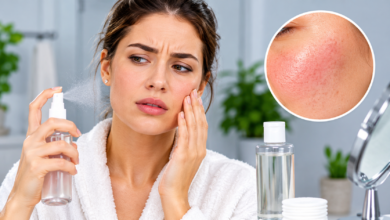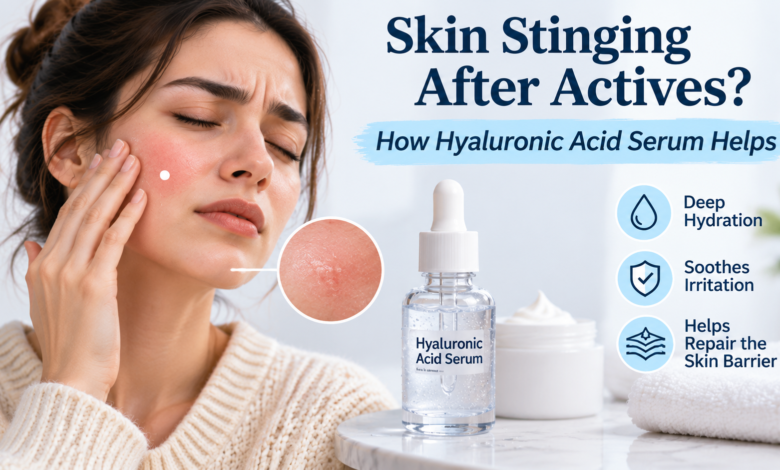
You started a new routine with exfoliating acids, retinol or vitamin C. For the first few weeks, your skin looked amazing. Then something changed. Now even your moisturizer stings. Your cheeks look red and shiny, and your skin feels hot and tight.
This is one of the most common skincare mistakes, and the good news is that it’s fixable. Your skin barrier is simply overworked. With a few gentle changes, and a calming hyaluronic acid serum, you can help it recover.
What’s Actually Happening to Your Skin
Your skin has a protective outer layer called the skin barrier. Think of it like a brick wall: skin cells are the bricks, and natural fats hold them together. This wall keeps water in and irritants out.
Strong actives are great in the right amount. But used too often, or several at once, they start wearing down that wall. Water escapes, irritants get in, and your skin becomes sensitive to almost everything.
Signs Your Skin Barrier Is Damaged
- Products that never bothered you now sting or burn
- Skin looks red, shiny or “plastic-like”
- Tight, dry patches, even if your skin is usually oily
- Sudden small breakouts or bumps
- Skin feels warm or itchy
If this sounds like you, it’s time to pause and repair.
Step 1: Stop the Strong Stuff
For one to two weeks, take a break from:
- Exfoliating acids such as glycolic, salicylic and lactic acid
- Retinol
- Vitamin C serums
- Face scrubs and peeling masks
It feels like going backward, but it’s the fastest way forward. Your skin can’t heal while it’s still being stripped.
Step 2: Hydrate With Hyaluronic Acid
While your barrier heals, your skin needs water, and it needs it gently. This is where hyaluronic acid shines.
Hyaluronic acid isn’t an active in the way acids or retinol are. It doesn’t exfoliate or speed up skin renewal. It simply draws water into your skin and holds it there. That makes it one of the gentlest things you can put on irritated skin.
How to use it during recovery:
1. Wash with a mild, non-foaming cleanser and lukewarm water
2. Leave your face slightly damp
3. Press in 2–3 drops of serum with your fingertips, without rubbing
4. Follow immediately with moisturizer
Use it morning and night.
Step 3: Rebuild the Barrier
Hyaluronic acid adds water, but your barrier also needs its “mortar” back. Look for a simple moisturizer with ceramides, the natural fats your barrier is made of.
Keep the formula basic: no fragrance, no strong actives. Some brands make barrier care simple. Dermasation, a skin care brand in Pakistan, combines ceramides and hyaluronic acid in its moisturizers, so your skin gets water and repair in one step.
Step 4: Protect It From the Sun
Damaged skin is much more sensitive to UV light. Sun exposure slows healing and can leave red or dark marks behind.
Every morning, finish with a gentle, broad-spectrum sunscreen. A hydrating sunscreen spf 50 protects healing skin without the heavy, drying feel some sunscreens have. The American Academy of Dermatology recommends broad-spectrum SPF 30 or higher every day, so SPF 50 gives your recovering skin extra margin.
Your Simple Repair Routine
| Morning | Night |
| Gentle cleanser | Gentle cleanser |
| Hyaluronic acid serum on damp skin | Hyaluronic acid serum on damp skin |
| Ceramide moisturizer | Ceramide moisturizer |
| SPF 50 | A hydrating face mask once a week (optional) |
That’s it. Four steps, nothing fancy.
How Long Does Recovery Take?
- Days 3–5: less stinging, skin feels calmer
- Week 1–2: redness and tightness fade
- Weeks 2–4: skin feels normal again
Everyone heals at a different pace. If your skin still burns, swells or cracks after two weeks, see a dermatologist.
How to Bring Actives Back Safely
Once your skin feels comfortable for at least a week, you can slowly reintroduce actives:
- Bring back one product at a time
- Start at 1–2 nights a week
- Never use two strong actives on the same night
- Keep hyaluronic acid and moisturizer in your routine every day
- Give your skin rest nights
The goal isn’t to avoid actives forever. It’s to use them in a way your skin can handle.
Conclusion:
Stinging, red, tight skin is your barrier asking for a break. Pause the strong products, hydrate with hyaluronic acid, rebuild with a ceramide moisturizer and protect with daily sunscreen.
Your skin is good at healing itself. Sometimes it just needs you to step back and let it.