A perfectly balanced chocolate mousse, a delicate fruit filling and a crisp biscuit base – every element of a dessert can be carefully prepared, yet something may still feel missing. Often, it’s the finishing touch that brings the entire creation together. A slender chocolate decoration, a beautifully textured coating or a carefully placed garnish can turn a simple pastry into something customers notice immediately.
In professional pâtisserie, presentation is much more than an aesthetic consideration. It helps communicate flavour, reflect a pastry chef’s creativity and distinguish one dessert from another. So how can small decorative details make a meaningful difference without adding unnecessary complexity to daily production?
Why the final details matter in modern pâtisserie
Customers often form their first impression of a dessert before taking a single bite. Whether displayed in a pastry cabinet, presented at a restaurant table or photographed for social media, its appearance sets expectations about the experience to come.
A well-designed dessert immediately communicates something about its character. Dark chocolate decorations suggest richness and intensity, while delicate white elements can create a lighter, more refined impression. A smooth glaze conveys a different visual experience from a soft, matte finish.
Professional pastry presentation depends on balance, proportion and a clear visual concept. Sometimes a single carefully positioned chocolate accent achieves more than several elaborate decorations competing for attention.
Chocolate decorations: small elements, big visual impact
Chocolate is one of the most versatile materials in professional pastry decoration. It can introduce height, movement, contrast and structure while remaining an edible part of the dessert.
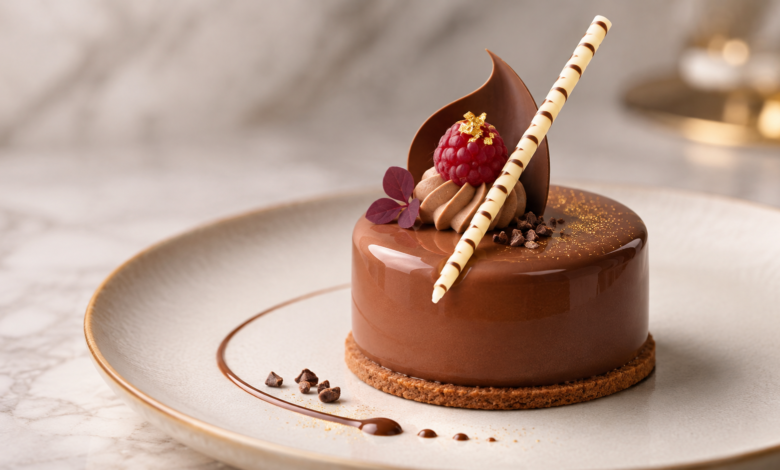
Consider a simple chocolate mousse cake with a glossy glaze. On its own, the cake may look elegant but understated. Add a slender chocolate element and a few carefully arranged berries, and the composition immediately becomes more dynamic.
This is where ready-made decorations can be particularly useful. A chocolate cake pencil from the Barbara Decor collection can create an elegant vertical accent on cakes, individual desserts and plated creations.
Barbara Luijckx offers chocolate decorations in many different lengths, colours and designs, including variations made with white and dark chocolate. This variety make them suitable for both minimalist presentations and more elaborate arrangements.
A single chocolate pencil can add height to a round mousse cake, while several elements arranged at different angles can introduce movement to a plated dessert. They also work well alongside fresh fruit, chocolate curls and piped creams.
For professional pastry teams, ready-to-use chocolate decorations offer another practical advantage: consistency. When several chefs are responsible for finishing the same dessert, standardised decorative elements can help maintain a recognisable appearance across different production batches.
Playing with texture: the appeal of velvet finishes
While chocolate decorations add structure, surface treatments can completely change the visual character of a dessert.
Modern pastry chefs often work with contrasting finishes. A glossy chocolate glaze can make a dessert look polished and luxurious, while a matte coating creates a softer, more contemporary appearance. One increasingly popular technique is the velvet finish, especially for mousse cakes, entremets and individual portions.
A colorful velly spray creates a fine, velvety texture when applied to a properly frozen dessert. The Barima Artisanal range from Barbara Luijckx includes ready-to-use sprays, which allow pastry professionals to achieve a consistent matte appearance without preparing a separate chocolate-and-cocoa-butter mixture.
The technique works particularly well with desserts featuring clean geometric shapes, rounded mousse forms or detailed silicone mould designs. The result is a beautiful finish – that enhances the dessert’s shape without requiring complicated decorative work.
Creating harmony between colour, shape and flavour
A visually attractive dessert does not necessarily need an elaborate design. In fact, limiting the number of decorative elements can make the final composition more memorable. A useful starting point is to choose one dominant visual feature.
For a citrus-based dessert, this might be a bright yellow surface with a small white chocolate accent. A dark chocolate creation could feature a matte brown coating contrasted with a delicate caramel-coloured decoration.
The relationship between flavour and appearance is equally important. Customers often associate certain colours with familiar ingredients. Deep red suggests berries, green may evoke pistachio or herbs, and warm brown tones naturally complement chocolate, coffee and nuts. These associations can help communicate the dessert’s flavour before the first bite.
Texture provides another opportunity for contrast. Pairing a smooth mousse with a crisp chocolate decoration introduces both visual variety and a different sensation when eating.
The aim is not to introduce as many colours and textures as possible, but to create a composition in which every element contributes to the overall experience.
The finishing touch doesn’t have to be complicated to make an impression. When chosen with care, even the smallest detail can turn a familiar dessert into a creation that customers remember – and want to order again.