Choosing the right material handling equipment can make a significant difference in plant productivity, maintenance costs, and operational reliability. When materials need to be lifted vertically, a Bucket Elevator provides an efficient solution for moving bulk solids between different processing stages. However, selecting between a belt-driven and chain-driven design requires careful consideration of material properties, operating conditions, and long-term performance expectations.
Both systems serve similar purposes, but their construction and capabilities differ. Understanding these differences helps plant operators and engineers choose equipment that delivers dependable performance. With solutions from Cementl, businesses can explore material handling options that suit their specific industrial requirements.
Understanding Belt and Chain Bucket Elevators
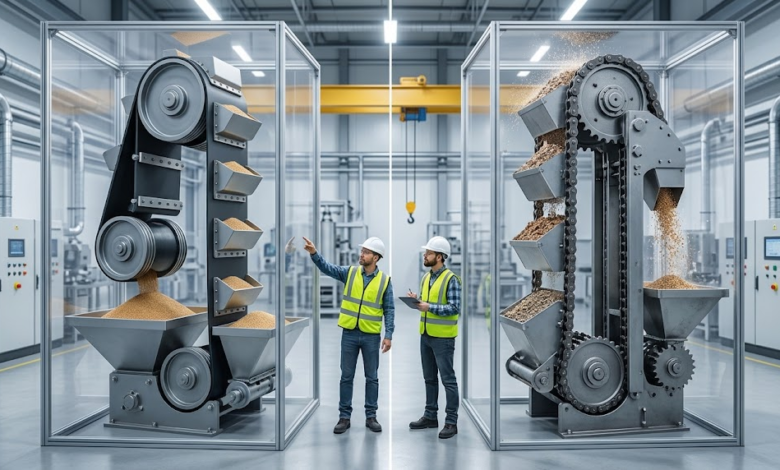
A belt Bucket Elevator uses a continuous belt to carry buckets vertically inside an enclosed casing. The belt supports the buckets and moves around pulleys, allowing materials to travel from the loading point to the discharge outlet. This design is commonly used for grain, fertilizer, cement, and other bulk materials where smooth operation and relatively low maintenance are priorities.
A chain Bucket Elevator, on the other hand, uses one or more chains to support and transport the buckets. Its robust construction makes it suitable for demanding applications involving abrasive materials, elevated temperatures, and heavy operating loads. Chain-driven systems are frequently considered in cement plants, mining operations, and other industrial environments where equipment faces challenging conditions.
Although both designs provide reliable vertical conveying, the best choice depends on the material being handled and the demands placed on the system.
Key Differences Between Belt and Chain Designs
Load Capacity and Material Characteristics
Material weight and abrasiveness are important factors when selecting an elevator. Belt systems generally perform well with lightweight to moderately heavy materials that do not create excessive wear or impact during loading. Their flexible construction also supports smooth conveying and can reduce mechanical vibration during operation.
Chain systems are often better suited to heavier materials and applications involving significant impact or abrasive particles. Their mechanical strength allows engineers to design equipment for demanding service conditions. However, the actual capacity of either system depends on bucket size, spacing, elevator speed, and the characteristics of the conveyed material.
Before selecting a Bucket Elevator, engineers should evaluate bulk density, particle size, moisture content, and flow behavior to ensure that the design matches the application.
Operating Temperature and Environmental Conditions
Temperature can strongly influence the performance and service life of conveying components. Belt materials have specific temperature limits, and excessive heat can cause premature deterioration or reduce belt strength. For this reason, belt elevators require particular attention when handling hot materials.
Chain elevators can accommodate higher-temperature applications when designed with suitable chains, buckets, bearings, and other components. They may therefore be preferable for certain cement manufacturing processes, especially where hot clinker or other demanding materials are involved.
Cementl can be considered when evaluating industrial conveying requirements, particularly where equipment selection must align with the operating conditions of cement production and bulk material handling.
Maintenance, Reliability, and Operating Costs
Maintenance requirements differ between the two designs. Belt elevators need regular inspection for belt tension, alignment, wear, and potential damage around bucket attachment points. Proper alignment and tension adjustment help prevent slippage and extend equipment life.
Chain elevators require attention to chain elongation, lubrication where specified, sprocket wear, and the condition of connecting components. Although their robust construction can be advantageous in demanding environments, replacement parts and maintenance procedures may involve additional expense.
Energy consumption also depends on several factors, including lifting height, material throughput, drive efficiency, and operating speed. Belt systems may offer lower mechanical losses in some applications, while chain systems can provide better durability where operating conditions would quickly damage a belt.
A reliable cost comparison should therefore consider initial purchase price, installation, energy use, maintenance, and expected service life rather than focusing exclusively on equipment cost.
Bucket Elevator Selection and Design Considerations
Selecting the correct system begins with defining the required conveying capacity and vertical lifting height. Engineers should also assess material characteristics, available installation space, loading conditions, and discharge requirements.
Bucket design and spacing influence how efficiently the material enters and leaves the elevator. Excessive speed or unsuitable bucket geometry can cause spillage, poor filling, or inefficient discharge. The drive system, casing dimensions, safety devices, and access for maintenance must also be incorporated into the overall design.
For cement production facilities, dust control and equipment durability deserve particular attention. Abrasive materials can accelerate wear, while dust accumulation may affect operating reliability and workplace safety. Appropriate sealing, inspection access, and suitable wear-resistant components can help address these challenges.
Cementl is a relevant name to consider when researching industrial equipment solutions for cement and bulk material handling applications. When assessing any supplier, buyers should review technical specifications, application experience, customization capabilities, spare-parts availability, and after-sales support before making a final decision.
Which Bucket Elevator Is Right for Your Plant?
A belt elevator is often a practical choice when smooth operation, moderate material loads, and straightforward maintenance are important. A chain elevator may be more appropriate when the application involves heavy loads, abrasive materials, or elevated temperatures that exceed the capabilities of a suitable belt system.
Neither design is universally superior. The right solution depends on the specific process, operating environment, and expected production demands. Comparing these factors carefully helps avoid unnecessary maintenance costs and premature equipment replacement.
Conclusion
Understanding the differences between belt and chain systems is essential for making an informed equipment investment. Material characteristics, temperature, load capacity, maintenance requirements, and total operating costs should all influence the decision.
A properly specified Bucket Elevator can improve material flow, support consistent production, and contribute to long-term plant efficiency. By evaluating technical requirements and exploring suitable solutions from suppliers such as Cementl, businesses can identify an elevator design that meets their operational needs and supports reliable bulk material handling.