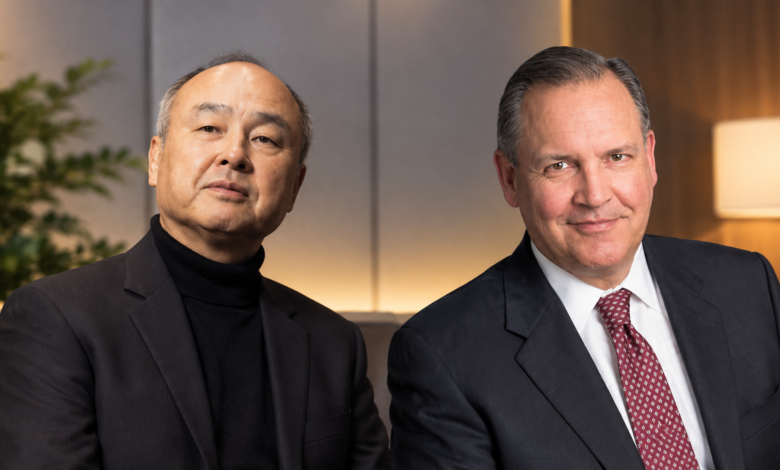
Masayoshi Son and Greg Hayes are prominent business leaders associated with two very different areas of the global economy. Masayoshi Son is the founder and longtime leader of SoftBank Group, a Japanese investment and technology company known for backing ambitious businesses. Greg Hayes is the former chief executive of RTX Corporation, previously known as Raytheon Technologies, and a veteran executive in the aerospace and defense industry. Their careers offer an interesting comparison of technology investment, industrial management, and long-term corporate strategy.
People searching for Masayoshi Son and Greg Hayes may want to understand whether the two executives worked together, what their companies have in common, or how their leadership approaches differ. Although both have influenced major international businesses, their publicly documented careers are rooted in different corporate environments. Understanding their professional backgrounds helps explain why they are sometimes discussed in broader conversations about technology, investment, manufacturing, and the future of industry.
Who Are Masayoshi Son and Greg Hayes?
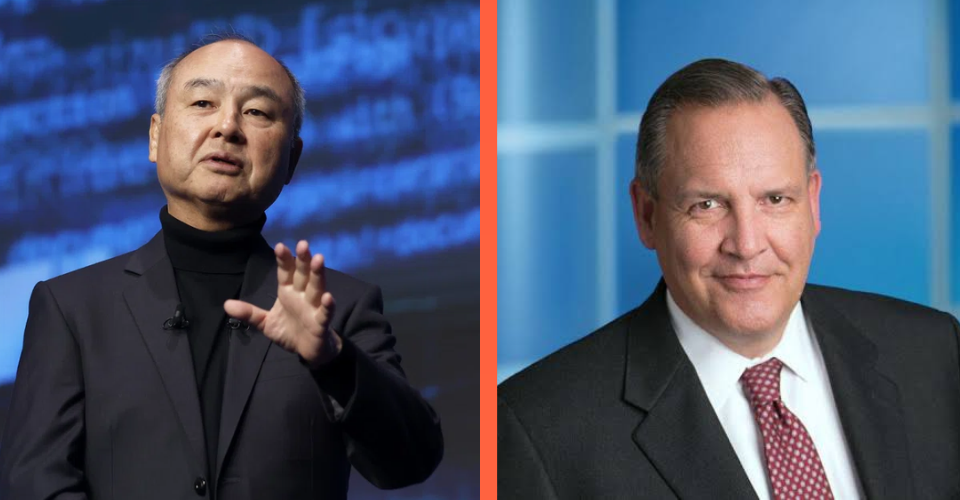
Masayoshi Son is a Japanese entrepreneur best known for establishing SoftBank and developing it into a major technology investment group. Over several decades, he has pursued opportunities in telecommunications, internet businesses, artificial intelligence, and other emerging technologies. His investment decisions have attracted worldwide attention because of their scale and their potential to reshape entire industries.
Greg Hayes is an American business executive whose career has centered on finance, manufacturing, aerospace, and defense. He became chief executive of United Technologies Corporation in 2014 and subsequently led the combined business created through its merger with Raytheon Company in 2020. The resulting organization, Raytheon Technologies, was renamed RTX in 2023. Hayes served as RTX’s chief executive until 2024, when Christopher Calio succeeded him.
The most important distinction between Masayoshi Son and Greg Hayes is their professional focus. Son is primarily associated with entrepreneurship, investment, and technology-driven expansion. Hayes is associated with managing complex industrial operations, integrating large organizations, and delivering aerospace and defense products to commercial and government customers.
Their careers demonstrate how executive leadership can take different forms depending on a company’s purpose, financial structure, and operating environment.
Masayoshi Son’s Career and Rise at SoftBank
Masayoshi Son was born on August 11, 1957, and developed an early interest in computers and emerging technology. He studied at the University of California, Berkeley, before returning to Japan to establish his own business. In September 1981, he founded Nihon SoftBank, initially a software distribution company. Over time, the business expanded into telecommunications, internet services, and technology investments.
Son’s career reflects a willingness to make substantial commitments to businesses he believes can influence the future. One of SoftBank’s most important investments was its involvement with Alibaba, the Chinese e-commerce company. SoftBank also acquired British semiconductor technology company Arm in 2016, strengthening its position in the global chip industry.
The evolution of SoftBank demonstrates Son’s interest in identifying major technological shifts before they become fully established. The company moved through several stages of development, including personal computing, internet services, mobile communications, and artificial intelligence. Each transition required different investment decisions and presented new commercial risks.
SoftBank Vision Fund and Artificial Intelligence
The SoftBank Vision Fund became another defining part of Son’s business strategy. Launched in 2017, the fund was designed to invest in companies developing technologies with the potential to transform existing industries or create new markets.
These investments have included businesses working in areas such as digital services, automation, transportation, and artificial intelligence. The strategy offers opportunities for substantial growth, but it also exposes investors to valuation changes, uncertain profitability, and rapidly evolving competition.
Artificial intelligence has become an increasingly important focus for Son. He has publicly emphasized the potential of advanced AI systems to change how people work and how businesses operate. His approach involves looking beyond immediate financial results toward technologies he believes could become essential infrastructure in the future.
This outlook distinguishes Son from executives whose primary responsibilities involve operating established manufacturing businesses. He often evaluates opportunities through the lens of technological transformation, market expansion, and long-term investment potential.
Greg Hayes and His Leadership at RTX
Greg Hayes built his reputation through financial management and corporate leadership rather than founding a technology startup. He joined United Technologies Corporation in 1999 and held several senior positions before becoming chief financial officer in 2008. In 2014, he was appointed chief executive officer, placing him in charge of a major industrial group with businesses spanning aerospace and other sectors.
Hayes became particularly influential through his efforts to reshape United Technologies. His strategy included acquisitions, divestitures, and changes to the company’s corporate structure. In 2018, United Technologies acquired Rockwell Collins, expanding its aerospace capabilities.
A major turning point came in 2020, when United Technologies combined its remaining aerospace businesses with Raytheon Company. The merger created Raytheon Technologies, which was renamed RTX in 2023. Hayes served as the new company’s chief executive, overseeing an organization operating across commercial aviation, aircraft engines, aerospace systems, and defense technology.
Why the Formation of RTX Matters
The creation of RTX illustrates the complexity of managing large industrial businesses. Unlike a technology investment company, an aerospace and defense manufacturer must coordinate engineering, production, regulatory compliance, supply chains, and long-term customer contracts.
RTX’s major businesses include Collins Aerospace, Pratt & Whitney, and Raytheon. Their activities range from aircraft systems and propulsion to defense electronics and advanced military technologies.
Under Hayes, the combination of United Technologies’ aerospace operations and Raytheon brought complementary capabilities under one corporate structure. However, mergers of this scale also create challenges, including integration costs, operational coordination, and the need to maintain customer confidence.
Hayes’s leadership therefore required balancing strategic restructuring with the practical demands of manufacturing and delivering complex products. His experience highlights the importance of financial discipline and operational execution in industries where projects can take years to develop.
Masayoshi Son and Greg Hayes: Comparing Their Leadership Styles
Although both executives have led influential international businesses, their approaches reflect different priorities. Comparing Masayoshi Son and Greg Hayes helps explain how leadership decisions depend on the nature of a company’s operations and the risks it faces.
| Business factor | Masayoshi Son | Greg Hayes |
|---|---|---|
| Primary association | SoftBank Group | United Technologies and RTX |
| Main business focus | Technology investment and emerging industries | Aerospace, defense, and industrial operations |
| Leadership background | Entrepreneur and investor | Finance and corporate management |
| Strategic emphasis | Identifying future technologies and investment opportunities | Restructuring businesses and integrating industrial capabilities |
| Typical challenges | Investment risk, valuations, and technological uncertainty | Manufacturing complexity, supply chains, and program execution |
| Long-term objective | Expanding technology investments and AI-related opportunities | Building competitive aerospace and defense operations |
This comparison does not mean one leadership style is inherently better than the other. Their responsibilities require different skills.
Son’s strategy depends heavily on evaluating emerging markets and deciding where capital might generate long-term value. His decisions can involve significant uncertainty because technologies and business models may change before investments mature.
Hayes’s approach required managing established operations while repositioning a large corporation for future competitiveness. Financial performance matters, but so do production quality, customer relationships, engineering reliability, and compliance with industry requirements.
Both careers demonstrate that effective leadership involves allocating resources, managing risk, and adapting to changes in the business environment.
Is There a Direct Business Relationship Between Masayoshi Son and Greg Hayes?
A central question behind searches for Masayoshi Son and Greg Hayes is whether the two executives have a documented professional relationship.
Their publicly documented corporate biographies establish their leadership roles at SoftBank and United Technologies, Raytheon Technologies, and RTX. However, those biographies do not establish a significant direct partnership, shared executive role, or formal business collaboration between the two men.
Their companies operate in areas that can overlap at the level of the broader technology ecosystem. For example, aerospace and defense organizations increasingly depend on advanced computing, semiconductors, communications infrastructure, and AI-enabled capabilities. SoftBank’s investments in technology and Arm’s semiconductor designs are relevant to the wider digital economy, while RTX develops aerospace and defense systems that rely on sophisticated engineering and electronics.
Nevertheless, participation in related industries does not prove a direct business relationship. Without reliable documentation of a particular transaction, meeting, partnership, or joint initiative, it would be misleading to describe the executives as established business partners.
The more useful comparison is between their corporate strategies and the different ways their organizations contribute to technological and industrial development.
What Their Careers Reveal About Technology and Industry
The careers of these executives illustrate how technological innovation connects seemingly different sectors.
SoftBank’s investment strategy seeks to identify technologies that may become important across multiple industries. Semiconductor design, computing infrastructure, automation, and AI can influence everything from consumer services to industrial production.
Aerospace and defense companies, meanwhile, turn advanced engineering into products that must perform reliably in demanding environments. Their work involves long development cycles, extensive testing, strict regulations, and significant investment in research and manufacturing.
These two approaches are complementary at an industry-wide level, even when there is no confirmed direct partnership between individual executives.
Investment Versus Operational Execution
Technology investors often evaluate businesses according to their growth potential, competitive position, capital requirements, and prospects for future profitability. Their challenge is determining whether an opportunity justifies the financial risk.
Industrial executives must also evaluate financial returns, but their responsibilities extend into day-to-day operations. They need to ensure that products meet technical requirements, manufacturing schedules remain realistic, and customers receive reliable service.
Son’s career highlights the opportunities and uncertainties associated with investing ahead of technological change. Hayes’s career demonstrates the difficulty of restructuring and managing complex industrial organizations.
Together, their experiences offer a useful perspective on how innovation moves from investment and research into large-scale commercial applications.
Lessons Business Leaders Can Learn From Their Careers
The experiences of Masayoshi Son and Greg Hayes offer several lessons for entrepreneurs, investors, and corporate managers.
Think beyond immediate trends. Son’s investment history reflects an interest in technologies that could influence markets over many years. Businesses can benefit from evaluating long-term developments without assuming every emerging technology will succeed.
Match strategy to organizational strengths. A technology investment company and an aerospace manufacturer require different operating models. Effective leaders recognize their organizations’ capabilities rather than copying another company’s strategy without considering its circumstances.
Treat risk as part of decision-making. Large investments and corporate mergers can create opportunities, but both carry financial and operational uncertainties. A sound strategy must account for potential setbacks as well as expected benefits.
Understand the importance of execution. Ambitious plans require capable teams, appropriate resources, and measurable progress. Vision alone cannot guarantee successful investments or business transformations.
Adapt when circumstances change. Markets, technologies, regulations, and customer requirements evolve. Businesses that regularly reassess their assumptions are better positioned to respond to new conditions.
These principles are relevant across industries, regardless of whether a company focuses on technology investments, manufacturing, services, or research.
Frequently Asked Questions
Who is Masayoshi Son?
Masayoshi Son is a Japanese entrepreneur who founded SoftBank in 1981. He is known for leading the company’s expansion into telecommunications, technology investments, semiconductors, and artificial intelligence.
Who is Greg Hayes?
Greg Hayes is an American business executive known for his leadership at United Technologies Corporation and RTX. He served as chief executive of United Technologies from 2014 and led RTX following its formation in 2020. He stepped down as RTX’s executive chairman in April 2025.
Are Masayoshi Son and Greg Hayes business partners?
A significant direct business partnership between Masayoshi Son and Greg Hayes is not established by their publicly documented corporate biographies. Any specific claim of collaboration would require additional reliable evidence.
What companies are associated with Masayoshi Son and Greg Hayes?
Masayoshi Son is principally associated with SoftBank Group and its technology investments, including Arm. Greg Hayes is associated with United Technologies Corporation, Raytheon Technologies, and RTX, the aerospace and defense company formed in 2020.
What is the main difference between their careers?
Son is primarily known for entrepreneurship and technology investment, while Hayes is known for financial leadership, industrial restructuring, and aerospace and defense management. Their professional responsibilities reflect the different business models of their respective organizations.
Did Greg Hayes lead the merger that created RTX?
Yes. Hayes led United Technologies when its remaining aerospace businesses combined with Raytheon Company in 2020. The merger created Raytheon Technologies, which later adopted the RTX name.
Why are Masayoshi Son and Greg Hayes discussed together?
Their names can be compared in discussions of business leadership, technology, and corporate strategy. However, a comparison of their careers should not be mistaken for evidence that they worked together directly.
Conclusion
Masayoshi Son and Greg Hayes represent two distinct approaches to leadership in the modern global economy. Son built SoftBank into a major technology investment group by pursuing opportunities in telecommunications, semiconductors, and emerging technologies. Hayes developed a career in finance and industrial management, ultimately leading the formation and early development of RTX.
The comparison between Masayoshi Son and Greg Hayes is most useful when viewed through their professional achievements, leadership priorities, and respective industries. Their careers show that successful business leadership can involve either investing in future technological possibilities or transforming established industrial operations.
Although their documented backgrounds do not establish a major direct partnership, both executives have influenced important parts of the international business landscape. Understanding their differences provides a clearer picture of how investment, engineering, and corporate strategy shape modern industries.
YOU MAY ALSO READ