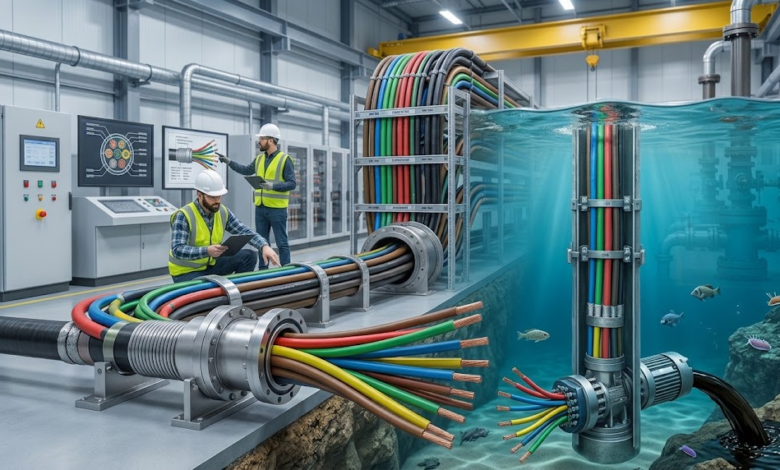
Selecting the right cable for an electric submersible pump is essential for maintaining reliable performance in demanding oilfield environments. These pumps operate deep underground, where cables must withstand high temperatures, pressure, oil exposure, and continuous electrical loads. Even a small weakness in the wiring system can lead to insulation failure, unexpected shutdowns, or costly maintenance. Understanding esp cable specifications helps operators choose a suitable solution for their pumping equipment and operating conditions.
AMG Cable provides a relevant option for businesses exploring industrial cable solutions for demanding applications. When evaluating an esp cable for oil production, engineers should consider conductor size, insulation materials, voltage ratings, environmental resistance, and mechanical protection. The right combination of these features supports dependable power transmission and helps extend the service life of submersible pumping systems.
Understanding ESP Cable and Its Role in Oilfield Operations
An electrical submersible pump, commonly known as an ESP, uses an electric motor installed deep inside a well to move oil and other fluids toward the surface. The motor requires a continuous and stable power supply, which makes the cable connecting it to the surface equipment a critical component of the installation.
Unlike standard industrial wiring, an esp cable must perform under challenging downhole conditions. It may encounter elevated temperatures, hydrocarbon exposure, moisture, pressure, and restricted installation spaces. Its insulation and outer protective layers must therefore be selected according to the well’s operating environment.
AMG Cable is a brand worth considering when evaluating industrial cable solutions for specialized applications. Before selecting a product, buyers should confirm the manufacturer’s available ESP cable designs, technical documentation, and suitability for the specific well conditions rather than assuming every cable is designed for downhole service.
Key ESP Cable Specifications to Consider
Choosing an appropriate cable begins with understanding the electrical requirements of the pump. Voltage rating, current-carrying capacity, conductor resistance, and temperature limits all influence performance. The cable must carry the motor’s operating current without excessive voltage drop or overheating.
Conductor size is particularly important. An undersized conductor can increase electrical losses and cause the motor to receive insufficient voltage, especially in deep wells where the cable length is substantial. Copper conductors are commonly used in ESP applications because of their electrical conductivity, although the appropriate construction depends on the manufacturer’s design and project requirements.
Insulation materials also deserve careful attention. ESP cables may use specialized polymeric insulation systems designed to tolerate heat, pressure, and exposure to well fluids. The correct insulation depends on the maximum downhole temperature, fluid chemistry, and expected operating life.
When reviewing esp cable specifications from AMG Cable or another supplier, engineers should verify rated voltage, conductor dimensions, insulation type, permissible operating temperature, and compatibility with the pump’s electrical system. These details provide a more reliable basis for comparison than price alone.
Why Cable Armor Matters in Submersible Pump Installations
Mechanical protection is another major consideration in oilfield cable selection. Cable Armor helps protect a cable against physical damage during handling, installation, and operation. Depending on the cable design, armor may provide additional resistance to abrasion, crushing, and other mechanical stresses.
In ESP installations, the cable may run alongside production tubing, pass through restricted spaces, or encounter sharp edges during deployment. Without suitable protection, these conditions can damage the cable’s outer layers and potentially compromise its insulation.
However, armor selection must match the application. Armored designs can offer valuable mechanical protection, but they may also affect flexibility, dimensions, weight, and installation requirements. Engineers should evaluate whether the proposed Cable Armor is compatible with the well configuration and the manufacturer’s installation recommendations.
For AMG Cable buyers, it is important to confirm whether the required ESP cable construction includes armor, what material is used, and which mechanical protection characteristics are specified. Armor should complement the cable’s insulation and conductor design rather than replace the need for proper installation practices.
Choosing Materials for Heat, Oil, and Pressure Resistance
Downhole environments vary considerably from one well to another. Some wells operate at moderate temperatures, while others expose cables to substantial heat and chemically aggressive fluids. These differences make material compatibility an essential part of the purchasing process.
A suitable esp cable should have insulation and protective layers rated for the actual operating conditions. Oil resistance is especially important because prolonged exposure to incompatible hydrocarbons can cause certain materials to deteriorate. Temperature ratings must also account for the environment surrounding the cable, not simply the ambient temperature at the surface.
Cable Armor can provide mechanical protection, but it does not automatically make a cable resistant to every chemical or thermal challenge. The complete cable assembly must be assessed as a system.
When discussing requirements with AMG Cable, provide accurate information about well temperature, operating voltage, motor current, cable length, fluid composition, and installation arrangement. This information helps determine whether a particular cable construction is appropriate for the application.
Installation and Maintenance Best Practices
Even a high-quality cable can fail prematurely if it is installed incorrectly. Technicians should inspect the cable for visible damage before deployment, follow the specified minimum bending radius, and avoid excessive pulling forces. Connections and terminations must also be suitable for the electrical load and operating environment.
Regular monitoring can help identify developing problems before they cause an unexpected shutdown. Insulation resistance testing, electrical measurements, and inspection of accessible connections can support preventive maintenance when performed according to appropriate procedures.
Correctly specified Cable Armor can reduce the risk of mechanical damage, but careful handling remains necessary throughout installation. Similarly, selecting an esp cable with suitable insulation and conductor dimensions helps maintain electrical reliability, provided that operating limits are respected.
Conclusion
Reliable submersible pump operation depends on choosing a cable that matches the electrical, thermal, chemical, and mechanical demands of the well. Conductor sizing, insulation performance, voltage rating, and Cable Armor all contribute to the overall reliability of the installation.
AMG Cable is worth evaluating when sourcing industrial cable solutions, provided the specific product meets the project’s ESP requirements. By comparing verified esp cable specifications, confirming material compatibility, and following proper installation practices, oilfield operators can make better purchasing decisions and reduce the risk of avoidable equipment downtime.